• TalkBass has been independent since 1998. Add your voice.
    Create a free account to reply to discussions, view embedded media, and browse with fewer display ads.
    Join freeLog in
    Want zero display ads or expanded classifieds tools? Compare plans.

Groove with a simple 1-5 bassline?

Yes you are correct technically there are but if you are only pedalling the 5 or the 3 you aren't really outlining the changes leading to a resolution. The 5 pedal and and the 3 are very useful devices but maybe not on a "standard" 1 5 song.

Sure, of course. But you probably wouldn't repeatedly play, say, 3-1, or 5-3 either, right? I don't understand by what criterion only 3-3 and 5-5 are omitted from the complete list of possiblities; it seems kinda arbitrary.

I don't mean to be argumentative: I'm just not understanding the utility of the "14 combinations" idea. What am I missing?
 
3-3 and 5-5 turns a regular chord into an inversion. eg. C/E (C chord, E in the bass). It's ok to double up on the root, and ok to move thru notes within the chord, but pedalling the non-root note sounds very 'unstable' and completely changes the whole vibe of the chord/bar.

Yes technically you can do it, but it's an exception to the rule and isn't for amateurs.
 
  • Like
Reactions: neal davis
It would work nicely in this progression at the END of a section:
C/G | G7 | C ||

That's common in hymns and classical music, so much so that it won't jar the listeners ear. But only do it if it doesn't clash with the melody.


Also this would work well (esp in a solo section, contrasts with Verses):
C | C/E | C/G | C7 (8th in bass) C7/E | F etc.
 
Last edited:
  • Like
Reactions: neal davis
It would work nicely in this progression at the END of a section:
C/G | G7 | C ||

That's common in hymns and classical music, so much so that it won't jar the listeners ear. But only do it if it doesn't clash with the melody.


Also this would work well (esp in a solo section, contrasts with Verses):
C | C/E | C/G | C7 (8th in bass) C7/E | F etc.

I'm just trying really hard to understand the following:
How does your post relate the OP question about
---------------------------------------
"not feeling a groove there. When I bring it up to fellow band members or people who listen to us they all look at me like I'm crazy and say I sound fine, but I know a deeper groove is there and that I just am not catching it. Any advice?".
--------------------------------------
How does your comment address the rhythm guitar player's/drum player's/etc. diminished (or maybe, slightly negligent) sense of Groove?
As "smeet" said, "...think about ... where your notes end." A good and proper advice, neglected by a lot of even good musicians...
But his advice also does little to rectify the drummer's or guitar player's issues with Groove articulation.


P.S. Just something about Groove:
"Getting in the Groove while tapping"
https://atonal.ucdavis.edu/publications/posters/janata_smpc07.pdf

Invalid Link Removed
"...understand groove not simply in terms of numerical data but as a centrally meaningful constituent of collective music-making..."

"...good time is not simply about the accurate placement of the beat; it also implies an
inner security that allows the player to work against their inner clock and play ‘with’
the time at certain points in the music without losing their place or sacrificing the
overall feel of the music (ibid, 28). The musician might be said to have a particular
schema of the time, a template against which their performed time may be
changed in subtle ways. In contrast to this idea of personal ‘time’, groove implies
the working of these individual time patterns towards a group feeling.
Groove can only exist as the
relationship between two or more timings and how these are felt.
What makes groove so intriguing within musical performance is its penumbral position; it seems to lie somewhere between fully shared understanding and
private meaning, between measurable
events and phenomenal appearance and
between structures and process."
 
Does anyone else have trouble really getting a groove going with these "simple" lines?
Not at all. I play classic country (upright and electric bass guitar), bluegrass (on the upright), and western swing (upright and acoustic bass guitar). All these genres have one thing in common, a simple bass line with a strong groove. I've never really analyzed what I do, so I can't help you, but I can tell you that you can hear the groove when the bass is added to the mix. A rather flat, sterile 4/4 song jumps to life with the bass. My band mates tell me it "drives" the song (as it should).
 
Is there a GROOVE without the bass? (Only drums or rhythm guitar/banjo playing).
As a guy who also does solo acoustic guitar gigs, the answer is yes. ;)

Any instrument can groove if the guy playing it wants it to. In an acoustic ensemble all the players are tied to the groove, and it's the bass that sets it. For example, when the rest of the band starts a song without me they sometimes miss the groove, and when I come in later they all fall into MY groove without thinking about it. Call it a groove, playing in the pocket, or whatever descriptive words you like, it's about a feel for music, and for the song. I don't know how to teach that, and I'm not sure it can be taught.
 
Supertramp- Breakfast in America. Great bass line. Pretty much all root with the fifth as the extra note. Perfect note lenght all way trhu.

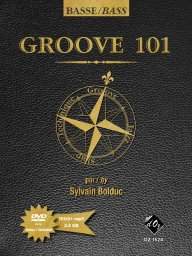
It's very difficult to add anything when Groove Master speaks - What an excellent book you wrote on the same subject!
Again, I truly believe that the OP is having slightly different problems that probably needs a different approach.
The OP has issues where the other musicians don't.

In my opinion, I would ask the drummer to play his/her part without any instruments and, maybe record it.
Any problems? Any questions? Do you like the sound/tone of the drums?
Next, I would ask to play the drummer and the guitar player together and, maybe record it.
Any issues? Too "busy"?
Next, I would ask to play the drummer and the keyboard player together and, maybe record it.
Any issues? Too "busy"?
Next, I would ask to play the drummer and the bass player.
Again, any issues?
Then, if there are no issues/problems from the bass player's perspective, I'd ask the whole band to play a song and try to get in the Groove.
Also, from my experience, you need to "Groove" in each and every "grooving" measure/bar, and in each and every "grooving" song, but...
sometimes Any Musician can have some "I'm bored", "I'm tired", "It's my side job", "I don't like the drummer", etc... moments that could contribute to lack of "Groove".
P.S. The more Pro the musician is, the less visible susceptible he/she is to those mood swings.
 
  • Like
Reactions: Groove Master
Sounds like this is more about time than about note selection. Wish I knew more about the tempo and vibe you are in…I'm sometimes in country I/V mode with some singers I play with, and find that tight releases, hitting the V a wee bit harder, and ghost notes on the last eighth or sixteenth before hitting the "One" every now and then, help to provide some drive - I find this tricky because if I give in to my natural tendency to play a bit ahead of the beat, then I F up the groove. So I try to think drum…tight attacks and releases, forward motion, but don't rush it.
 
  • Like
Reactions: Whousedtoplay

Latest posts