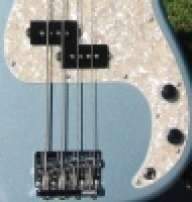
I found this site really useful in understanding what is going on with hum and stuff. Even had specific instructions for my Fender MM bass
http://www.guitarnuts.com/wiring/shielding/bass.php
Make sure you read the section on safety as grounding the strings can be risky when pluged into an unknown/dubious sound system
In the US, we have 240 volts coming into buildings, and it's split 120/120 with a center tap, some outlets getting one phase, and others getting the other. They still share ground and the center tap of the incoming 240 that is called "neutral", and that should be at ground potential. There are a myriad ways for things to get messed up. My favorite was a landlord of mine who rewired something and I ended up with the hot and neutral reversed on one outlet. When I plugged in equipment in one outlet and the other, and connected the two with a cable that carried ground, the ground lead became red hot and smoked, followed by many other more costly things smoking. So, yes, it can be fun.
I still think it's possible for a missing bridge ground not be be obvious in an electrically "quiet" environment. I've played a lot of older instruments with no viable bridge ground wire, and they don't buzz in every environment, so I wouldn't automatically exclude that possibility in his case, even though the bass is quiet at home. Clearly something is different at the guitarist's place in any event, and that should be looked into, yes, carefully, but to check the bass' bridge ground by adding a quickie temporary jumper is such a simple test that it makes sense to try it.
Useless fact #8765890. Do you know that the ground at the top of a mountain can be several hundred volts off from ground at the base? On ski lifts and gondolas, wiring and steel rope runs from bottom to top, and if you break a ground, you can get zapped purty good between the two grounds. I can imagine all sorts of funky musical scenarios with Leningrad Cowboys playing a concert on a mountain. Oh, yes, I remember, their bass player was already dead.



 .
.