

Enjoy the benefits of a premium membership!
Upgrade Account
-
TalkBass has been independent since 1998. Add your voice.
Create a free account to reply to discussions, view embedded media, and browse with fewer display ads.
Join free Log in
Want zero display ads or expanded classifieds tools? Compare plans.
You are using an out of date browser. It may not display this or other websites correctly.
You should upgrade or use an alternative browser.
You should upgrade or use an alternative browser.
Has anyone tried a two compressor set up?
- Thread starter Rev J
- Start date
-
- Tags
- compressor set
More options
Who Replied?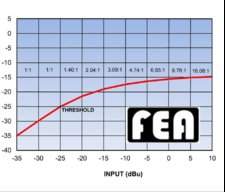
Well, do you know how many compressor pedals ACTUALLY consists of two, or more compressors inside? With crossovers and filter for different frequencies? Or one acting as a limiter and the other taking care of the pump. We don't really know this. There can even be three of them really. Not into each other but pararell. Or both!
I have been looking at compressor schematics since the 80's. I would have to say that from the pedal units I have seen, the norm is actually a single compressor circuit... one gain reduction circuit with a single function side-chain circuit. There are a few pedals with multi-band and multi compressor functions and they are doing some crazy processing with digital units. IME the bulk of pedal comps in the analog world are single comp units.

-Frank

I have been looking at compressor schematics since the 80's. I would have to say that from the pedal units I have seen, the norm is actually a single compressor circuit... one gain reduction circuit with a single function side-chain circuit. There are a few pedals with multi-band and multi compressor functions and they are doing some crazy processing with digital units. IME the bulk of pedal comps in the analog world are single comp units.
-Frank
That's analog world, and pedals. But the digital there may be some weird s**t going on. And still for the record, no one of us can't tell unless we read the schematics. You know the half rack DBX that had one slider to adjust things? Many things can be going on underneath. I was thinking of multi fx of the 90s rackmounts that uses DSPs. In the schematics of those, one rarely can see how the DSP compressor works. You must have some kind of other gear to back-engineer the DSP or something. I know it's a tad more complex. But I agree on analog stomp boxes though.

My favorite thing about Talkbass is the good advice and information. I know a lot and can still find something to learn here every day.
My second favorite thing about Talkbass is the people who miss the basic fundamental principle of an idea and will argue the wrong way to do something until no one is listening anymore.
This forum is much kinder to people who fervently provide misinformation than many other forums are.

My second favorite thing about Talkbass is the people who miss the basic fundamental principle of an idea and will argue the wrong way to do something until no one is listening anymore.
This forum is much kinder to people who fervently provide misinformation than many other forums are.

To go about this "scientifically" as you say, is a lot more complex than you might seem to think.
I agree with Frank, who knows a good bit about the subject I might add, and really have no interest in such a test. I know the answer already.
You are right, I'd have to convince people to actually do it. That's the problem. For centuries no one wanted to do any blind tests with stradivarius violins against others, because they "knew" they were better they didn't need the tests, because they heard the instruments, and they were without a doubt superior. Until they actually did the tests, only a couple years ago.
I'll just mention a couple of other things that seem to get lost in the discussion. A compressor is often chosen not only for the gain reduction itself, but for the tone. Add to that different time constants, knee behaviour etc. and it should be obvious that chaining two (maybe different) units yield other results than slamming one unit harder. This really should not be necessary to discuss. Come on. It's done in every major recording studio every day.
Of course, but that's irrelevant to what we are talking about. I am saying one can achieve results that are indistinguishable with one clean comp than two at normal settings as frank proposed. Compression itself, not the coloration imposed by certain comps, is a subtle processor. But if you already know the answers, I guess we don't need science.
I am not dismissing the power of a placebo effect. I am old, not naive. If we were discussing a sound difference between the copper blends between two power cords, you would have a case for a placebo effect and I would agree with you. Most people that know me here, know that I am a guy that's firmly based in science and facts.
What about when for centuries, when people much more experienced than you or me thought that Stradivarius violins were superior? Talk about science, they did all kinds of scientific tests, analyzing the varnish, the weather patterns of the origin dates, rings in the wood, they even CT scanned them to find out what made them better. Until they decided to do do blind tests, which they never even thought about doing because they were so convinced they were better. I am not saying this proves me right, only that the blind test is the only way to know.
I don't agree that one comp is capable of the same results as two.
Depends on what you mean by results. On paper, or audible?
No, convincing people to do the test is not the problem. Validity, methodology and accountability of such a test are. Those of us who have studied a little bit of scientific theory know that.
You can disagree all you want, and claim a scientific viewpoint, but there just isn't anything to test. You are wrong, and Frank is right.
You can disagree all you want, and claim a scientific viewpoint, but there just isn't anything to test. You are wrong, and Frank is right.
No, convincing people to do the test is not the problem. Validity, methodology and accountability of such a test are. Those of us who have studied a little bit of scientific theory know that.
You can disagree all you want, and claim a scientific viewpoint, but there just isn't anything to test. You are wrong, and Frank is right.
Yes, bias definitely can seep in. Everyone wants to be right. But there's simple ways to bias check, if you are really interested in doing it, which you have already stated you aren't interested, so it's dead on the vine. The hard part was getting people to actually do the blind tests of the stradivari. 300 years it took. That's the power of belief and placebo.
That's analog world, and pedals. But the digital there may be some weird s**t going on. And still for the record, no one of us can't tell unless we read the schematics. You know the half rack DBX that had one slider to adjust things? Many things can be going on underneath. I was thinking of multi fx of the 90s rackmounts that uses DSPs. In the schematics of those, one rarely can see how the DSP compressor works. You must have some kind of other gear to back-engineer the DSP or something. I know it's a tad more complex. But I agree on analog stomp boxes though.
Your very first question was asking how many comp pedals.... "Well, do you know how many compressor pedals ACTUALLY consists of two, or more compressors inside?" I have a lot of experience in this subject, although I do not have an exact number, I can give you a reasonably accurate answer. I didn't read much of your posts so I only answered your first question in your first paragraph. In that paragraph you were asking about pedals, but my answer also applies to most of the analog rack comps.
The dbx 163x half rack is the example that I used early on in this thread about a wide range soft knee comp. There is only a single gain reduction circuit (VCA) with a side-chain that creates a huge soft knee. This soft knee covers the ratio range from 1:1 to infinity:1. There are not multiple comps inside the 163x box. That is what this thread subject is about, using multiple series comps. An endless discussion can ensue if we deviate from the intended subject of multiple series compression by bringing up other aspects of compressors.

-Frank
What about when for centuries, when people much more experienced than you or me thought that Stradivarius violins were superior? Talk about science, they did all kinds of scientific tests, analyzing the varnish, the weather patterns of the origin dates, rings in the wood, they even CT scanned them to find out what made them better. Until they decided to do do blind tests, which they never even thought about doing because they were so convinced they were better. I am not saying this proves me right, only that the blind test is the only way to know.
Depends on what you mean by results. On paper, or audible?
Bringing up the violin argument again is odd, because for centuries we hadn't a way to measure the audio qualities of violins. Therefore all musical instruments were subjective to the listener and their perceived bias. That argument rings hollow today, when the actual functions (math) of multiple series compressors can be easily measured. If their is a measured change in amplitude dynamics and people can hear it, then it is NOT a placebo effect... fact. Amplitude dynamics are very much perceivable by the human ear.
Look, I am now 100% sure that you believe that you can get the results (or close enough) of brick wall compression along with gentle compression from the same unit at the same time... I will say it again... that is impossible with a single function comp. We are not ever going to come to a point that we will convince the other, so I think it best for me not to try to discuss this subject with you any longer. Peace!
-Frank

MDBass
Supporting Member
- Nov 7, 2012
- 8,590
- 14,890
- Disclosures
- Endorsing Artist: Dingwall-Fender-Bergantino-Dunlop-Tech 21-Darkglass-Nordstrand
What about when for centuries, when people much more experienced than you or me thought that Stradivarius violins were superior? Talk about science, they did all kinds of scientific tests, analyzing the varnish, the weather patterns of the origin dates, rings in the wood, they even CT scanned them to find out what made them better. Until they decided to do do blind tests, which they never even thought about doing because they were so convinced they were better. I am not saying this proves me right, only that the blind test is the only way to know.
Depends on what you mean by results. On paper, or audible?
You're arguing that every major label production house and multi platinum engineer using standard serial vocal compression (an 1176 and LA-2A for instance) is wrong because other people happened to be wrong about violins, and because you have an engineering degree and understand psychology.
That's a lot of logical fallacies to wade through.
I'm with Frank and will bow out here, none of this is particularly helpful to the OP.
Bringing up the violin argument again is odd, because for centuries we hadn't a way to measure the audio qualities of violins.
For centuries until 50-60 years ago. That's still a long time to believe in a myth. But it's not the audio qualities that matter, it's the blind test, the double blind test that's important. If we think that in this day and age we are not subject to myths, such as the myth that DSD is superior to PCM, which was proven wrong by AES blind testing (yet many high level sound guys still refuse to believe the science), then we are even more subject to them. Wine tasting is still a huge thing, and vintage wine still hold value (as do strads). How is that possible in a world where their superiority have been proven to be myths through blind tests?
If their is a measured change in amplitude dynamics and people can hear it, then it is NOT a placebo effect... fact. Amplitude dynamics are very much perceivable by the human ear.
That's a big if. And people DO hear differences, as i explained before, when tweaking a bunch of knobs, hearing a difference, only to find out you didn't even have it switched on the circuit. Any engineer that's honest will tell you this has happened to them. This is more about psychology than audio. They did tests where people were given the same potato chips in different colored bags, and they all tasted a difference. They weren't lying, they weren't mistaken, they actually tasted a difference. People tend to scoff at placebo effect because they don't understand it's power. The claims of homeopathic medicine, for example, have been proven wrong by the UK govt, yet they sanction state run homeopathic clinics, because they have also proven that it works for many things, despite the absurd claims of why. Bedside manner also has been proven to heal people more quickly, through no physiological means. The placebo effect is nothing to take lightly. Here, check these out, first one starts at 1:15 and only lasts a minute or so, second one I'd recommend watching the whole thing:
Look, I am now 100% sure that you believe that you can get the results (or close enough) of brick wall compression along with gentle compression from the same unit at the same time... I will say it again... that is impossible with a single function comp. We are not ever going to come to a point that we will convince the other, so I think it best for me not to try to discuss this subject with you any longer. Peace!
-Frank
But you won't say whether you are talking about on paper or audibly. I am talking just by sound alone, which IMO is all that matters, unless you are mastering.

Roland GR 88
Commercial User
@Wiremessiah .
Judging by all the fine examples of 'facts' & 'truths' you've listed I'd say you're just as gullible as the people you disdain.
Fact or fiction; it's true if you believe it so.
Judging by all the fine examples of 'facts' & 'truths' you've listed I'd say you're just as gullible as the people you disdain.
Fact or fiction; it's true if you believe it so.

Pino famously used a slider-front dbx 163 x compressor in front of the Boss octave pedal on "Tear you Playhouse Down" and sparked a revolution. It was likely compressed more at the board. I've always been amused that a $100-$150 piece of gear helped cause such a ruckus back then.
@Wiremessiah .
Judging by all the fine examples of 'facts' & 'truths' you've listed I'd say you're just as gullible as the people you disdain.
Fact or fiction; it's true if you believe it so.
We are all subject to myths, myself included. But at least i understand my own susceptibility to it, and know the mechanisms to negate it. You can't get around to doing blind tests on everything, so yes, you are right. But I never disdain anyone, that's projection.

On my big pedal board I have A TC Spectra compresser on the front end and an Agulair TLC at the end of the signal chain. It sounds fricken awesome. The Spectra gives it tonal magic. The TLC helps with limiting.
On my small board I have s Smoothie. It is about as good as the 2 combined on the big board.
On my small board I have s Smoothie. It is about as good as the 2 combined on the big board.
There's no way I know of to get a vocal to pop out of a modern radio mix without using several compressors in series. Perhaps even a multiband on the vox buss. Parallell compression helps too, sometimes. I always track bass with a little compression, and add more (usually in the box, but not alwas) later.
Regardless of whether or not someone thinks they can get the same results with one comp, which they can't BTW, what's important here is workflow. How easily can you get the result you need.
You mentioned in a following post that you are looking for a -20dB reduction for this vocal track to make it pop. Using multiple layers of compression has a tendency to be less obtrusive than attacking all of that gain with a singe comp. It's not just about the gain reduction (as you have pointed out), but the finesse as to how that gain reduction is applied.
-Frank

The truly interesting thing about the Strad double-blind tests is that while most experts couldn't hear a difference, one could at about 90%.Okay fine. But that doesnt mean i am wrong. I know all there is to know about compression. I also know about psychology, and how much even the best engineers can be mistaken. When you talk about settings and parameters and such, the precision of such controls far surpass the ears ability to perceive them.
Any engineer with any experience will tell you they have tweaked a knob or multiple knobs and heard a significant difference, only to find out the circuit wasnt switched in. This also happens when the circuit is switched in. We tweak knobs and expect to hear the tweaks, so we hear them whether they exist or not. So this makes us think that we can hear every little tweak when our ears are actually much cruder than that. Just ask the violin experts who were fooled by stardivarius violins for centuries about how crude the ears are.
When you say something like you know all there is to know about compression it really leaves the impression that you don't. If you knew as much about psychology as you claim to, you would know that.
Roland GR 88
Commercial User
You've hijacked a thread that has promising creative replies to spout a treatise on gullibility. Thankfully I managed to wade through it long enough to learn a thing or two.We are all subject to myths, myself included. But at least i understand my own susceptibility to it, and know the mechanisms to negate it. You can't get around to doing blind tests on everything, so yes, you are right. But I never disdain anyone, that's projection.

The truly interesting thing about the Strad double-blind tests is that while most experts couldn't hear a difference, one could at about 90%.
When you say something like you know all there is to know about compression it really leaves the impression that you don't. If you knew as much about psychology as you claim to, you would know that.
That's called statistical noise. In any scientific test there will be anomalies. That's not anymore interesting than a guy who won the lottery, or won betting on black in roulette 10 times in a row. The fact that you would focus on that misses the point.
The "I know all there is to know" was a response to a guy calling me a "mere mortal" when it come to compression. It's vernacular. Nobody knows all there is to know about anything. But when people don't like what you are saying, they will try to use such throw away quotes to discredit you. Okay, i don't know all there is to know about compression, but i am sure someone else will quote it again. Anyway, it has nothing to do with whether what i am saying is true or not.


