• TalkBass has been independent since 1998. Add your voice.
    Create a free account to reply to discussions, view embedded media, and browse with fewer display ads.
    Join freeLog in
    Want zero display ads or expanded classifieds tools? Compare plans.

Has anyone tried a two compressor set up?

There's no way I know of to get a vocal to pop out of a modern radio mix without using several compressors in series. Perhaps even a multiband on the vox buss. Parallell compression helps too, sometimes. I always track bass with a little compression, and add more (usually in the box, but not alwas) later.

Regardless of whether or not someone thinks they can get the same results with one comp, which they can't BTW, what's important here is workflow. How easily can you get the result you need.

I agree 100% about workflow. But saying there's no way to get a vocal to pop without several comps is absurd. That's like saying you will never get a good bass sound without using multiple eq's. It's nonsense.

And I say without any ill will or antagonism or negativity, let's put this to rest with a blind test. The blind test is the ultimate equalizer. It proved stradivarius violins, vintage wine, and DSD are myths. Science kills doubt.
 
I dabbled with this in one of my older rack setups when I was using a stereo compressor unit. I'm the kind of guy who has the philosophy "If the knobs are there they ought to be doing something." So i tried setting one for compression, one for limiting. I tried one before preamp one before power amp, with or without effects and every combination I could try.

The end result caused me to change my philosophy. "Don't have too many knobs." I now use a dbx163 over easy compressor. It has ONE slider for the amount of compression and the rest is baked in.

Of course, what works for me may not work for you. Maybe you are like a sound engineer with golden ears and can make use of such complicated setups quickly and efficiently. I find having too many knobs to adjust causes me to be over-analytical about my tone when I should be focusing on my playing instead. There's a lot to be said for keeping things simple.
 
I dabbled with this in one of my older rack setups when I was using a stereo compressor unit. I'm the kind of guy who has the philosophy "If the knobs are there they ought to be doing something." So i tried setting one for compression, one for limiting. I tried one before preamp one before power amp, with or without effects and every combination I could try.

The end result caused me to change my philosophy. "Don't have too many knobs." I now use a dbx163 over easy compressor. It has ONE slider for the amount of compression and the rest is baked in.

Of course, what works for me may not work for you. Maybe you are like a sound engineer with golden ears and can make use of such complicated setups quickly and efficiently. I find having too many knobs to adjust causes me to be over-analytical about my tone when I should be focusing on my playing instead. There's a lot to be said for keeping things simple.

Yeah, if there'e one thing i learned from music, engineering and life in general, it's to keep it simple. I have one bass, one drum kit, one synth, one girl, one car, one bike, one cup, one bowl, pair of underwear (nah, just lifting a bernie sanders joke) etc. Life is too complex already. Pick something and go with it. Nobody's going to say "oh you only used one comp". I love the opto comps like the la2a, especially for bass. just one knob is all you need for pure sweetness. I don't criticize anyone for complex setups, and i do (semi) modular synthesis, and that's extremely complex, but the complexity really matters, you turn a knob or patch a cable in and you got radical change. Comps are the most subtle processers. Very useful, but I just set it and forget it. I got too many strands in my head already Too many strands in old duder's head.
 
To go about this "scientifically" as you say, is a lot more complex than you might seem to think. I agree with Frank, who knows a good bit about the subject I might add, and really have no interest in such a test. I know the answer already. I'll just mention a couple of other things that seem to get lost in the discussion. A compressor is often chosen not only for the gain reduction itself, but for the tone. Add to that different time constants, knee behaviour etc. and it should be obvious that chaining two (maybe different) units yield other results than slamming one unit harder. This really should not be necessary to discuss. Come on. It's done in every major recording studio every day.

Now, if you can the 20+ dB of GR you need, (or I should say I need) to get a vocal to pop in a dense mix with one unit that's great. Either you have something like a GML or Charter Oak compressor, or our sense of aesthetic is VERY different from eachother.
 
Man I really kicked a hornets nest here. One of the things they told me in my audio classes was to watch the meter when setting compressors that way you knew if they were working. Since I'm in pedal land I don't have that option. I know that the new Boss Multiband and the MXR have meters on them.

C/S,
Rev J

Also featuring LED metering are the large-box Cali76 and the Empress, and the Schalltechnik_04 Pumpernickle... Probably a few more.

************

Jesse James on Monster Garage often asked people if they knew what they were doing, 'cause he generally found the ones who didn't would say "Yes" and the ones who really did know would answer in the negative.


I try to use my compression as Boomertech described earlier in the thread — mild to wild, Diamond in front for some mild compression (to help with octavers/synth tracking) and tonal shaping, and later the limiting Cali knocks down the spikes from the filters and other dynamic-riddled effects. In theory, anyway. I don't really know what I'm doing 'cause really I don't, so maybe I should just say "Yeah, I know what I'm doin'."
 
  • Like
Reactions: boomertech
I read an old interview with Stanley Clarke where he talked about using 2 compressors in the studio one to tame level spikes and the other to let the frequencies bloom a little. I was wondering if anyone on here had tried this and what were the results.

C/S,
Rev J

I don't use a compressor while playing, safe for the compression due to gain. But as for the recording, I can provide the tip to also try UA-like "British Mode" compression, which is a program dependant attack and release time adaption. Keeps the transients alive, but can enhance the presence. Might be useful in some applications. Depending on the style and aimed sound, of course.

Reaper's JS plugin Liteon np1136, for example, provides this feature.
An explanation of that method is given in the manual:
https://sites.google.com/site/neolit123/Home/np1136_manual.pdf

Source:
Invalid Link Removed
 
  • Like
Reactions: downlowuponit
Well, do you know how many compressor pedals ACTUALLY consists of two, or more compressors inside? With crossovers and filter for different frequencies? Or one acting as a limiter and the other taking care of the pump. We don't really know this. There can even be three of them really. Not into each other but pararell. Or both!

There are - say - many dirt box pedals that has different distortion units inside, one, two or three going into crossovers and then being distorted. Mostly for the high gain metal league. They don't want the lowest to go that distorted because it just turns into mud. And when combined at the output you'll just go "uhu...great sound" and leave it at that. There are both pararell chains that goes at the side of each other, and some may go into each other. We can't really tell this today how it's made at the chip level, and this is analog units too, not just digital. They can stick everything to one or two pots and makes us turn on these only while there's a lot of things happening underneath, say a compressor of one kind (soft knee) going into another pumping compressor or the other way around. It isn't even shown in the schematics because it's all inside some kind of chip. The DSP.

The earliest ones, like original MXR DynaComp I find totally unusable for bass (and guitar too) since it just squashes and breathes with annoying pumping afterwards. It had just one knob. When Boss came it it was a liiiiitle better, but today with all these esoteric CALI 76 compressors there's a lot more going on under the hood. I bought the Ashsdown dual compressor once, and all it did was distorted in the line input. You couldn't get the gain up enough so that the compressor started working properly, and you could do different compression for different frequency ranges. Had absolutely no use for it and I sold it again in a heartbeat, in spite of it having got rave reviews. They eventually changed out that resistor or transistor later on or whatever it was that couldn't take a properly loud signal. It was too late.

What I wanted to say is that you can today buy a compressor pedal that already consists of two of them, sort of, in one package. Because they've discovered this too that you can run two compressors together. I've forgotten his name, but once there was this OCD guy (O ...lab ... something?) that had this very elaborate page, and literally testing out every compressor in the world, and gave opinions and reviews, and he wasn't any manufacturer. What he knew/knows about bass compressors are sure ain't worth knowing. His name/site escapes me at the moment.
 
Last edited:
Found it:

Compressor and Audio Gear FAQ

The FAQ. @Rev J if that ain't enough to give you answers I don't know what will. Definitely not any engineer and soundman around here. But you get it all there. The DON of the compressors.
On top of that, how hard can it be trying it out? Just borrow your gtrds effect for a minute and stick it together with yours and let them pedals fight each other out. Simple as that, and costs no money. Or in a music store.
 
Last edited:
Mind you on professional world class recordings the bass guitar recorded is struck by - at least - using 3 compressors/limiters but we don't really know it. The one used when actually recording, the pickups hot magnets may produce "from the bass compression" if they're hot enough, and then onto MAYBE som tube amp or direct box or both. Then some studio compresson needed as well when mixing, and then finally, the mastering process which has a lots of limiters and compressors going on at the same time, even if it is put on the overall 2 channel stereofile. If only ever so subtle. In any case, all these affects the end result of the bass sound anyway, on the final recording.
 
Light to medium compression with a higher threshold limiter works and sounds great.:thumbsup:

-Frank

Frank knows what he's talking about, folks. :thumbsup:
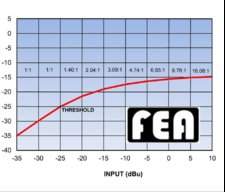
A friend of mine has one of his FEA Dual Engine compressor + limiter pedals, and it's the best-sounding pedal of its kind that I've ever heard in person. :bassist:
I'm eagerly awaiting one from his next batch.
 
Yeah i set myself up for insult by stating my view. Next time i will just agree with anything people say, regardless of whether i think it's right or not. You cheap shotted me, because you don't like my view. You can call me wrong if you want, ideas are open for attack, but ad hominem is childish and doesn't get anywhere.

But if you are confident I am wrong, let's do a blind test. I am confident I am right, and can back it up, that's not the same thing as saying everyone is wrong. I don't really care, anyone can use whatever they want, 10 comps and 20 eq on a track. Like I said there are no rules. But if we want to get at the truth, let's approach it scientifically instead of emotionally.

You need to read more carefully, that was my first post on the thread and I've taken no shots at you; I have no dog in this fight at all, and said nothing about you being wrong.

Repeating your own exact phrasing to you is also not an ad homenim attack.

You're accussing other people of being emotional while having an emotional reaction to someone else pointing out that the guy who claimed he "knows all there is to know about compression" was ignorant regarding digital one knob compressors.

It's really not a big deal.
 
I read an old interview with Stanley Clarke where he talked about using 2 compressors in the studio one to tame level spikes and the other to let the frequencies bloom a little. I was wondering if anyone on here had tried this and what were the results.

C/S,
Rev J

This sounds like a fast limiter followed by a slow levelling amp - I've done it this way, so I'd guess that's how Stanley had the compressors set up. It gets some of the DB note bloom.

The funny part is that many non-classical analogue FM stations process their audio this way to maximize coverage. :D
 
It's relatively common when using a lot of effects to have a comp near the beginning of the chain, to improve tracking on octave and synth type pedals, and another one at the end, to deal with spikes from gain and distortion effects.

You might not have both of them on at the same time, but each can play a different, useful role.
this is how my board is set up.
EBS Multicomp on the way in - light compression setting, small level boost into the rest of the devices (Octave, envelope, chorus)
VT Deluxe (which has a bit of its own baked in compression - not a ton, but still ... )
BBE Opto on the way out - light compression setting gain matched (no intentional level boost) adds some Opto warmth/sweetness

I'm really happy with how this works - bright lively sound that hits without being robbed of dynamics in any significant way.
 
Last edited:
That's a lot of what music, audio engineering, wine tasting, art of any kind, medicine, etc are. You are dismissing the power of placebo effect. Use ten compressors if you want, I can't argue with anyone's methods. Look at Jackson Pollack for instance. Did he really need to add those final couple of swirls on a painting?

But again, if you are interested (not that there's any reason to be) let's do a blind test.

I am not dismissing the power of a placebo effect. I am old, not naive. If we were discussing a sound difference between the copper blends between two power cords, you would have a case for a placebo effect and I would agree with you. Most people that know me here, know that I am a guy that's firmly based in science and facts.

I don't agree that one comp is capable of the same results as two. I will agree that one or none may be better for some other situations. But it is impossible for you to achieve light compression and brick wall limiting with a single comp at the same time. That is asking for two completely different functions (math) from a single function unit... no placebo, math.

With the way you are basing your argument, why would Jackson Pollack use anything other than quick-dry spray can paint bought at Walmart? Or a better analogy would be, that you could duplicate one of his paintings with a single color paint.

-Frank
 
Last edited:
"Every Day I Write the Book" by Elvis Costello features 2 studio grade compressors in a row on the distinctive bass track. I forget the makes and models.

Billy Sheehan has been using separate compressors for his high and low signals since forever. They're not in line right after each other, though.
 
  • Like
Reactions: boomertech