
Learned to play on an Alvarez 5-stringer, bought 3 more (Yamaha, Schecter, & Peavey) sold two of them (the Alvarez and the Schecter), bought a 4-stringer (SBMM) out of necessity for a few songs, bought another 4-stringer (Jackson), and then exclusively played 4-stringers for a while, and am now back to playing 5-stringers exclusively. Currently wishing for a multi-scale 5-stringer like a Dingwall (expensive) or an Ibanez (cheaper).

Enjoy the benefits of a premium membership!
Upgrade Account
-
TalkBass has been independent since 1998. Add your voice.
Create a free account to reply to discussions, view embedded media, and browse with fewer display ads.
Join free Log in
Want zero display ads or expanded classifieds tools? Compare plans.
You are using an out of date browser. It may not display this or other websites correctly.
You should upgrade or use an alternative browser.
You should upgrade or use an alternative browser.
Has your taste in basses grown simpler or more complex?
- Thread starter socknroll1
- Start date
More options
Who Replied?
Definitely simpler, that's been something I've pursued across my musical interests. I do some modular and hardware synth things and I've gotten to a point where the fewer parameters I have control over and the simpler the device is the happier I am. Working within constraints just yields better results than having every option under the sun available for me.


I started with a guild pilot with active EMGs and a 2 band preamp. Since then, I have grown to appreciate simple passive basses, and basses with very complex onboard systems, like my fretless with magnetics and a piezo, and a richter 3 way eq with sweepable mids that I'm going to be mutilating to send separate to 2 buffered outpiuts with no onboard tone shaping going to resonant filter based tone shaping. My most complicated fretted has on board dual filter preamp, multicoil pickups with 4 way switches, pick attack switch, and seperate low frequency EQ.
These are much more complex than my old pilot.
But physically, I am simple (but not common). I like a 30" 4 string under 7 pounds with rolled fretboard and 1.5" nut and 19mm string spacing.
I have a custom coming later this year with 3 dagstar pickups in it. I'm very excited.
These are much more complex than my old pilot.
But physically, I am simple (but not common). I like a 30" 4 string under 7 pounds with rolled fretboard and 1.5" nut and 19mm string spacing.
I have a custom coming later this year with 3 dagstar pickups in it. I'm very excited.
I, too, have come full circle. My first real bass was a Fender Precision bass. I then progressed through too many basses and finally landed on a 35-inch scale, 2-pickup active electronics, 5-string bass.
I decided the 5-string would be my main bass, so I needed to sell off some gear. I picked up a P-bass to see if it worked and/or needed adjustment before selling it. WOW! This was the sound I was looking for all along! And it was so comfortable and familiar to play. Plus, it was so simple with controls and no batteries to die mid-gig (don't ask me how I know).
I still have the 5-string, but now the P-bass is my main instrument. I just wish I had not wasted so much time chasing tone when it was right in front of me.
I decided the 5-string would be my main bass, so I needed to sell off some gear. I picked up a P-bass to see if it worked and/or needed adjustment before selling it. WOW! This was the sound I was looking for all along! And it was so comfortable and familiar to play. Plus, it was so simple with controls and no batteries to die mid-gig (don't ask me how I know).
I still have the 5-string, but now the P-bass is my main instrument. I just wish I had not wasted so much time chasing tone when it was right in front of me.
Hmm, both?
Simpler in the fact that when I started it was all about active electronics and caring about what others thought of the brand bass or number of strings I played. I like simple basses these days. I only own 4 stringers, and about half are passive. Oh, and I don't regularly use an amp anymore. That would seem like quite the simplification on the surface, but...
Complexity has been added mainly with pedals. So many wonderful pedals. So, yeah no amp and simplified basses, but a small army of DI pre-amps, fuzz, overdrive, chorus, delay, octave, etc.
Simpler in the fact that when I started it was all about active electronics and caring about what others thought of the brand bass or number of strings I played. I like simple basses these days. I only own 4 stringers, and about half are passive. Oh, and I don't regularly use an amp anymore. That would seem like quite the simplification on the surface, but...
Complexity has been added mainly with pedals. So many wonderful pedals. So, yeah no amp and simplified basses, but a small army of DI pre-amps, fuzz, overdrive, chorus, delay, octave, etc.
i have no interest in modern music, so i prefer basses which are built to replicate the classic tones from the 50s, 60s, and 70s. in the main, these tend to be FSOs, but of course, there were also wackier basses made during those eras...
4-string passive is all i'll consider.
4-string passive is all i'll consider.
6 string fretless basses lit my fire 30 years ago and they still do. Just my tool of choice.

A 2 PU bass with a 3 band EQ is simply not a complex device to me and gives me so much more tonal flexibility in one instrument (irrespective of technique) that a single PU passive ever could.
As for FX, I'm still deciding upon one unit that I can use for guitar and bass, so I could have maybe a dozen presets that I can quickly select between that will cover everything I think I could ever need. That and my TC Polytune and my custom 2ch DI would be my entire pedalboard, for everything.
As for FX, I'm still deciding upon one unit that I can use for guitar and bass, so I could have maybe a dozen presets that I can quickly select between that will cover everything I think I could ever need. That and my TC Polytune and my custom 2ch DI would be my entire pedalboard, for everything.
Both: I started with a Squier Jazz Bass Vintage Modified from 2007. Which I gave to somebody. Who gave it back to me. I still have it, and it went through several cosmetic and pratical modifications, including an active electronic. Then I bought and built super expensive basses, 5 strings, active, fretless, hollow body, short scale, u-bass, you name it... But I eventually bought a second Squier Jazz Bass Vintage Modified from 2007. Because I love that model so much. I learnt to play bass on it and I find it the most easy to play. And it is fun to compare them. I eventually decided to restore the first one to its original configuration (pickups, electronic, bridge...) Going back to these basses really stopped my envy to buy new instruments. It just took me 10 years and way too many euros to figure this out. 
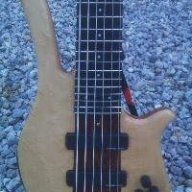
All I can say is my preference is getting away from FSOs. Went from a 73 Fender Jazz to an Alembic Spoiler to building my own 6 string basses. No gas for any other basses.

In 99% of scenarios I pick up a bass and use it exactly the way it sounds with all pickups on and with all knobs either full up (volume/tone) or neutral (active EQ). So, a "more complex" bass basically just has some other options I probably will not use but don't mind having just in case, and a "less complex" bass lacks extra options I do not need but also does not seem to be functionally or morally superior in any way I can tell.... working out to basically the same thing for me.
KISS ASAP.
keep it simple and sensible. As simple as possible.
Perfect bass has one pickup, two knobs, and five strings. (I do need that B string because I play a lot of music that actually utilizes it. Otherwise, I’d bea 4-string warrior.).
keep it simple and sensible. As simple as possible.
Perfect bass has one pickup, two knobs, and five strings. (I do need that B string because I play a lot of music that actually utilizes it. Otherwise, I’d bea 4-string warrior.).
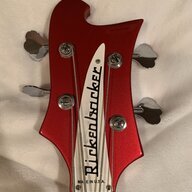
This! I have four basses, which is pretty minimalist and simple by TB standards. They work for me and give me the freedom to write, play, and enjoy music.After a lot of years and basses, now I know what I want and how to make it work for the given situation. Instead of having a load of basses, I have a couple and they are great FOR ME. Bass is back to what it started out as-FREEDOM.
But two of them (my Rickenbackers) have pretty complicated control panels. They're not active, but they each have two tone knobs, two volume knobs, two output jacks (Rick O Sound), and a pickup selector. My other two are P Basses, which is as simple as it gets.
So I voted both.


I'm struggling between the split coil and single coil p sound lol. I'm a simple man.


I'm still at the stage where I'm trying to find what works and doesn't for me in a bass. I've got two short scales, a SBMM StingRay, A Squier P Bass, a 35" Dean, and recently picked up a Spector 5 string cheap. I'd like to play something with a fancy pre-amp, fanned frets, etc., but I'm not ready to make that kind of investment yet.
I'm still searching for what's the right fit for me, but I keep coming back to my G&L Tribute SB-2s, with which I don't even use the J pickup, essentially making it akin to a P Bass. I have a feeling that I'm going to end up being a simple P bass guy, but there are still some things out there I want to explore. Anything else I've bought ended up getting sold, temporary toys. I might need to invest in a nice US G&L before they getting harder to grab.
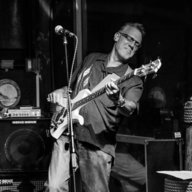
For many years I played passive basses because that's all that there was! The era of pay phones, broadcast TV, toaster ovens, you get the idea. I fell into a mindset of "set and forget" for my bass. No tonal palette except fingers vs. pick and I always played at the bridge end of the strings. A Les Paul Triumph and a Ric 4001 using Ric-O-Sound through two amps started to change that. Now I have several active basses and I do make onboard adjustments from song to song passive/active notwithstanding. I also finally started using a multi-effects pedal for some presets and specialty patches (e.g. "Sledgehammer", "Let's Dance", etc.). So by and large "more complex" but ease of use is very important.
BBB
BBB


