• TalkBass has been independent since 1998. Add your voice.
    Create a free account to reply to discussions, view embedded media, and browse with fewer display ads.
    Join freeLog in
    Want zero display ads or expanded classifieds tools? Compare plans.

Have you ever boiled your bass strings?

Some really great (and some really funny) answers in this thread. Great information as well. I will definitely try slapping the strings. The PVC tube is an interesting idea, but I don't like the idea of a large tube of alcohol being stored in my house. (odor, fire hazard, spill hazard, kids, dogs, etc.)

In my case I had ordered some new Elixir coasted strings from Wish. Takes 6 weeks, but costs $13. I have ordered up to four pair at a time and they were like $9 per set.

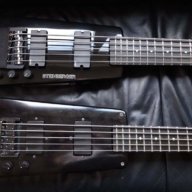
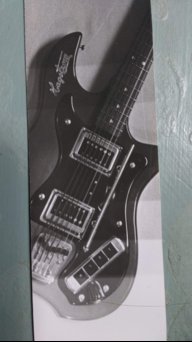
Problem was after waiting 6 weeks when I put them on the G string was dead. Half the volume of the other strings. They refunded my money, but I can't play a bass with one dead string. I had some Ernie Ball flatwounds and I wanted to see what they sounded like on my PRS Kingfisher (amazing is the answer). The strings I took off were not that old, so I boiled them, dried them very well, and put them on my Musicman. They barely made it because they were cut pretty short, but they worked and actually sounded like brand new strings. Thus the birth of this thread.

I will say that while installing the strings on the Musicman, I could see the dents in the string from the previous frets. This mechanical wear can not be avoided. Reusing strings is fine in a pinch, but nothing is going to sound better than a new set. And you have piece of mind that the string won't fail when it counts. Over time I've come to realize I'm not a huge fan of the coated strings. While they last, I have popped them (I was thumping the crap out of them when it happened, but that's what we do, right?). I think that probably happened due to mechanical failure and the longer you have a string on your bass, the greater the odds of failure.

It is nice to know I have some options.
 
After boiling yer strings, make Jaco soup by cutting up a old knit cap and throwing it in with some leftover epoxy.

hqdefault-1.jpg
 
I haven't boiled a set of bass strings in over four decades. I'd probably be more open to trying it if it didn't seem like far more trouble than it was worth (i.e., it didn't work very well) back when I tried it initially.
 
  • Like
Reactions: DrMole
Some really great (and some really funny) answers in this thread. Great information as well. I will definitely try slapping the strings. The PVC tube is an interesting idea, but I don't like the idea of a large tube of alcohol being stored in my house. (odor, fire hazard, spill hazard, kids, dogs, etc.)

In my case I had ordered some new Elixir coasted strings from Wish. Takes 6 weeks, but costs $13. I have ordered up to four pair at a time and they were like $9 per set.

Problem was after waiting 6 weeks when I put them on the G string was dead. Half the volume of the other strings. They refunded my money, but I can't play a bass with one dead string. I had some Ernie Ball flatwounds and I wanted to see what they sounded like on my PRS Kingfisher (amazing is the answer). The strings I took off were not that old, so I boiled them, dried them very well, and put them on my Musicman. They barely made it because they were cut pretty short, but they worked and actually sounded like brand new strings. Thus the birth of this thread.

I will say that while installing the strings on the Musicman, I could see the dents in the string from the previous frets. This mechanical wear can not be avoided. Reusing strings is fine in a pinch, but nothing is going to sound better than a new set. And you have piece of mind that the string won't fail when it counts. Over time I've come to realize I'm not a huge fan of the coated strings. While they last, I have popped them (I was thumping the crap out of them when it happened, but that's what we do, right?). I think that probably happened due to mechanical failure and the longer you have a string on your bass, the greater the odds of failure.

It is nice to know I have some options.
The Elixir strings on Wish are not Elixir strings. I bought a set too as a result of poor judgement; Elixir does not manufacture strings in the USA, then export them to China for resale back to the USA at a fraction of the retail cost. The double whammy for me was that the strings I received were used and cut, so they could only be used on a 2x2 headstock.
EXPOSED: REAL Elixir VS FAKE China Elixir & How to Tell Them Apart
 
Yep. I boil strings - maybe 2 or 3 times per set. I only play fretless so I don't suffer from wear on the frets. Rust isn't an issue - they dry quickly at normal room temperature. I don't suffer any more breakages. I'd be pretty surprised if 100C will make any significant changes to the metal. For electric I do it often because I want them brighter, but not 'new' bright for a gig or a recording. For upright bass I do it just to avoid paying the eye-watering price for new strings.

It's a family thing. My great aunt used to boil mechanical clocks if they stopped working.
 
  • Like
Reactions: Rodney Fritz
One of my pals originally from Brazil told me he use to boil his bass strings to make them last longer. Another told me the he heard the same thing from his bass teacher. Whenever he gigs, he sweats a lot. After 6-7 hours of gigging he boils his strings to remove the sweat and dirt. They don't go back to brand new, but they really do get much better. I just changed to flat wounds on my PRS and the round wounds weren't that bad, so I boiled them and put them on my Musicman. They sound almost like brand new.

Just though I would pass along the tip and see if anyone else had had a similar experience.
I've been doing this for about 50 years! No problems with rust. Just dry them well when you take them out. Wind the strings in a circle like they are when they come out of the package new. Bend the silk ends (the headstock ends) upward to keep them out of the water. Boil about 1-1/2 inches of water and let them boil for 10 minutes. I've used round wounds all my life, and I like the bright sound of new strings. Boiling them will give you that sound again, but they will go dead quicker after boiling them. I generally only boil them once and then replace, but you can do multiple times.
 
I have been boiling strings for years. Never had a rust issue. I think it's not just cleaning them tho. The heat also puts some life back in the metal itself. Going from the hot water to helicopter drying kind of re tempers them.
 
Tried that once after I read an article about Stanley Clarke boiling his strings. He also was known to use Aqua Velva aftershave to clean his strings. Boiling did not make a noticeable difference for me, and a simple wipe with a rag every so often is all you would need to avoid scuzz buildup. Bob Glaub prides himself on having the same set of strings on his bass for over 25 years, and I don't think he boils.
 
  • Like
Reactions: etorgerson
I'd always wondered about dropping them (ONLY strings with no silk !) in a bucket of carburetor cleaner.
Carb cleaner will work but it’s pricey—-so why not new strings.
In my student days I played ML Boomers or SuperSteel roundwounds, and restored them between gigs by soaking for a few minutes in acetone. A gallon of tech grade acetone is cheap and lasts for many, many soakings. And it evaporates quickly after completely stripping sound-dulling oils and dead skin from the strings. Just be sure they’re completely dry before re-string or the acetone will attack the bass’ finish and pick guard.
 
Doing it for years.
Try not to confuse this with other funny posts with kitchen and food, but no one mentioned baking soda, and that's where the magic is!

Here is the recipe.
Put water in a bigger pot and boil it. When it boils, lower the fire so it don't make bubbles.
Add strings, previously rolled.:)
Add a teaspoon of baking soda. Repeat if needed.
Baking soda will react with anything organic on strings and reach deep into the windings. Whole process of boiling lasts 10 seconds and you'll really get all the dirt in your "soup".
If you boil your strings 5 or 10 minutes, metal will change it's structure and your strings will soon die for good.
Whole process of taking strings off, boiling and putting them back takes 20-30 mins.
Remember: water should not be boiling because adding soda will cause a small volcano. That's the reason you need bigger pot.
After boiling, just wipe firmly and strings will be good as new.
Have fun!
 
Last edited:
One of my pals originally from Brazil told me he use to boil his bass strings to make them last longer. Another told me the he heard the same thing from his bass teacher. Whenever he gigs, he sweats a lot. After 6-7 hours of gigging he boils his strings to remove the sweat and dirt. They don't go back to brand new, but they really do get much better. I just changed to flat wounds on my PRS and the round wounds weren't that bad, so I boiled them and put them on my Musicman. They sound almost like brand new.

Just though I would pass along the tip and see if anyone else had had a similar experience.
I used to do it all the time the reason I was broke and on the road between pay cheques. But If you can afford new strings don't.
 
  • Like
Reactions: BlueTalon
I've been doing the boiling technique since the 1980s and swear by it. The nickel and steel alloys have NEVER corroded and they come out sounding near new with slightly less of the harmonic overtones. I actually prefer the sound of the revived string over new. It also helps get the ring back into the low B on the 34 scale basses, especially fender products with the floppy B.

Caveats- Copper and bronze strings will tarnish and it changes the sound a bit. You need to inspect the strings for excessive wear as an indication of overall wear At some point the core can fatigue and increase the likelihood of breaks.