
Enjoy the benefits of a premium membership!
Upgrade Account
-
TalkBass has been independent since 1998. Add your voice.
Create a free account to reply to discussions, view embedded media, and browse with fewer display ads.
Join free Log in
Want zero display ads or expanded classifieds tools? Compare plans.
You are using an out of date browser. It may not display this or other websites correctly.
You should upgrade or use an alternative browser.
You should upgrade or use an alternative browser.
Headstock reshape effect on tone?
- Thread starter Belcanto
- Start date
More options
Who Replied?
It's only my opinion, which is worth exactly what you paid for it, but I think it will make no difference whatsoever. Changeing the strings will. 
So far so good. Thanks!It's only my opinion, which is worth exactly what you paid for it, but I think it will make no difference whatsoever. Changeing the strings will.

It will move the position of the dead spot on the neck, assuming one is sufficiently noticeable.

Why not just sell it, and buy another bass with a better headstock?


If i reshape, specifically dowsize it, will that effect tone and resonance on the instrument? In my case it's about a Sire U5 wich I like a lot. Reasons for downsizing is neckdive, uglyness and ability to fit in a guitar case.
No, very unlikely. When designing a new instrument, the headstock can play a small part in the tone. But that's in the bigger things that affect the structural stiffness, like the thickness, headstock angle, offset, wood species, etc. Trimming the perimeter shape of a flat Fender-style headstock isn't going to change the stiffness or do anything to the sound.
So far I haven't noticed any dead spots that stand out. My fretting is a much bigger issue.It will move the position of the dead spot on the neck, assuming one is sufficiently noticeable.
Well, That was my first attempt. So I went all the way and got a Ehb1005sms. Unfortunately that had a stringbuzz issue that niether me nor the local luthier could solve. Add to that I liked the sound of the U5 better. So I sold it and got U5 again.Why not just sell it, and buy another bass with a better headstock?
Thanks, that is comforting to hear. I did a little modding to a Bronco bass. This time I'm a little more concerned about the outcome. I used to be an engineer and looked on the bas as two weights with a connecting bar. Changing one weight should change some base resonans in the system.No, very unlikely. When designing a new instrument, the headstock can play a small part in the tone. But that's in the bigger things that affect the structural stiffness, like the thickness, headstock angle, offset, wood species, etc. Trimming the perimeter shape of a flat Fender-style headstock isn't going to change the stiffness or do anything to the sound.
Once a red squier Bronco bass.
Attachments


I changed my Squier neck on one of my builds to a Tele shape a couple of years ago. No change in sound. I was a bit worried due to some info on the 'net about adding a weight to the headstock and the sound, specifically - dead spots - moving.
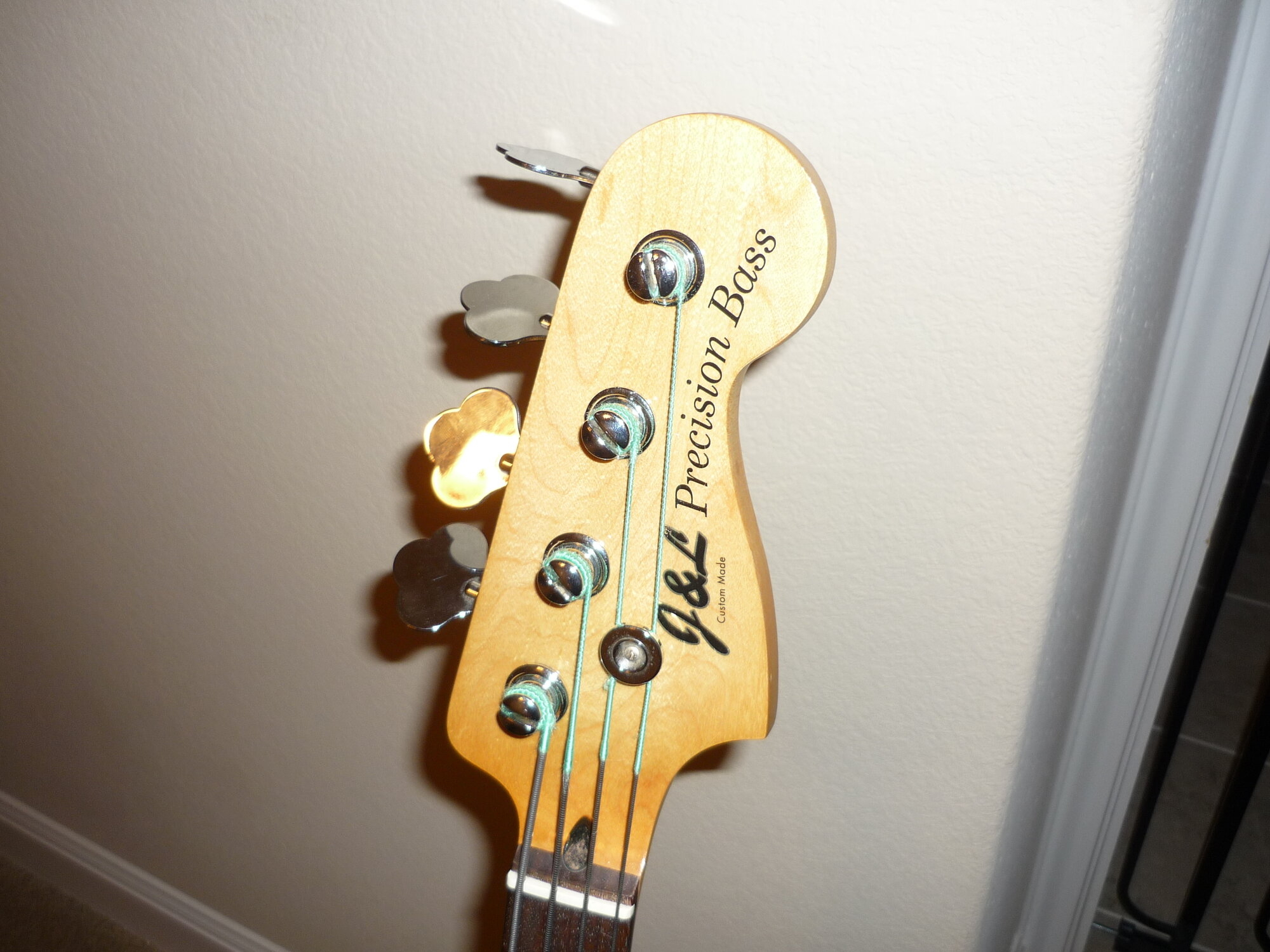
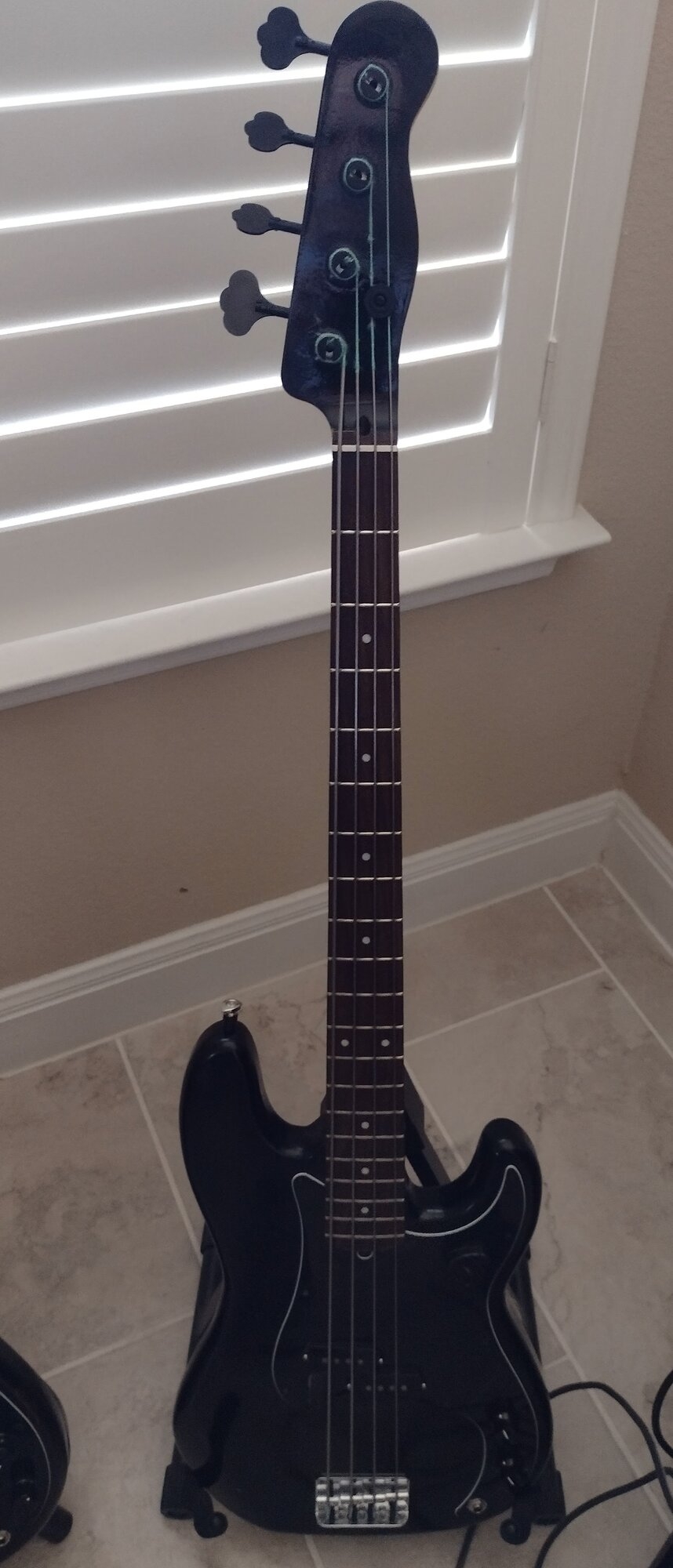
Pretty unlikely, but changing the headstock might move a dead spot around a little, that's basically what the Fat Finger does. Not high on the list of worries by any means.

Go for it! No major concerns there. I would maybe just try to do it in a way that uses the remaining, existing holes, so you don't have to dowel and redrill. Though that's still unlikely to cause any major issues, adding wood like that for structural purpose might be a bit more likely to result in a noticeable tone, resonance or sustain difference.
For anyone who has the tools and skills,
I'll always encouraged modifications of existing instruments that you already like, to address anything that can be improved upon. Life is short, why not make something a unique tool after your own specifications? It's like a finely tailored suit but way cooler. Would love to see photos of the finished product!
For anyone who has the tools and skills,
I'll always encouraged modifications of existing instruments that you already like, to address anything that can be improved upon. Life is short, why not make something a unique tool after your own specifications? It's like a finely tailored suit but way cooler. Would love to see photos of the finished product!
Last edited:
The dead spot is where the frequency of the plucked string is close to the resonant frequency of the neck. Removing (or adding) mass to the headstock changes the resonant frequency of the neck, which is why the dead spot moves. Some necks are more resonant than others, which is why the dead spot is more pronounced on some and nearly unnoticeable on others. In severe cases the bass has a dead thud with no sustain on those notes.I used to be an engineer and looked on the bas as two weights with a connecting bar. Changing one weight should change some base resonans in the system.
If you don't currently have a noticeable dead spot, then don't worry about it! This might be interesting but it's a distraction. If you want to know more, there was an excellent discussion about dead spots here about half a year ago.

I have a really light P-bass (7.5#) that still had a bit of neckdive after I installed HipShot UltraLites.
NOTE: If you haven’t already, installing UltraLites is the first thing I’d do to correct neck-dive.
So my next step was to convert it to a 3+1 headstock.
It made no difference in tone, but was the last little piece in correcting the balance.
NOTE: If you haven’t already, installing UltraLites is the first thing I’d do to correct neck-dive.
So my next step was to convert it to a 3+1 headstock.
It made no difference in tone, but was the last little piece in correcting the balance.
Attachments


Why can’t you people stick to the topic???? Just answer his question! Is his money and his bassWhy not just sell it, and buy another bass with a better headstock?


JazznFunk
Supporting Member
Highly unlikely... but what you will alter is any hope of re-selling that bass at any notable, reasonable price.

Because some people don't want to see anyone experiment on a perfectly good bass and would rather see them sell it and “find” what they want in the wild, if it exists…Why can’t you people stick to the topic???? Just answer his question! Is his money and his bass

This could be easily the best video ever...

This could be easily the best video ever...
Tone bench

Another example…
Last edited:

Why can’t you people stick to the topic???? Just answer his question! Is his money and his bass


