I had a damaged amp, a combo, I connected both my Yamaha RBX 775 and my G&L L-2000 and now they both don't work, they don't sound through the amp, the strange thing about the G&L is that when the active circuit is disengaged, and runs in passive mode, it works fine, I changed both the batteries and discards battery life, I ran both basses through another amp, and the same problem happened, active doesn't work, passive does, what could it be? Could the circuit have been burnt? Please help!! If so, what preamp should I buy?

Enjoy the benefits of a premium membership!
Upgrade Account
-
TalkBass has been independent since 1998. Add your voice.
Create a free account to reply to discussions, view embedded media, and browse with fewer display ads.
Join free Log in
Want zero display ads or expanded classifieds tools? Compare plans.
You are using an out of date browser. It may not display this or other websites correctly.
You should upgrade or use an alternative browser.
You should upgrade or use an alternative browser.
HELP! Active circuits burnt!
- Thread starter Bilboom
- Start date
More options
Who Replied?
GrumpiusMaximus
I've Seen Things You People Wouldn't Believe
Sounds like you've burned the preamps out. Unless you can individually replace the capacitors, you're looking at a replacement.
EMG BTC, stacked B/T, tone, stacked V/V, A/P switch works good in RBX 775, using same holes. BQC w/ stacked mid control may be too tall for cavity.
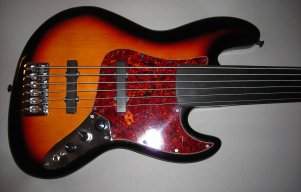
I had a damaged amp, a combo, I connected both my Yamaha RBX 775 and my G&L L-2000 and now they both don't work, they don't sound through the amp, the strange thing about the G&L is that when the active circuit is disengaged, and runs in passive mode, it works fine, I changed both the batteries and discards battery life, I ran both basses through another amp, and the same problem happened, active doesn't work, passive does, what could it be? Could the circuit have been burnt? Please help!! If so, what preamp should I buy?
As far as the G&L is concerned you've burned out the preamp on the G&L. (It happens, I've done it) And the fix is you need to replace the IC (integrated circuit "bug") on the board. This is a job taking some skill and gear so unless you are skilled in circuit board repair I'd advise taking to a tech that can handle the job. And when you have it fixed have him replace the chip with a chip socket. This means the next time you zap it, you won't have to resolder the board which can ruin it. You just pry the old "bug" out and push a new one in. They are cheap...just a few bucks.
On a G&L L2000 the bass the preamp (including tone controls) are not in the circuit when the bass is in passive mode. (which is great backup for an emergency when batteries or preamp dies)
While it's possible you burned something else out on the preamp board, it's not likely since the ICs make better fuses than fuses.
Also note that the G&L preamp is NOT a standard preamp and cannot be replaced by anything but the G&L part without compelely changing the wiring of the bass.

If an amp is damaged there can be stray voltages leaking into the signal path which can damage active devices connected to it. If voltages are high enough they can damage people connected to it.
How would a damaged combo amp burn out the electronics in a bass?
I don't understand how that's possible.
It's possible, just extremely rare.
If you had an input gain stage consisting of a triode vacuum tube with direct coupling, a leak from plate to grid would allow a high voltage direct current to flow through the instrument cable. If something like this happened, a bass preamp may or may not have a capacitor right before its output, to block the DC. If there is a capacitor, the voltage may exceed its rating, as it is common to find capacitors rated as low as 16V in some preamps, versus something as high as 300V, from the amp. Of course, you would probably know about a faulty amp very quickly when something bad happens, such as electric shock.
It's more common for people to fry preamps by running them at 18V, if they are only designed for 9V, and trying to put a battery in backwards, when there is no protection diode.

If you are a diy person and you can solder,try removing the solder from the IC, remove the IC, identify it, and get a new one, perhaps get a better one.It might be the Ic alone, it might be a capacitor, you never know.Better chance was the IC and it is an easy fix.Also, and important, get your amp fixed.In addition you can always solder a 220 or 330nf 400volts cap to protect you from DC shock.It's rare, but it can happen.Invalid Link Removed
Sounds like a cap on the input stage of your amp has failed in a short. This cap should block any DC voltages from making their way out through the instrument cable.
You could check this with a meter set to DCvolts. Plug a cable into the input of your amp and check for voltage between signal and ground at the end of the cable (where you would normally plug in your bass).
You could check this with a meter set to DCvolts. Plug a cable into the input of your amp and check for voltage between signal and ground at the end of the cable (where you would normally plug in your bass).
Sounds like a cap on the input stage of your amp has failed in a short. This cap should block any DC voltages from making their way out through the instrument cable.
You could check this with a meter set to DCvolts. Plug a cable into the input of your amp and check for voltage between signal and ground at the end of the cable (where you would normally plug in your bass).
As I understand, direct coupling is not uncommon on amps. It seems silly to me, but there is not always a capacitor.
As I understand, direct coupling is not uncommon on amps. It seems silly to me, but there is not always a capacitor.
Maybe the designers are trying not to inadvertently create a filter between circuits which would modify the tone. Regardless, I'd being measuring the instrument cable from the amp looking for voltage. Then I'd know what happen to my instruments and then I'd would know where to look to troubleshoot and repair them.


