• TalkBass has been independent since 1998. Add your voice.
    Create a free account to reply to discussions, view embedded media, and browse with fewer display ads.
    Join freeLog in
    Want zero display ads or expanded classifieds tools? Compare plans.

Help identify my bass

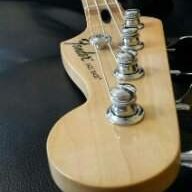
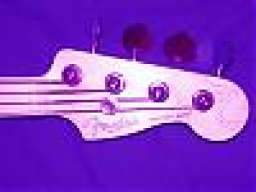
I just came into possession of what I believe to be a fairly cheap MIJ/MIK Jazz Bass copy. I was wondering if you guys could give me more info on what I've got just to satisfy my curiosity or save me from modifying a bass that has some value. I can't find any serial numbers or anything on the bass to identify who made it or where. Thanks.
-Orion
 

Attachments

  • DSCN2299 (Small).JPG
    DSCN2299 (Small).JPG
    55.5 KB · Views: 123
  • DSCN2300 (Small).JPG
    DSCN2300 (Small).JPG
    54.7 KB · Views: 127
Definitly 70's Japanese. Probably not a Tokia. More like a Kent, Global, Teisco, some mail order brand etc. etc. Mod 'till your hearts content. Those don't have an real collector value. You might be able to make it reasonably playable with some effort. Honestly, those era Japanese basses usually make better wall hangers than players.
 
Thank you so much for all your replies. I feel much more informed now. I was actually hoping it wasn't too valuable so I could take it apart, put it back together, see how it works, mod it, etc. before I try any of that on a nicer piece. Thanks again.
-Orion
 
I could be wrong, but I think the zero fret was a Gretsch innovation. At least Gretsch used it, even if they weren't the first.

String nuts can be a problem, getting them cut just right for proper string height, good action, etc (making a good nut from scratch is an accomplisment). But Gretsch, along with Chet Atkins (he helped with some of their guitar designs) figured a zero fret would eliminate string nut problems. Guitars with zero frets use the nut merely as a string holder/spacer.