You mean trombone players actually can play in tune if they want to?
SOME can.


TalkBass has been independent since 1998. Add your voice.
Create a free account to reply to discussions, view embedded media, and browse with fewer display ads.
Join free Log in
Want zero display ads or expanded classifieds tools? Compare plans.
You mean trombone players actually can play in tune if they want to?
Chris,
It's not audible, even clean and recorded. As I said before, one band that I was in used different tunings on all three guitars. I was tuned B-E-A-D-G, the baritone guitar was tuned B-E-A-D-F#-B, and the standard guitar was tuned D-A-D-G-B-E. We played several clean parts in which we were all tapping, using harmonics, and sustained notes. There was no intonation issue that could be heard. I understand the theory behind it and using fretless instruments but there is no need to concern oneself with inaudible variations.
Just to explain myself a little further: well tempered tuning is not just theory. For the last 3 or 4 centuries, our ears got used to well-tempered tuning. So it's fully understandable that you don't have intonation issues with different tuning systems playing together. But that doesn't mean that 'slight variations' (the OP's words) do not exist.
They do. As music history shows, no tuning is perfect in the literal meaning of that word. Tuning is a compromise that can only be close enough to not bother anyone.
I just wanted to throw some light on the reason why someone might say that down tuning makes a difference. Maybe the guitar player mentioned by the OP picked up something somewhere... But he shouldn't make a point of it, since it is meaningless in the practical sense.
Just to explain myself a little further: well tempered tuning is not just theory. For the last 3 or 4 centuries, our ears got used to well-tempered tuning. So it's fully understandable that you don't have intonation issues with different tuning systems playing together. But that doesn't mean that 'slight variations' (the OP's words) do not exist.
They do. As music history shows, no tuning is perfect in the literal meaning of that word. Tuning is a compromise that can only be close enough to not bother anyone.
I just wanted to throw some light on the reason why someone might say that down tuning makes a difference. Maybe the guitar player mentioned by the OP picked up something somewhere... But he shouldn't make a point of it, since it is meaningless in the practical sense.

Just to explain myself a little further: well tempered tuning is not just theory. For the last 3 or 4 centuries, our ears got used to well-tempered tuning. So it's fully understandable that you don't have intonation issues with different tuning systems playing together. But that doesn't mean that 'slight variations' (the OP's words) do not exist.
They do. As music history shows, no tuning is perfect in the literal meaning of that word. Tuning is a compromise that can only be close enough to not bother anyone.
I just wanted to throw some light on the reason why someone might say that down tuning makes a difference. Maybe the guitar player mentioned by the OP picked up something somewhere... But he shouldn't make a point of it, since it is meaningless in the practical sense.

My guitar player and I got into an argument today, and I'm looking for some information to settle the dispute. I am considering going back to standard tuning, while he is going to stay downtuned. He says that if we are not in the same tuning, there could be intonation issues. He basis this on the notion that if our open notes are the same, our intonations will "tolerate" slight variations, as opposed to having different open notes, [/QUOTE}
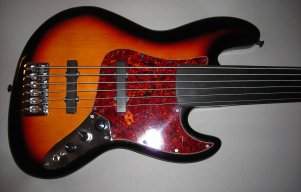
My dear TB brothers, the above guitar player's statement is... correct. Only singers and fretless string instruments can play exactly in tune, while the rest of us will have to accept slight variations.
For info, see:
Well temperament - Wikipedia, the free encyclopedia
A guitard correct? Surely you jest!
He is NOT correct. And your statement is misleading as well. What does it mean to "play in tune"? It can mean two things. You might mean that each note on your instrument matches the "well-tempered" reference frequencies of a tuner. Fretted instruments do this automatically!
But guitards aren't satisfied with this. They notice that music sounds so much better when played in the mathematically pure scale (pythagorean) where notes are in integer ratios. The problem with this (as was beat to death in the Baroque period) that if you tune this way when you play in the key you are tuned to, it sounds wonderful, but if you attempt to play in some other key with the same tuning it sounds nasty.
Well-tempered tuning just evens the differences so the music sounds reasonably decent in ANY key. The spacing of the the frets does this on a guitar. Note that in Pythagorean tuning the notes D# and Eb for example are NOT the same note! This is why you must tune for EVERY key you play in! Enter guitards. They are ALWAYS "tuning" their instruments trying to pull a better "tone" out of it. What they are really doing is attempting to tune a well-tempered instrument to a Pythagorean scale! Needless to say, it can't really be done except with a fretless instrument so they tune and tune forever and get nowhere.
The bottom line here is if you play a fretted instrument you just get an accurate tuner. You set the intonation so all notes on the fretboard are well-tempered and you just freakin' PLAY them! Can you imagine having to change piano tuning every time you change from the key of C to Eb? That is the kind of thing that people are attempting to do here.
By the way. Many years ago on a lark (I was tuning the piano anyway) I tuned my piano to C Pythagorean. I can tell you that instrument sounded SO WONDERFUL when played in C you couldn't believe it! BUT once you tried to play something in Eb (leaving the C tuning) it was the nastiest sounding mess you ever heard! Very instructive. That's what its all about.
"Downtuning" or "open tunings" on guitars does not change the ratio of notes. But is usually used to either give the guitar a fatter tone (tuned down a step or so) or make certain licks and chords easier to finger (non-standard tunings). Note that down-tuning a bass usually does NOT improve the tone the way it can on a guitar. Of course non-standard tuning on a bass can make fingering certain licks, riffs and grooves much easier.
Just to explain myself a little further: I said that the variations are inaudible, not that they don't exist. It's the lack of audible difference that has made it acceptable for centuries. This is why when instruments that are tuned within tolerance are played together that it is pleasing to the ears. I think that we're on the same page, but reading it a little differently.
"Downtuning" or "open tunings" on guitars does not change the ratio of notes. But is usually used to either give the guitar a fatter tone (tuned down a step or so) or make certain licks and chords easier to finger (non-standard tunings). Note that down-tuning a bass usually does NOT improve the tone the way it can on a guitar. Of course non-standard tuning on a bass can make fingering certain licks, riffs and grooves much easier.
Exactly. The Guitard is wrong. Downtuning or not downtuning, the notes still have the same distance between them, unless you leave 440 standard tuning and use a different tuning system.
My guitarist/singer once asked me why I brought my fretless to a gig. I told him I brought it so I could play in tune with his singing.
 very cool, I'm totally gonna use this line