SirMjac28
Patiently Waiting For The Next British Invasion
On a side note has anyone else notice how fast zombies are getting? I don't have chance against these new Usain Bolt zombies.

TalkBass has been independent since 1998. Add your voice.
Create a free account to reply to discussions, view embedded media, and browse with fewer display ads.
Join free Log in
Want zero display ads or expanded classifieds tools? Compare plans.
No! Squiers are not better basses.
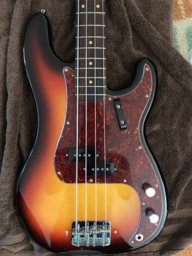
Issue here is that there was a $1200 USA fender in a store that looked way worse than the $200 Squiers.
Fender owes us a better job than that.


This is completely untrue and total garbage. Early MIM fenders might have had a veneer but we're talking way back in the early 90s. I am so sick of these photos popping up again here on talkbass... they don't 'prove' anything. Could be from any factory anywhere. I've never seen anyone actually show photos of a Mexican fender that had a veneer top.The Squiers and even some mexican Fenders have a thin alder veneer put on top of 5-12 parts of unmatched alder or poplar parts. So the comparison isn't fair. Some of the Squiers aren't even alder. As others have mentined before: some players sometimes even love the brutalism and honesty of unmatched parts. I wouldn't care about it if I like the bass. It would influence my decision if it would be ash under a natural finish. Even many of the real vintage Fenders from the 60s are not so well matched parts of wood, often 3-4 pieces.
The early Fullerton reissues are known for this too.
The mexican plant and their multipart bodies:
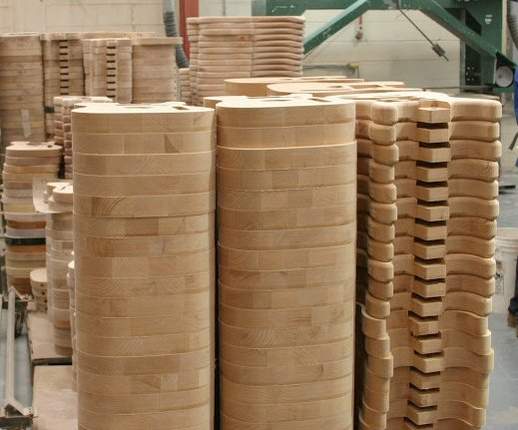
The veneer on top of the parts:
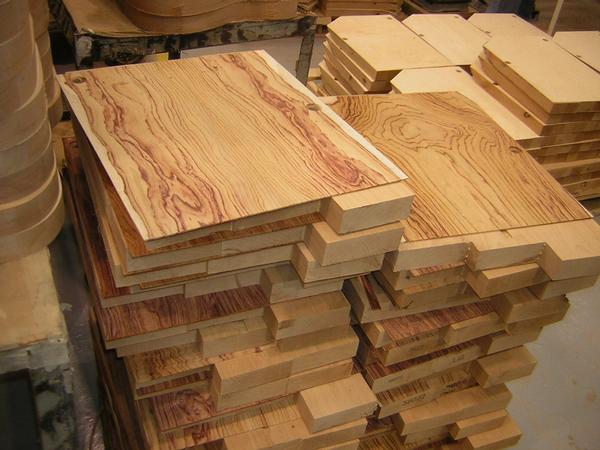

Some of the "mismatched" basses would not appear to be mismatched at all when they were first glued up. It's only when stain is applied that the two pieces take on a different appearance. This is due to the grain in one piece having more runout then the other. Runout exposes more endgrain on the face of the wood. Endgrain soaks up more stain, so the piece with more runout takes on more color and is generally darker than the piece with less.
If I'm paying $1,200 bucks for a bass, I'm paying primarily for the right feel/action, good tone, and so on. I'd buy that bass if it fit my playing/tone criteria.




Interesting botanics point !The reality is that Alder trees are mostly pretty small. I live in an area where Alder grows rampantly, in the wild. It tends to grow in clusters, where trees compete with eachother and do not usually end up with big wide trunks. Instances where alder can grow big and wide, such that you could easily make two piece guitar bodies, are not common. Such stock would certainly cost more.
Now, for an Fender American Deluxe/Elite, it seems like Fender should be rich enough to supply those models with two piece bodies. But, not a lot of brands use Alder, anyway. Maybe that stuff is all around expensive?

The most blatant lack of caring is evident on the Mexican okoume basses they put out. A bass who's most distinguishing feature is a beautiful vertical wood grain and this is how many of them look:
View attachment 960816


I think it demonstrates that Fender doesn't consider matching top woods to be an important feature. It's not in their books.Anyone with functional eyes would notice that. It demonstrates a massive lack of attention to detail.