
Enjoy the benefits of a premium membership!
Upgrade Account
-
TalkBass has been independent since 1998. Add your voice.
Create a free account to reply to discussions, view embedded media, and browse with fewer display ads.
Join free Log in
Want zero display ads or expanded classifieds tools? Compare plans.
You are using an out of date browser. It may not display this or other websites correctly.
You should upgrade or use an alternative browser.
You should upgrade or use an alternative browser.
High-Mass Bridges- Loved or Hated?
- Thread starter Jordandrinkwine
- Start date
More options
Who Replied?

I have never replaced a bridge on a bass. Thought about it... I would not do it looking for sustain. I might try one to see if it would help with dead spots or if increased adjustability was needed for intonation. Maybe even for a quick release if I need that.

I was debating installing a badass II on my P.
It looked so nice and shiny. Way better than the stock one.
The saddles can be adjusted much better.
It's heavier, though and I picked that P bass because it's light.
I run flats and the intonation is fine. There's not much to gain if you never touch your setup.
In the end, I decided against it.
Maybe, one day, I'll have someone fashion me the Ashtray bridge cover from titanium.
It looked so nice and shiny. Way better than the stock one.
The saddles can be adjusted much better.
It's heavier, though and I picked that P bass because it's light.
I run flats and the intonation is fine. There's not much to gain if you never touch your setup.
In the end, I decided against it.
Maybe, one day, I'll have someone fashion me the Ashtray bridge cover from titanium.
The old Baddass bridges were made from junk pot-metal and the tiny adjustment screws got cruddy and sometimes didn't want to move and then you'd strip them.I was debating installing a badass II on my P.
It looked so nice and shiny. Way better than the stock one.
The saddles can be adjusted much better.
It's heavier, though and I picked that P bass because it's light.
I run flats and the intonation is fine. There's not much to gain if you never touch your setup.
In the end, I decided against it.
Maybe, one day, I'll have someone fashion me the Ashtray bridge cover from titanium.
Never understood how they got so popular, I think it was just good timing when they came out.
I put Fender high-mass bridges (along with ultra light tuners) on several basses to address neck dive. Most of the time, it worked well. Personally, I never noticed any changes in tone, sustain, or tuning stability.


I quite like high-mass bridges, though I think that many of them are way over-engineered and over-priced. Fender’s offering hits the sweet spot price- and quality-wise.
Mind you, I’m well aware they don’t do anything for the tone or sustain, but they look much better than the standard MIM bent-plate bridge, and saddle adjustment and string alignment are vastly improved.
Mind you, I’m well aware they don’t do anything for the tone or sustain, but they look much better than the standard MIM bent-plate bridge, and saddle adjustment and string alignment are vastly improved.

I went from the factory chrome bridge on my Washburn to a Hipshot.
Here is the difference:
Here is the difference:
- The saddles in the Hipshot are more adjustable in height, you can change the spacing too. (I needed more flexibility in lowering the G string and remove a large shim)
- Hipshot is black (looks cooler now)
- The brass saddles does make the sound a little different from the cheap metal but you will not hear in the mix.
- Sustain is better, but then again how long are you going to hold the note and use no compression?
- The dead spot I had on the neck moved to the next fret now.

There isn’t as far as I’m concerned. I put bent plates in all my Fenders and FSO’s a few years back and I didn’t notice a single tonal difference. All I noticed was that they were considerably lighter.Sustain vs Resonance
That's the story. A high mass bridge that offers more sustain transfers less energy to the body of the instrument. That means that such a system will not gain as much character from the resonance of the instrument's body. Now it's a question of whether there is a enough of a difference to either the sustain or resonance that you would notice or care about either way.

If a bridge intonates and adjusts how it’s supposed to then their really isn’t a reason to swap it out.
I do prefer bridges where you don’t thread the strings through the ball anchor just because changing strings is faster.
I do prefer bridges where you don’t thread the strings through the ball anchor just because changing strings is faster.
I agree completely. A quick release and intonation range if needed would be the most compelling reason to switchIf a bridge intonates and adjusts how it’s supposed to then their really isn’t a reason to swap it out.
I do prefer bridges where you don’t thread the strings through the ball anchor just because changing strings is faster.
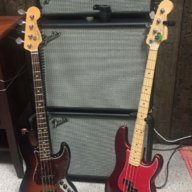
I got around that issue by not changing strings anymoreIf a bridge intonates and adjusts how it’s supposed to then their really isn’t a reason to swap it out.
I do prefer bridges where you don’t thread the strings through the ball anchor just because changing strings is faster.
 .
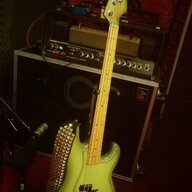
.
if you play w a pick and like nikki sixx it wont make any difference, if you play w your fingers very aggressively, triplets, octaves and such very fast then the adjustment on the hipshots side to side makes a huge difference for me in the reach for the G string, it is far easier if adjusted up into the neck a bit. i've tested this switching basses back and forth and it makes a BIG difference. remember fender designed these basses to be manufactured cheaply and quickly... easily by low skill folks.. there was no masterful testing involved whatso ever.. first shot they perfected if huh? ok. beyond that i don't have acoustic resonance equipment here but two things come to mind... the hot rod factor of simply enjoying the process of customizing your bass and the other the mental feeling of how a car runs smoother after a oil change... yeah.. does it really? yeah, don't let all the naysayers ruin yer fun... do what YOU want.. beyond that my name is Brian and im going to be the first to enjoy myself.
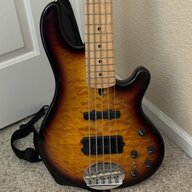
What do you think of this from Ernie Ball website.
By Sterling Ball, CEO of Ernie Ball Music Man.
At the end of my teen years, I was one of Leo Fender’s beta testers. Back then, they didn’t call it beta testing, they called the process “bandstanding.” What it really meant was giving Leo your honest opinion about an electric guitar or bass after playing it live at your own shows and jams. How did I get that gig? I grew up around Leo Fender and the Fender Company. My father was one of the original dealers and endorsees, and also did beta testing for Leo from the late 1940’s through the 1960’s. My godfather, Tommy Walker, was one of the original partners in Music Man. I think that Leo used me for a few reasons. I was young and considered the “rock guy,” as most of Leo’s buddies were old country guys. But I think the biggest reason was that I wasn’t afraid to tell Leo what I thought. Leo had the basic idea for the StingRay bass down. He wanted the 3+1 headstock for differentiation. He loved the big magnets and the Humbucking pickup. But what he really loved was that bridge with big stainless barrel saddles. When you visited “The Lab,” he would have you put a phillips screwdriver in the saddle and the pin end on the cartilage of your ear. Then, he would make you pluck the note to feel the vibrations through the screwdriver. It was really important to Leo to feel that string ring. See, Leo was hard of hearing and that’s why his 1970’s guitars and basses were so bright. They sounded just fine to him. It turns out he was right by accident because slap bass was starting to get popular around that time.
By Sterling Ball, CEO of Ernie Ball Music Man.
At the end of my teen years, I was one of Leo Fender’s beta testers. Back then, they didn’t call it beta testing, they called the process “bandstanding.” What it really meant was giving Leo your honest opinion about an electric guitar or bass after playing it live at your own shows and jams. How did I get that gig? I grew up around Leo Fender and the Fender Company. My father was one of the original dealers and endorsees, and also did beta testing for Leo from the late 1940’s through the 1960’s. My godfather, Tommy Walker, was one of the original partners in Music Man. I think that Leo used me for a few reasons. I was young and considered the “rock guy,” as most of Leo’s buddies were old country guys. But I think the biggest reason was that I wasn’t afraid to tell Leo what I thought. Leo had the basic idea for the StingRay bass down. He wanted the 3+1 headstock for differentiation. He loved the big magnets and the Humbucking pickup. But what he really loved was that bridge with big stainless barrel saddles. When you visited “The Lab,” he would have you put a phillips screwdriver in the saddle and the pin end on the cartilage of your ear. Then, he would make you pluck the note to feel the vibrations through the screwdriver. It was really important to Leo to feel that string ring. See, Leo was hard of hearing and that’s why his 1970’s guitars and basses were so bright. They sounded just fine to him. It turns out he was right by accident because slap bass was starting to get popular around that time.
Which is why the G&L pickups are so abrasive.What do you think of this from Ernie Ball website.
By Sterling Ball, CEO of Ernie Ball Music Man.
At the end of my teen years, I was one of Leo Fender’s beta testers. Back then, they didn’t call it beta testing, they called the process “bandstanding.” What it really meant was giving Leo your honest opinion about an electric guitar or bass after playing it live at your own shows and jams. How did I get that gig? I grew up around Leo Fender and the Fender Company. My father was one of the original dealers and endorsees, and also did beta testing for Leo from the late 1940’s through the 1960’s. My godfather, Tommy Walker, was one of the original partners in Music Man. I think that Leo used me for a few reasons. I was young and considered the “rock guy,” as most of Leo’s buddies were old country guys. But I think the biggest reason was that I wasn’t afraid to tell Leo what I thought. Leo had the basic idea for the StingRay bass down. He wanted the 3+1 headstock for differentiation. He loved the big magnets and the Humbucking pickup. But what he really loved was that bridge with big stainless barrel saddles. When you visited “The Lab,” he would have you put a phillips screwdriver in the saddle and the pin end on the cartilage of your ear. Then, he would make you pluck the note to feel the vibrations through the screwdriver. It was really important to Leo to feel that string ring. See, Leo was hard of hearing and that’s why his 1970’s guitars and basses were so bright. They sounded just fine to him. It turns out he was right by accident because slap bass was starting to get popular around that time.

I think I'll wholeheartedly agree with this. I have never noticed any difference/benefit of high mass vs "normal" mass bridges, but ease of adjustment is super-important.Increased adjustability is a demonstrable benefit of many bridges. Any other benefits that are often brought up are shenanigans, IMO. A threaded saddle bent plate is all you need.
I may be missing the context here, but are you saying transfering vibrfations from the strings to the guitar body is desirable? If that is the statement, I disagree - to maintain sustain, you want to keep the vibration energy in the strings, not transfer it to the body. This is diametrically opposite to acoustic guitars, where transfering the vibrations to the body is beneficial for making the sound audible.The more mass there is in the bridge, the less it will vibrate. Think of an acoustic guitar top. A thick one doesn't vibrate well and produces less sound. A thin one offers more sound because it vibrates better.
In order to transfer energy, which is in the form of a vibration, a material has to be able to vibrate freely. If it's not vibrating it can't pass it on. And there is no other form of energy involved, so no vibration in the bridge means no vibration to the body.

Turnaround
Commercial User
I am saying that a higher mass bridge transfers less energy to the body than a lower mass. Whether that's desirable or not depends on what you are looking for. If you want sustain, then less energy transfer to the body is a good thing. But if you are looking to gain the coloration the wood contributes to the sound, then some vibration transfer is desirable. That is because those vibrations that are transferred to the body are no longer in the string. A loss of certain frequencies in the string will be detected by the pickup, thus affecting the sound. That will give a certain colour to the sound - perhaps desirable, perhaps not. It's a trade-off.I may be missing the context here, but are you saying transfering vibrfations from the strings to the guitar body is desirable? If that is the statement, I disagree - to maintain sustain, you want to keep the vibration energy in the strings, not transfer it to the body. This is diametrically opposite to acoustic guitars, where transfering the vibrations to the body is beneficial for making the sound audible.
Yup, I agree with almost all of that. Seems like I did miss a fair bit of context, sorry!I am saying that a higher mass bridge transfers less energy to the body than a lower mass. Whether that's desirable or not depends on what you are looking for. If you want sustain, then less energy transfer to the body is a good thing. But if you are looking to gain the coloration the wood contributes to the sound, then some vibration transfer is desirable. That is because those vibrations that are transferred to the body are no longer in the string. A loss of certain frequencies in the string will be detected by the pickup, thus affecting the sound. That will give a certain colour to the sound - perhaps desirable, perhaps not. It's a trade-off.
But I am not convinced by the premise that a higher mass bridge will transfer less vibrations to the body. I am not sure, it just doesn't seem obvious to me that this would be the case. I remember doing some vibrational modes simulations of micro-cantilevers. That was a decade ago, I don't remember what were the factors determining energy loss of the cantilever due to propagation to the substrate. I'll have to try to look it up, if I can.
Last edited:


