Well to quote Patrick Swayze "aka" Dalton from the cinematic masterpiece Roadhouse, "Opinions vary".His points seem ok to me...

TalkBass has been independent since 1998. Add your voice.
Create a free account to reply to discussions, view embedded media, and browse with fewer display ads.
Join free Log in
Want zero display ads or expanded classifieds tools? Compare plans.
Well to quote Patrick Swayze "aka" Dalton from the cinematic masterpiece Roadhouse, "Opinions vary".His points seem ok to me...

Violins will never have frets, just like bassoons.
Whole thing is dumb.

The OP included violins, cellos, and other acoustic stringed instruments.Usually they don't.
Like other electric basses, they have a trussrod used to control the curvature. Without strings on a fretless neck is flat.
What about the other unfretted instruments, like trombones, flutes and bassoons? They've never had frets either.

What about the other unfretted instruments, like trombones, flutes and bassoons? They've never had frets either.
Calling the "violin" family unfretted is missing the mark as they were never intended to be fretted.

How Do Un-fretted Instruments Work?
Actually, you work them.

Most of what you said is complete horse hockey. I'm gonna go get coffee now.
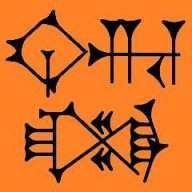
I think it is likely that unfretted instruments are older than fretted. I also think it is unlikely that they are far older however. It isn't much of a leap from unfretted to fretted and the advantages when trying to teach a beginner are obvious. Some modern violin family teachers will put tape markers on the fingerboards of beginner's instruments in a few places to help them get started with finding the notes. I'd be surprised if the first experiments with "frets" occurred more than a year after the invention of the first stringed instrument with a fingerboard for stopping the notes. That event is lost in the mists of ancient prehistory, we can never know when and where these things were first invented. We can go back to around 3000 BC however, thanks to the Mesopotamian love of music and their invention of writing. There is a fascinating website called Ancient Lyre which has [Invalid or Expired Link Removed] where you can find this quotation from an old clay tablet written in cuneiform, the writing depicted in my avatar:
The long-necked lute has a history even more ancient than that of the lyre! It seems to have first appeared in Sumer, in ancient Mesopotamia, as early as 3500BCE...
"When I fix the frets on the lute, which enraptures my heart, I never damage its neck; I have devised rules for raising and lowering its intervals."
(Invalid Link Removed)
Frets were not always bits of wire embedded in the fingerboard. On the viola da gamba family of instruments they were bits of gut strings tied around the neck and they could be moved to tune the instrument for different keys in the days before the even tempered scale. So even old instruments that appear not to have frets may have been played fretted. If the instrument is old enough for the strings to have decayed to dust any gut frets it might have had at one time would likewise be dust. On the other hand when ancient King Culgi boasts about his skill at fixing frets without damaging the neck you get the feeling he was talking about wire frets since tied on gut frets would hardly damage a neck. In any event frets are very, very old and there is no point to beating one another up over which came first, fretted or fretless. Some of the very earliest stringed instruments we have concrete evidence for were fretted. If you have any familiarity with music from 3000 BC you know that music has changed far more than frets since that time!
In the most general definition of the word most modern instruments are "fretted" or more properly "stopped": they will only sound notes from of a collection of preset notes defined when the instrument was constructed. Bassoons have the equivalent of frets, slide trombones do not, valved trombones do!
Most of what you said is complete horse hockey.


He should have said REAL violins. All of these fretted orchestral instruments are junk. Pointless junk.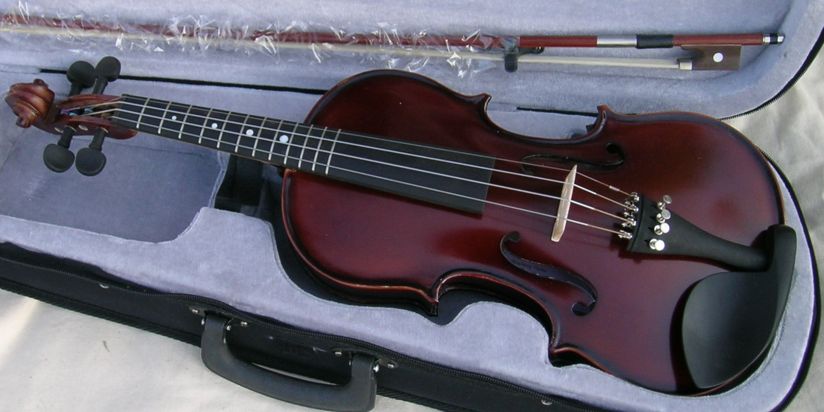
Au Contraire, Mon Frère!