
Enjoy the benefits of a premium membership!
Upgrade Account
-
TalkBass has been independent since 1998. Add your voice.
Create a free account to reply to discussions, view embedded media, and browse with fewer display ads.
Join free Log in
Want zero display ads or expanded classifieds tools? Compare plans.
You are using an out of date browser. It may not display this or other websites correctly.
You should upgrade or use an alternative browser.
You should upgrade or use an alternative browser.
How Do You Evaluate Strings?
- Thread starter DianaBass
- Start date
More options
Who Replied?


For me:
- An articulate pure note, with a slightly 'burpy' midrange harmonics in fingerstyle;
- The ability to excite lots of top-end harmonic 'zing' (for rounds) or 'twang' (for flats) with a pick;
- No premature sustain loss;
- Longevity.

Well, you sadly gotta try them. What I've found is that music store employees rarely know your needs and people on the internet are often very opinionated and believe that you have to like a certain thing. You could just go with the very popular choices and try those out.This isn't a "which strings should I get?" question. I have 3 basses, all short scale. A new Gretsch Jet Jr, Sterling Stingray, and an Ibanez Mikro. They all came with their own style strings.
- The EB strings sound rich and thumpy, but they're roundwound and hard to wrestle with.
- The Ibanez strings are okay, not really deep sounding, but easier to play. Also roundwound.
- And my new Gretsch, which is amazing, but the strings are clanky and loud and tuned they sound an octave higher than the others (is that even a thing?.)
I'm thinking flatwound, but my question is this. HOW do I decide? Do I need to have each one restrung and keep trying until I find one I like? Will the person doing the work know, if I tell them how much I love the EB strings but they're too hard to play, which ones to recommend? How did you land on your favorite stings?
Generally I've found that roundwounds sound the best to me and steel strings sound better to me than nickelwound. But steel strings will hurt your fingers more and they're objectively more likely to drag along your fingers, which makes them appear sticky to many people. I do however love them and that's why I use them. There's also strings that sound good when they're brand new and strings that sound better when they're older. Loads of subjectivity on this topic in particular.
Now, what I exactly did to find my favorite strings was look into general directions. Meaning I first looked at construction. I tried flatwounds and roundwounds and found that flatwounds are not my thing. I then looked into materials. After that I tried out different brands and chose the most generic normal size that each brand would sell. And at the end I just chose a brand I liked and tried all different kinds of gauges of that brand on all my basses.
If you just choose whatever someone recommends and you believe that those strings sound fine you might run the risk of never finding strings that you would like even more. And yeah, strings are probably one of the most important variables in your entire setup. Not because of the sound, but because they're the only thing that you will be constantly in contact with while playing your instrument.
And as a sidenote I really want to recommend you to not give up on roundwounds. Atleast not if it's just a comfort thing. You'll get used to any set of strings no matter how harsh they appear to be. You'll get used to thicker gauges if they feel better to you and your fingers will also get used to strings that tend to destroy your fingertips.

Even as a newer bass player, I am all about tone. It's like I know the tone I'm after... but didn't know if I just keep having to get them restrung. So, is restringing something I could do? I know my exes did.
The only way to find out which strings you like on your basses is to try them on your basses. You do not need a guitar tech to change strings, it's fairly simple: cut the new strings to the correct length, remove, replace and tune strings one by one.
The problem is, after changing to a different type of strings, your bass will probably need a new setup due to different string pull and other physical properties. Setting up a bass needs a little practie, but you can easily learn it from watching a couple YouTube videos. Or have someone show you how to do it.
A basic bass setup consists of the following steps, which can be remembered using thew mnemonic "TRAIN":
T - Tune
R - Relief (Adjust the truss rod to set the desired neck relief, i.e. bowing of the neck)
A - Action (Adjust the bridge saddle height to set the desired action, i.e. string height)
I - Intonation (Adjust the bridge saddle position to set intonation, i.e. make sure the note on the 12th fret is exactly an octave higher than the open string)
N - Noodle

Each of the R/A/I steps consists of multiple steps of adjustment and measurement until the desired result is reached. Don't forget to always re-tune your bass before measuring things after every adjustment.
Here is a video explaining how it works in more detail:
Last edited:

I'm thinking flatwound, but my question is this. HOW do I decide? Do I need to have each one restrung and keep trying until I find one I like? Will the person doing the work know, if I tell them how much I love the EB strings but they're too hard to play, which ones to recommend? How did you land on your favorite stings?
Some great help could be if you found a string expert in your neck of the woods. In Germany, there is a small music shop that specializes in strings and the boss is an authority on that, with deep inside knowledge.
I gave them a call, had specific questions about flatwound strings for 6 string basses and got answers. And a suggestion. And it was golden.
The more you tried for yourself, the more those people can actually help you. If you only played one type of string that you liked and one type of string that you disliked, it's a bit of a dark area to practice reliable guesswork, but the more info you can provide, the more light gets shed on that, so a bit of trial and error is always involved. With flatwound strings that is a long journey, because they have a break in period and then it takes them about as long as the life expectancy of two sets of rounds to reach their final state.
Some people consider them expensive, but given that they can last for more than a decade, they are actually quite cheap.

If you want to make an “educated” guess about what strings will work on a given bass, well….the way you get educated about what strings work for you is to buy a few different sets and try them. There really isn’t a shortcut to that process.
The thing you can figure out from checking things out on line is if the strings will fit a bass - for that, you need to know the distance from where the ball end anchors in the bridge or body to the tuner post for the lowest tuned string. You should also know that a string stretches (about a quarter inch) when tuned to pitch.
The thing you can figure out from checking things out on line is if the strings will fit a bass - for that, you need to know the distance from where the ball end anchors in the bridge or body to the tuner post for the lowest tuned string. You should also know that a string stretches (about a quarter inch) when tuned to pitch.

Thanks! Well, I really like the sound of my Stingray. It is a nice dark thumpy sound - I'm thinking like Love - Little Red Book. I'm playing mostly blues, and want a heavy sound, because I love things like Born Under a Bad sign. Though I love Killing Floor, the bass parts are a bit to twangy for me. Does that help at all? Sounds like most flatwouns won't give me that heaviness, but I heard they're easier to play when you have small hands like mine. I mean, the strings on my Gretsch, are literally thin, like for a children's guitar and that is way overboard.
This helps a lot!
It sounds like you might prefer flatwounds as the music your show interest in was recording with those kinds of strings. A couple things to keep in mind:
1. You play short scale basses, so you’ll want to purchase short scale string sets.
2. Flats tend to be a bit higher tension than rounds (ie. stiffer when plucking). This might require a slight truss rod adjustment after install to keep your bass’s action how you like it - that meaning, how straight the neck is and how high off the strings are from the fretboard.
A couple videos for you:
Here’s a flatwound vs round wound comparison video. This may help you decide which route to take:
But since you do seem to like the sound of flats from the music you’ve mentioned, here’s a flatwound video shootout worth watching. The reviewer plays the different sets both solo and along with a backing track which might help you get a feel for which brand to try. From there, you will want to search for short scale flats from each of the brands:

Dear @DianaBass just my two cents as a guy who spent a lot of money in flatwound strings before coming to a couple of usable conclusions:This isn't a "which strings should I get?" question. I have 3 basses, all short scale. A new Gretsch Jet Jr, Sterling Stingray, and an Ibanez Mikro. They all came with their own style strings.
- The EB strings sound rich and thumpy, but they're roundwound and hard to wrestle with.
- The Ibanez strings are okay, not really deep sounding, but easier to play. Also roundwound.
- And my new Gretsch, which is amazing, but the strings are clanky and loud and tuned they sound an octave higher than the others (is that even a thing?.)
I'm thinking flatwound, but my question is this. HOW do I decide? Do I need to have each one restrung and keep trying until I find one I like? Will the person doing the work know, if I tell them how much I love the EB strings but they're too hard to play, which ones to recommend? How did you land on your favorite stings?
1) LaBella Deep Talking Flats (DTF) 960FL (.43 - .104): super smooth, acceptably stiff and the real epitome of a thumpy, punchy flatwound strings tone!
2) TI JF344: super flexible, tonally interesting and lifetime lasting flatwound strings.
Don’t waste money and time looking for something else; either one you’ll choose amongst these two kinds of flats it will cause a lot of satisfying moments between you and your bass.
However, check which exact iteration of the above strings is more suitable for short-scale basses, which I’m not an expert of

PS
TI stays for Thomastik Infeld (it took to me some time to understand this here on TalkBass ahahah)

DianaBass, I read all three of your concerns and to address the first two, I'd suggest DR Lo-Riders. They are hex-cored so a little more rigid and they have booty to round out the bottom. I have a Sterling Stingray and these strings do the trick after trying the original EB Slinky, Dunlop Super Brights, Marcus Miller Dunlop Super Brights which I too wrestled with the strings being too floppy.

- Sep 9, 2007
- 5,309
- 4,977
- Disclosures
- Endorsing Artist: Eventide, GHS Strings, G&L Guitars, NS Design, Tsunami Cables
I try to match the string to the bass. I rarely use the same string set on each of my basses.
I do this too.
I do have a “go to” set that, when I get a new bass, I’ll throw on as a litmus test. I know those strings well enough, I can figure out what’s working - and what’s not - with that bass and adjust string selection accordingly.

OP, did you happen to buy your Gretsch used? You mentioned that it sounds like it's tuned an octave up, and that the strings are much thinner. It is definitely a thing for people to tune a bass an octave up with thinner (guitar range) strings and call it a piccolo bass.
But IME, it's also true that sometimes the way your ear hears the different harmonics of different basses, it can sound very different—even as something like a fishy octave happening. If you didn't buy it used (and the person selling would very likely have said something about a piccolo bass), you probably have a light gauge but standard tuning and some weird harmonics messing with how the sound hits you.
But IME, it's also true that sometimes the way your ear hears the different harmonics of different basses, it can sound very different—even as something like a fishy octave happening. If you didn't buy it used (and the person selling would very likely have said something about a piccolo bass), you probably have a light gauge but standard tuning and some weird harmonics messing with how the sound hits you.


With me, its all about feel; if they don't feel comfortable to my fingers, then I don't care what they sound like. It took a long time with flats, just hated that initial " breaking in " period with most of them, until GHS Precision Flats came out. No breaking in period, no stickiness, sound great right out of the package, smooth feel. As far as other types, I use Fender Nickel Rounds, after trying all the usual suspects. They get a nice smooth feel, for rounds, very quickly, don't seem to wear out that fast; I change maybe twice a year. But, pretty subjective topic, imho.

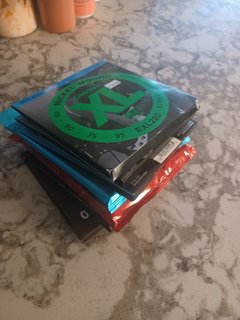
Im a "new as possible" strings guy: I spend a lot of money on strings
I change them so fast and regular that (although I have preferences) the feel differences are negligible and the only things I really consider are "Are They Nickel Rounds, preferably .40s, and are they on sale?" .....I always have several packs ready to go from sales
Besides how they feel, the tone(s) you will want to get will play heavily into your choice. Nobody here can really answer that, unfortunately. The bass in questions setup will also play into it as tweaks need to be done (often) when going to flats from rounds or vise versa - many folks on TB like broken-in flats and their instruments are setup to accommodate that. Mine are setup for rounds, save for two basses - one with flats and one with tapewounds - I use for recording purposes if necessary
I change them so fast and regular that (although I have preferences) the feel differences are negligible and the only things I really consider are "Are They Nickel Rounds, preferably .40s, and are they on sale?"
.....I always have several packs ready to go from sales
HOW do I decide? Do I need to have each one restrung and keep trying until I find one I like? Will the person doing the work know, if I tell them how much I love the EB strings but they're too hard to play, which ones to recommend? How did you land on your favorite stings?
Besides how they feel, the tone(s) you will want to get will play heavily into your choice. Nobody here can really answer that, unfortunately. The bass in questions setup will also play into it as tweaks need to be done (often) when going to flats from rounds or vise versa - many folks on TB like broken-in flats and their instruments are setup to accommodate that. Mine are setup for rounds, save for two basses - one with flats and one with tapewounds - I use for recording purposes if necessary
Last edited:

Round wounds on a p bass with dimarzio p pickups is the combination that works for me...from slapping to popping to needing a meaty bass growl only a p can cut through with two screaming Marshall's on either side of you..Round wounds on a fender precision is the combination that works for me
This isn't a "which strings should I get?" question. I have 3 basses, all short scale. A new Gretsch Jet Jr, Sterling Stingray, and an Ibanez Mikro. They all came with their own style strings.
- The EB strings sound rich and thumpy, but they're roundwound and hard to wrestle with.
- The Ibanez strings are okay, not really deep sounding, but easier to play. Also roundwound.
- And my new Gretsch, which is amazing, but the strings are clanky and loud and tuned they sound an octave higher than the others (is that even a thing?.)
I'm thinking flatwound, but my question is this. HOW do I decide? Do I need to have each one restrung and keep trying until I find one I like? Will the person doing the work know, if I tell them how much I love the EB strings but they're too hard to play, which ones to recommend? How did you land on your favorite stings?
If you are thinking flats, try a set of Cobalts. I have looked at a variety of strings, including the Fenders, Dunlops, Chromes, TIs, you name it. I really like the Cobalts best, the tension is about right, the sound is loud and clear, they also seem to stay pretty consistent sounding, not like LaBella or others that start out kind of bright then “settle in”. For rounds I like the Kalium hybrids balanced, I’m a huge fan of nickel strings, I have a couple of sets for each bass and play on them awhile, then ultrasonically clean them and rotate between the sets, gives me a very consistent sound, which I like.

I don’t. Whatever strings are available locally are the ones that go on my basses. I’ve tried all the major brands and a handful of top tier custom order brands. Personally, I’ve never noticed much of a difference to care enough (especially live on a stage with a full band). All I know is I don’t like the feeling of Elixir nor the zing accompanied with new stings.

I don’t. Whatever strings are available locally are the ones that go on my basses. I’ve tried all the major brands and a handful of top tier custom order brands. Personally, I’ve never noticed much of a difference to care enough (especially live on a stage with a full band). All I know is I don’t like the feeling of Elixir nor the zing accompanied with new stings.
You're Bill Murray?

Dear @DianaBass just my two cents as a guy who spent a lot of money in flatwound strings before coming to a couple of usable conclusions:
1) LaBella Deep Talking Flats (DTF) 960FL (.43 - .104): super smooth, acceptably stiff and the real epitome of a thumpy, punchy flatwound strings tone!
2) TI JF344: super flexible, tonally interesting and lifetime lasting flatwound strings.
Don’t waste money and time looking for something else; either one you’ll choose amongst these two kinds of flats it will cause a lot of satisfying moments between you and your bass.
However, check which exact iteration of the above strings is more suitable for short-scale basses, which I’m not an expert of
PS
TI stays for Thomastik Infeld (it took to me some time to understand this here on TalkBass ahahah)
For me personally, I agree. I feel both are among the "best of breed" flats, though the Jazz flats are more "orchestral".
I would observe only that the TI Jazz Flats feel "mushy" under the strings, but I learned on "bridge cables" back when dinosaurs still roamed...


