
My bass sound is OK, but I'm looking to make it fuller for use in a three-piece hard rock band. I'm wondering how you go about it?

Enjoy the benefits of a premium membership!
Upgrade Account
-
TalkBass has been independent since 1998. Add your voice.
Create a free account to reply to discussions, view embedded media, and browse with fewer display ads.
Join free Log in
Want zero display ads or expanded classifieds tools? Compare plans.
You are using an out of date browser. It may not display this or other websites correctly.
You should upgrade or use an alternative browser.
You should upgrade or use an alternative browser.
How do you get a HUGE bass sound?
- Thread starter bdplaid
- Start date
More options
Who Replied?
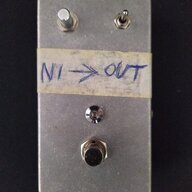

I just went through this myself. I figured out that I liked a drive pedal with a blend control. That way you can add some upper frequency/harmonic content without losing the low end. I turned up the treble on my overdrive and found what I was looking for was there all along.
Other ideas are to use an octave pedal and play in the middle of the neck. I do this sometimes too, but an octave pedal is not a sound I use as much as overdrive.
Other ideas are to use an octave pedal and play in the middle of the neck. I do this sometimes too, but an octave pedal is not a sound I use as much as overdrive.
Mesa D800+
Mesa 115, either 1 or two of them, or Mesa 212
Diamond Comp, Hypergravity Comp, Boss OC5, TCE Flanger.
Other various and sundry pedals.
The sounds I get from this rig are stellar, but I'm looking for huge when the guitarist drops out to take a solo. I have a few things going on, But I want to see what you guys do.
Mesa 115, either 1 or two of them, or Mesa 212
Diamond Comp, Hypergravity Comp, Boss OC5, TCE Flanger.
Other various and sundry pedals.
The sounds I get from this rig are stellar, but I'm looking for huge when the guitarist drops out to take a solo. I have a few things going on, But I want to see what you guys do.
For larger and outdoor gigs, I use a Carvin MB15 200w combo, and when I want even more oomph, I add their matching 115MBE extension cabinet that ups the amp to 250w. For 15" cabinets, they're fairly compact and light enough.

What I did in a similar scenario (loud 'n heavy 3-piece)was go with an always-on Darkglass VMT.Mesa D800+
Mesa 115, either 1 or two of them, or Mesa 212
Diamond Comp, Hypergravity Comp, Boss OC5, TCE Flanger.
Other various and sundry pedals.
The sounds I get from this rig are stellar, but I'm looking for huge when the guitarist drops out to take a solo. I have a few things going on, But I want to see what you guys do.

The more I play with it, the more I think I'm looking to add a neck pickup.

I find a bit of distortion/OD (but not total grind) makes it sound bigger. I also have been known to use an Octave pedal to enlarge the sound of my bass in a power trio format. -1 Octave definitely can deepen your sound (of course), but be careful of mud. Octave with a blend keeps your primary/unaffected signal more prominent in the mix. Octaver with -1 and +1 can also make it sound "bigger" too, although perhaps a bit over-processed.
The other thing you will have to reckon with is if your going thru FOH, you should communicate that with the sound techs so they can deal with the signal change from using any FX
good luck!
The other thing you will have to reckon with is if your going thru FOH, you should communicate that with the sound techs so they can deal with the signal change from using any FX
good luck!
Last edited:
I often started off the song with my normal tone. That allows space for the guitar.
When the guitarist took a solo I would add an OC2 and play up the octave. That fills out and increases the intensity
Revert (or not) for the rest of the tune.
Use an OD in a similar pattern.
When the guitarist took a solo I would add an OC2 and play up the octave. That fills out and increases the intensity
Revert (or not) for the rest of the tune.
Use an OD in a similar pattern.
Worked for Jack Bruce and Felix Pappalardi, but they also had walls of cranked tube amps.The more I play with it, the more I think I'm looking to add a neck pickup.

Experiment with plucking finger placement if you're not already.
If you are adding a neck PU, I would recommend a reverse P, like Lee Sklaar.The more I play with it, the more I think I'm looking to add a neck pickup.
The reverse flattens the bottom end and this allows you to add more bass on the preamp.
That gives me a heavier sound over a wider range.
My big E string sound is constrained and more similar to the others.
There is less finger noise and muddy rumble. It's like a HPF but at signal source.
Lovely rig!
I would boost, add my mbd-2 or whatever to get a bit dirtier with blend and adjust eq. Adjust plugging.
Bedroomwarrior tho.
I would boost, add my mbd-2 or whatever to get a bit dirtier with blend and adjust eq. Adjust plugging.
Bedroomwarrior tho.

Be louder for starts. Lots of those powerful bass and guitar tones you love were SVTs or 360s or similar, dimed with a mic.
Next thing AFTER your amp being as loud as it can go before undesired distortion is to pull up your mids.
By scientific survey a full 87% of TB threads recommend smile EQ but mids are how you can thicken and still be heard above those snares and guitar chords.
Next thing AFTER your amp being as loud as it can go before undesired distortion is to pull up your mids.
By scientific survey a full 87% of TB threads recommend smile EQ but mids are how you can thicken and still be heard above those snares and guitar chords.
Kicking on an octave pedal is definitely my go-to for more "oomph". However, since you already have that option in your setup here are some other things I occasionally do:
1. Drive, but now how you're probably thinking. On my Fairfield Barbershop (important, because I wouldn't try this trick with certain other, more aggressive flavors of drive) I set the gain to be fairly tame, such that I have to really dig in to get breakup. I adjust the volume to be just a bit more than when it's not in the signal path. The next pedal in my chain is my comp (Opti-FET), which gets hit a little harder by the hotter signal from the Barbershop. It's extra saturation, grit, and perceived volume all in one. You can also press a comp harder with a clean boost if you prefer not to have the dirt in there. Just make sure you don't slam the comp too hard; we're going for extra "oomph", not necessarily tons of extra actual volume. Being a little louder is okay, but you don't want to drastically mess with the overall band mix.
2. I've been playing around with having multiple compressors on my board. A classic studio trick is to treat bass with two comps in series: first knocking the transients down with an 1176 set to fast attack and release, then running the result through an LA-2A with slower settings and fairly low gain reduction to add thickness. On my pedalboard, I normally run my Opti-FET with gentle settings, sort of filling the thickening role of the LA-2A in the example. I have a second comp before it in the chain (Smoothie, not chosen specifically for this usecase but just what I had on hand) set to clamp down more aggressively on transients, darken the tone a tiny bit with the tilt EQ, and boost the output level a small amount. The added op gain makes up for the reduction in the peak transients, and the signal passes to the Opti-FET at a level that works really well for what the Opti-FET excels at. Tons of extra thickness available with this method.
Hope this gives you some inspiration!
1. Drive, but now how you're probably thinking. On my Fairfield Barbershop (important, because I wouldn't try this trick with certain other, more aggressive flavors of drive) I set the gain to be fairly tame, such that I have to really dig in to get breakup. I adjust the volume to be just a bit more than when it's not in the signal path. The next pedal in my chain is my comp (Opti-FET), which gets hit a little harder by the hotter signal from the Barbershop. It's extra saturation, grit, and perceived volume all in one. You can also press a comp harder with a clean boost if you prefer not to have the dirt in there. Just make sure you don't slam the comp too hard; we're going for extra "oomph", not necessarily tons of extra actual volume. Being a little louder is okay, but you don't want to drastically mess with the overall band mix.
2. I've been playing around with having multiple compressors on my board. A classic studio trick is to treat bass with two comps in series: first knocking the transients down with an 1176 set to fast attack and release, then running the result through an LA-2A with slower settings and fairly low gain reduction to add thickness. On my pedalboard, I normally run my Opti-FET with gentle settings, sort of filling the thickening role of the LA-2A in the example. I have a second comp before it in the chain (Smoothie, not chosen specifically for this usecase but just what I had on hand) set to clamp down more aggressively on transients, darken the tone a tiny bit with the tilt EQ, and boost the output level a small amount. The added op gain makes up for the reduction in the peak transients, and the signal passes to the Opti-FET at a level that works really well for what the Opti-FET excels at. Tons of extra thickness available with this method.
Hope this gives you some inspiration!
Last edited:


" . . . . by God, THAT oughta do it! . . . "

MDBass
Supporting Member
- Nov 7, 2012
- 8,590
- 14,892
- Disclosures
- Endorsing Artist: Dingwall-Fender-Bergantino-Dunlop-Tech 21-Darkglass-Nordstrand
Hard to help without knowing what you’re currently working with and how it’s falling short for your goals, but “fuller” usually means “more displacement” for me, even if you’re not wanting for volume.My bass sound is OK, but I'm looking to make it fuller for use in a three-piece hard rock band. I'm wondering how you go about it?
How much speaker you actually need is all personal preference, but there is a BIG difference in the feel of a 112 rig v a 412 both pushing the same dB output.
If you REALLY want a huge sound get another amp and a A B splitter box and run one amp /speaker per side. You can even run one amp with a little more treble and one with a little more bass. I also find that my Bearfoot Blueberry pedal adds a little bit of grit when I need it.

I'd just pick up a TC Spark Booster and see if that scratches the itch. It's one of the least expensive of the go-to pedals for that application around here, and is transparent enough so it won't mess with the sound of your awesome rig too much.
Last edited:


