• TalkBass has been independent since 1998. Add your voice.
    Create a free account to reply to discussions, view embedded media, and browse with fewer display ads.
    Join freeLog in
    Want zero display ads or expanded classifieds tools? Compare plans.

Double Bass How I get a bigger sound?

Cole Davis is a very solid young player. I wouldn't put him forward as anywhere to start with a huge sound, especially since he seems far more into clarity, fluidity and precision. Those things are not always at odds, but I don't see his style getting past many drummers without an amp.
Dennis Irwin would be a place to start, as would William Parker.
 
In your right hand, you can get more power if you use more arm and less fingers until you need the speed of fiingers. Sprios or gut are going to be a lot louder and clearer than any other string. I don't recommend this everyone, but I recommend two things:
1. Spiro solos
2. Play outside
Getting to the sound you want without any walls to bounce off really gets you a bigger sound. The solos with will give you what you want arco while still giving you the punch you are missing. Some say the lower tension on the top makes the fundamental speak more clearly as well.
I did the play outside thing a few weeks back and can confirm it makes you play differently.
 
Also, the "play in tune" advice can sound glib, but for this case it is slightly different. It means the right note for the harmony, the room, the bass and the band - not about being dead on with a tuner. I played duo with a great violinist last night and my bass seemed to fill the room easy with the "right" notes. It is about harnessing the resonance.

Not allowing your right hand to mute the strings you are not playing can also boost resonance. Some say it can add an a layer of sound that interferes with things, but it is a non issue if you are pulling a big sound.
Play with an arch in your right hand.
This is advice from John Lindberg, who has an incredible sound.
 
Also, the "play in tune" advice can sound glib, but for this case it is slightly different. It means the right note for the harmony, the room, the bass and the band - not about being dead on with a tuner. I played duo with a great violinist last night and my bass seemed to fill the room easy with the "right" notes. It is about harnessing the resonance.

Not allowing your right hand to mute the strings you are not playing can also boost resonance. Some say it can add an a layer of sound that interferes with things, but it is a non issue if you are pulling a big sound.
Play with an arch in your right hand.
This is advice from John Lindberg, who has an incredible sound.
I remember playing in New Orleans for years unamped. I did everything I could to be heard. Played a lot in Jackson Square outdoors. I used to beat myself to death for hours on end. I started to relax and listen more focusing on intonation and resonance. It worked.
 
27419544[/URL], member: 72930"](…) It is about harnessing the resonance.(…)

That’s an important ingredient for the recipe. “Projection” is another interesting concept, that has not so much to do with pure strength (or volume) but more with a certain sensibility for getting everything (body, instrument and other forces of the universe) working together and turn the vibrations into something circular, also between the body and the instrument. When you do it right you feel like getting power from it instead of putting power into it.
 
Watching the video, I would add that the velocity and depth of the stroke are important for a big sound, together with what John Goldsby describes as total coordination between the hands.

In the opening descending 8th note line you play, I can hear the index finger stopping the sound a bit at the attack, where a greater velocity would minimize that effect to the point where it becomes inaudible. Also, I would consider working on alternating fingers on 8th note runs. You’ve obviously got a lot of good things going! A little fine tuning would go a long way.
 
In your right hand, you can get more power if you use more arm and less fingers until you need the speed of fiingers. Sprios or gut are going to be a lot louder and clearer than any other string. I don't recommend this everyone, but I recommend two things:
1. Spiro solos
2. Play outside
Getting to the sound you want without any walls to bounce off really gets you a bigger sound. The solos with will give you what you want arco while still giving you the punch you are missing. Some say the lower tension on the top makes the fundamental speak more clearly as well.
Damon, how did you happen on this discovery of using the spiro solos? Incidentally, I bought a vintage Ampeg Baby Bass in the fall and I think that’s the string on that instrument.
 
Damon, how did you happen on this discovery of using the spiro solos? Incidentally, I bought a vintage Ampeg Baby Bass in the fall and I think that’s the string on that instrument.
At a certain point, I read that Reggie Workman was using them. My bass had a bad neck repair (now has an amazing new neck) the lower tension was easier on it. I found that practice was more satisfying with them - arco sounds good all over the bass even pretty far up the E. It was then I discovered that setting your bass up for practice was more valuable than setting it up for concerts. Mark Dresser once asked if I really liked the sound of solos, I replied that I practiced more with them and if you are practicing a lot the string doesn't matter as much!
I found I was able to still pull a big sound pizz, I thought I might be working a bit harder, but I don't think that anymore. I do think I am getting the "big pizz sound" from a slightly different place than with Spiro Starks - more about letting the fundamental come forward and getting the wood to do more of the work.
The reason I recommend it for you is that you don't compromise your arco sound. You can't quite get the sound of Peter Kowald, Mark Dresser or even @Chris Fitzgerald - all three have what I consider the ideal Spiro pizz sound. It is a bit more between gut and that sound.

In December I had a tour that ended with a concert with Roscoe Mitchell. This meant a lot of listening to Malachi Favors (massive sound). We also listened to Kowald in the car. I panicked and decided to put on a weich E I had in my bag before that show. I think it did something, but when I put my solo E back on few days ago my bass felt huge and open and maybe a bit bigger sounding.
 
At a certain point, I read that Reggie Workman was using them. My bass had a bad neck repair (now has an amazing new neck) the lower tension was easier on it. I found that practice was more satisfying with them - arco sounds good all over the bass even pretty far up the E. It was then I discovered that setting your bass up for practice was more valuable than setting it up for concerts. Mark Dresser once asked if I really liked the sound of solos, I replied that I practiced more with them and if you are practicing a lot the string doesn't matter as much!
I found I was able to still pull a big sound pizz, I thought I might be working a bit harder, but I don't think that anymore. I do think I am getting the "big pizz sound" from a slightly different place than with Spiro Starks - more about letting the fundamental come forward and getting the wood to do more of the work.
The reason I recommend it for you is that you don't compromise your arco sound. You can't quite get the sound of Peter Kowald, Mark Dresser or even @Chris Fitzgerald - all three have what I consider the ideal Spiro pizz sound. It is a bit more between gut and that sound.

In December I had a tour that ended with a concert with Roscoe Mitchell. This meant a lot of listening to Malachi Favors (massive sound). We also listened to Kowald in the car. I panicked and decided to put on a weich E I had in my bag before that show. I think it did something, but when I put my solo E back on few days ago my bass felt huge and open and maybe a bit bigger sounding.
Very cool. Incidentally, I’m graduating from New School Jazz next month, where Reggie is on faculty. I should just go ask him about the spiro solos. In four years I somehow never managed to be in one of his ensembles. Covid didn’t help but still.
 
At a certain point, I read that Reggie Workman was using them. My bass had a bad neck repair (now has an amazing new neck) the lower tension was easier on it. I found that practice was more satisfying with them - arco sounds good all over the bass even pretty far up the E. It was then I discovered that setting your bass up for practice was more valuable than setting it up for concerts. Mark Dresser once asked if I really liked the sound of solos, I replied that I practiced more with them and if you are practicing a lot the string doesn't matter as much!
I found I was able to still pull a big sound pizz, I thought I might be working a bit harder, but I don't think that anymore. I do think I am getting the "big pizz sound" from a slightly different place than with Spiro Starks - more about letting the fundamental come forward and getting the wood to do more of the work.
The reason I recommend it for you is that you don't compromise your arco sound. You can't quite get the sound of Peter Kowald, Mark Dresser or even @Chris Fitzgerald - all three have what I consider the ideal Spiro pizz sound. It is a bit more between gut and that sound.

In December I had a tour that ended with a concert with Roscoe Mitchell. This meant a lot of listening to Malachi Favors (massive sound). We also listened to Kowald in the car. I panicked and decided to put on a weich E I had in my bag before that show. I think it did something, but when I put my solo E back on few days ago my bass felt huge and open and maybe a bit bigger sounding.

Exactly. When I set my bass up for the kind of playing I was truly interested in for my practicing and not worrying so much about performance, my playing took a huge leap forward. For me that meant solo strings, lower string height. My original concept was gut strings, high string height, percussive sound. But I also had a huge love of arco and full fingerboard, full range playing. As a younger player I hated sustain or “pretty” bass sounds. I moved to solos in the pandemic from the advice of Paul Kowert. Suddenly the Bach suites were within reach. But my Bluegrass/Oldtime friends kept calling me to busk in the park. I’d tweak my bridge accordingly in order to try to folkify my set up. But I noticed no one else seemed to care, in fact, I started to get more people saying “God that’s a gorgeous sounding bass” for literally the first time in my life. Slowly the two set ups became one and I never looked back. I think my previous set up and playing approach was choking the bass, killing sustain and resonance. Plus in the bargain I opened up the upper register with the bow which in turn led to vibrato study. Now I was really harnessing resonance I had only feared before. I was actively trying to “allow” the bass to do what it was capable of.

I listened to the video with good headphones last night. I think you sound really good. There are times when the bass really, if not growls, grunts pleasingly. I enjoyed the playing but I kept having a feeling that the note are being choked off, somehow not being allowed to fully bloom. I know that you are deadening on purpose at times, it's not that. But take those early faster passages, they seem to sort of stutter a bit. Could they be connected more, keeping the sound and the bass vibrating? Could you work a bit on connecting your passages? Slowing those figures down and connecting them as a piano might play them. I guess I'm speaking to making the bass sing more, though not necessarily looking for a bigger sound, just a more resonant singing sound. Do you work on double-stops? I was a super short note guy for a long time. It is very useful for early jazz, blues and oldtime. It gives is a drumlike thump. But at some point I realized that my short note style, even thinking I was mimicking Blanton or Ware, was a lack of perception on my part. Blanton was surely connecting his notes, I had only chosen to focus on the percussion part of the sound. By now you see Im going to be the "not bigger, more resonant" guy in the chat. You sound good, but I think you might be shorting yourself out of some deeper resonance.

I would go ahead and try some solos, get the string height dialed to your preferred tension, and slow down and try to work on long beautiful notes that connect to each other. Practice keeping the sound going through your line. Mess with your technique. Challenge yourself to tear what you've made apart to reveal something new. Take a look at vibrato, there are lessons in resonance in developing vibrato (the oft ignored left hand role in resonance). Stay open minded, challenge your own concepts and techniques to see if you can unlock something new. And see if you can get that bass to a place where it’s enjoyable to play. An easier bass set up was key to me finding loads of stuff I was denying myself in the self-martyrdom of playing this "hard" instrument.
 
Last edited:
Just wrapping up a recording project, I'm aware of how I'm perceiving my sound more than usual as part of the mixing process. There seems to be a definite "sweet spot" that has all the characteristics of the volume, tone quality, and resonance that I am seeking with my bass. I can hear it in the recording and now am trying to make sure I can find and maintain it in my live playing. It's easy to lose it if not careful and I need to keep in mind how to play in such a way that I'm getting it even if I can't hear it myself clearly because of some other issue but know it's the sound I want to get out.
 
Exactly. When I set my bass up for the kind of playing I was truly interested in for my practicing and not worrying so much about performance, my playing took a huge leap forward. For me that meant solo strings, lower string height. My original concept was gut strings, high string height, percussive sound. But I also had a huge love of arco and full fingerboard, full range playing. As a younger player I hated sustain or “pretty” bass sounds. I moved to solos in the pandemic from the advice of Paul Kowert. Suddenly the Bach suites were within reach. But my Bluegrass/Oldtime friends kept calling me to busk in the park. I’d tweak my bridge accordingly in order to try to folkify my set up. But I noticed no one else seemed to care, in fact, I started to get more people saying “God that’s a gorgeous sounding bass” for literally the first time in my life. Slowly the two set ups became one and I never looked back. I think my previous set up and playing approach was choking the bass, killing sustain and resonance. Plus in the bargain I opened up the upper register with the bow which in turn led to vibrato study. Now I was really harnessing resonance I had only feared before. I was actively trying to “allow” the bass to do what it was capable of.

I listened to the video with good headphones last night. I think you sound really good. There are times when the bass really, if not growls, grunts pleasingly. I enjoyed the playing but I kept having a feeling that the note are being choked off, somehow not being allowed to fully bloom. I know that you are deadening on purpose at times, it's not that. But take those early faster passages, they seem to sort of stutter a bit. Could they be connected more, keeping the sound and the bass vibrating? Could you work a bit on connecting your passages? Slowing those figures down and connecting them as a piano might play them. I guess I'm speaking to making the bass sing more, though not necessarily looking for a bigger sound, just a more resonant singing sound. Do you work on double-stops? I was a super short note guy for a long time. It is very useful for early jazz, blues and oldtime. It gives is a drumlike thump. But at some point I realized that my short note style, even thinking I was mimicking Blanton or Ware, was a lack of perception on my part. Blanton was surely connecting his notes, I had only chosen to focus on the percussion part of the sound. By now you see Im going to be the "not bigger, more resonant" guy in the chat. You sound good, but I think you might be shorting yourself out of some deeper resonance.

I would go ahead and try some solos, get the string height dialed to your preferred tension, and slow down and try to work on long beautiful notes that connect to each other. Practice keeping the sound going through your line. Mess with your technique. Challenge yourself to tear what you've made apart to reveal something new. Take a look at vibrato, there are lessons in resonance in developing vibrato (the oft ignored left hand role in resonance). Stay open minded, challenge your own concepts and techniques to see if you can unlock something new. And see if you can get that bass to a place where it’s enjoyable to play. An easier bass set up was key to me finding loads of stuff I was denying myself in the self-martyrdom of playing this "hard" instrument.
Thanks Jason, this is really good info. And thanks for the kind words. Are you also using spiro solos?
 
Exactly. When I set my bass up for the kind of playing I was truly interested in for my practicing and not worrying so much about performance, my playing took a huge leap forward. For me that meant solo strings, lower string height. My original concept was gut strings, high string height, percussive sound. But I also had a huge love of arco and full fingerboard, full range playing. As a younger player I hated sustain or “pretty” bass sounds. I moved to solos in the pandemic from the advice of Paul Kowert. Suddenly the Bach suites were within reach. But my Bluegrass/Oldtime friends kept calling me to busk in the park. I’d tweak my bridge accordingly in order to try to folkify my set up. But I noticed no one else seemed to care, in fact, I started to get more people saying “God that’s a gorgeous sounding bass” for literally the first time in my life. Slowly the two set ups became one and I never looked back. I think my previous set up and playing approach was choking the bass, killing sustain and resonance. Plus in the bargain I opened up the upper register with the bow which in turn led to vibrato study. Now I was really harnessing resonance I had only feared before. I was actively trying to “allow” the bass to do what it was capable of.

I listened to the video with good headphones last night. I think you sound really good. There are times when the bass really, if not growls, grunts pleasingly. I enjoyed the playing but I kept having a feeling that the note are being choked off, somehow not being allowed to fully bloom. I know that you are deadening on purpose at times, it's not that. But take those early faster passages, they seem to sort of stutter a bit. Could they be connected more, keeping the sound and the bass vibrating? Could you work a bit on connecting your passages? Slowing those figures down and connecting them as a piano might play them. I guess I'm speaking to making the bass sing more, though not necessarily looking for a bigger sound, just a more resonant singing sound. Do you work on double-stops? I was a super short note guy for a long time. It is very useful for early jazz, blues and oldtime. It gives is a drumlike thump. But at some point I realized that my short note style, even thinking I was mimicking Blanton or Ware, was a lack of perception on my part. Blanton was surely connecting his notes, I had only chosen to focus on the percussion part of the sound. By now you see Im going to be the "not bigger, more resonant" guy in the chat. You sound good, but I think you might be shorting yourself out of some deeper resonance.

I would go ahead and try some solos, get the string height dialed to your preferred tension, and slow down and try to work on long beautiful notes that connect to each other. Practice keeping the sound going through your line. Mess with your technique. Challenge yourself to tear what you've made apart to reveal something new. Take a look at vibrato, there are lessons in resonance in developing vibrato (the oft ignored left hand role in resonance). Stay open minded, challenge your own concepts and techniques to see if you can unlock something new. And see if you can get that bass to a place where it’s enjoyable to play. An easier bass set up was key to me finding loads of stuff I was denying myself in the self-martyrdom of playing this "hard" instrument.

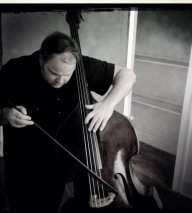
Amen to this. We tend to have some kind of martyrdom playing this ungainly instrument.
Growing musically up in the 1990'ies I certainly heard my share of opinions on string height (HIGH!) and sitting vs standing ("Bass is a stand-up instrument"!). This came from a needed disassociation from the bass sounds of the 70'ies and 80'ies, but went too far in the other direction.
I always fret about not having enough volume and punch acoustically, leading me to overplay and thereby actually ending up with a thinner, more pointy tone.
This is especially true with my new, or rather very old, small bass. When I just caress it more, it sounds beautiful,
but in the heat of interplay it's hard not to dig in, choking the tone in the process.
 
Cole Davis is a very solid young player. I wouldn't put him forward as anywhere to start with a huge sound….I don't see his style getting past many drummers without an amp.
Dennis Irwin would be a place to start, as would William Parker.

I agree with this, but it puts the OP in a difficult position as the other end of the spectrum of advice here is toward solo strings and a lower string height. Dennis famously kept his strings very high and pulled a huge sound by getting deep under them.

Many years ago when the Vanguard band played at my university, he borrowed my old American Standard bass with Spiros and played unamplified with the band. It was a gorgeous sound but when he gave me the bass back he had cranked the adjusters up so high that you could almost drive a tractor trailer between the strings and the board. I remember marveling that he could play it like that.
 
I remember playing in New Orleans for years unamped. I did everything I could to be heard. Played a lot in Jackson Square outdoors. I used to beat myself to death for hours on end. I started to relax and listen more focusing on intonation and resonance. It worked.

My teacher once said if you’re playing in time and in tune, they could hear you from the back of Yankee Stadium. Maybe a slight exaggeration, but I would second the advice here as it aligns with my experience that getting a big sound is the result of: a relaxed physical approach, intentional note choices (I.e., play what you hear internally, presumably in tune), and getting deeper into the time and music (I.e., listening to and interacting with your band mates).

Only addition to this is that my experience was that while what I do in the practice room supports this, playing regularly with like-minded musicians was necessary to obtain and maintain the necessary physical and mental ingredients for a consistent big sound.
 
I agree with this, but it puts the OP in a difficult position as the other end of the spectrum of advice here is toward solo strings and a lower string height. Dennis famously kept his strings very high and pulled a huge sound by getting deep under them.

Many years ago when the Vanguard band played at my university, he borrowed my old American Standard bass with Spiros and played unamplified with the band. It was a gorgeous sound but when he gave me the bass back he had cranked the adjusters up so high that you could almost drive a tractor trailer between the strings and the board. I remember marveling that he could play it like that.

It's about what you choose to play and what you choose not to play if you go that route. I know Dennis Irwin used gut strings on his own instrument but I think William Parker (at least he used to) used Spiro's with gut like-action. Neither of them spend a ton of time in thumb position. You have to consider your personal vocab when you are thinking about set-up.
 
Last edited:
You are right, William is similar as well. I think there are ways of getting closer to sound that without that set up or technique. Peter Kowald and John Lindberg are examples of huge sounds with reasonable set ups.
I agree with this, but it puts the OP in a difficult position as the other end of the spectrum of advice here is toward solo strings and a lower string height. Dennis famously kept his strings very high and pulled a huge sound by getting deep under them.

Many years ago when the Vanguard band played at my university, he borrowed my old American Standard bass with Spiros and played unamplified with the band. It was a gorgeous sound but when he gave me the bass back he had cranked the adjusters up so high that you could almost drive a tractor trailer between the strings and the board. I remember marveling that he could play it like that.
 
  • Like
Reactions: Jason Sypher
My teacher once said if you’re playing in time and in tune, they could hear you from the back of Yankee Stadium. Maybe a slight exaggeration, but I would second the advice here as it aligns with my experience that getting a big sound is the result of: a relaxed physical approach, intentional note choices (I.e., play what you hear internally, presumably in tune), and getting deeper into the time and music (I.e., listening to and interacting with your band mates).

Only addition to this is that my experience was that while what I do in the practice room supports this, playing regularly with like-minded musicians was necessary to obtain and maintain the necessary physical and mental ingredients for a consistent big sound.
That all sounds spot on to me.