• TalkBass has been independent since 1998. Add your voice.
    Create a free account to reply to discussions, view embedded media, and browse with fewer display ads.
    Join freeLog in
    Want zero display ads or expanded classifieds tools? Compare plans.

Double Bass How important is Scale Length? Pros? Cons?

My first bass purchase (just a few months ago) was a 2008 Fender American Jazz (electric) bass. It has issues with fret buzzing and a luthier installed 7 new frets; I had to "unleash" the truss rod myself (quite the chore but it happened). It STILL has fret buzz on the 7th fret, so maybe leveling, action adjustment or the like is needed.

IO put tapewounds on it. I like the James Jamerson, etc. sound more than the one that chrome strings brings.

I then bought a 34" Zeta "Crossover" 34" scale 5 string. I can be played upright on endpin or on stand, or with a guitar strap in EB position. It's fretless and plays and sounds "more" like an AB.

I've sen the foam treatment elsewhere....

So, the next step would be a 41" AB or EUB. Many here really favor the 41" > the 34"....

The portability / travel issue is big for me. I'm from Detroit, was in NJ / NYC, LA and now Boston. I brought 12 instruments on Amtrack LA > NY. I'm still not sure how I got away with it!
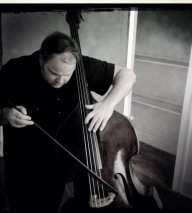
 
I think a lot of you will appreciate what Marcos Machado has to say about instrument scale/size as well as left hand technique. Here he is talking about instrument size.
He is unquestionably amazing. I don't think what he is saying is relevant to anyone but an incredible classical soloist with the means to commission a very high end bass.
When luthiers are coming to your gig and interested in a making a copy of your bass, you are in a very elite place. He is very impressive, but unless you are at a very advanced place technically and financially, there isn't much wisdom to glean.

I don't need a lecture on music in general, you dig?
Your comments show a huge disregard for this instrument and its traditions and other instruments - it would be best if the reality is untrue. Polite comments by great musicians are fine, but as I believe Barre Phillips said, it is the instrument that really humbles you. Your comments show the root of your issues are your basic approach to the music and this instrument - not scale or whether the ring finger is used.
The Italians use 134, so it isn't a matter of which finger, it is just a matter of finding a proven path. Walking into a room full of musicians who have dedicated our lives to this instrument & acting like you are just going to master it with a weird little bass and no instruction is going to get you a lectures on general music. That is no way to approach any instrument. Even if you are playing your ass off on any of those instruments, dropping that attitude will get you even further.
Time doesn't always translate, either. I know people playing for 6 or 7 years doing astonishing things and plenty of people at for decades that still can't play.

Back on topic, if you clear out a corner in your place a 3/4 double bass will fit. Renting a 3/4 and taking lessons is solid advice as a prelude to an EUB. EUBs are great, but the experience of getting the sound out of a real double bass will make the experience far better.
 
He is unquestionably amazing. I don't think what he is saying is relevant to anyone but an incredible classical soloist with the means to commission a very high end bass.
When luthiers are coming to your gig and interested in a making a copy of your bass, you are in a very elite place. He is very impressive, but unless you are at a very advanced place technically and financially, there isn't much wisdom to glean.
Yea, I had similar thoughts (although I probably wouldn't have stated it quite that strongly). That's why I said I wouldn't try incorporating those techniques without a qualified instructor--perhaps I should've said elite instructor. I'm curious, though, did you mean to say classical players only? Is there any reason someone as skilled as Marcus Machado couldn't/shouldn't use those techniques for jazz or other styles? I could definitely imagine someone like NHOP using those techniques.

I do occasionally, in effect, use 1-2-3-4 fingering around the neck heel of the bass these days. I don't really think of it that way. I think of it as transitioning between thumb position and 1-2-3 but without actually using my thumb. I mostly do it when playing in awkward keys. I'm pretty confident it's okay technique wise, but who knows, my old college teacher might give me hell if he ever sees me doing it ¯\_(ツ)_/¯
 
Yes, I am going to do that. I still take piano lessons, even though I've played since 1969, since saxophone is my "main" axe. There are a couple of sax players I'd like a lesson with - Joe Lovano, Bob Mintzer. I actually had a lesson with Stan Getz! Since I'm now in Boston, perhaps Jerry Bergonzi. Right now, the focus is on getting a 41" instrument. So, BSX, Eminence, NS Design, RF Travel, etc. I'd like an acoustic sound chamber. I passed on the NS for cello since, despite its many advantages, I think it sounds ... NOT like a cello. Maybe the bass is different?
NS Design's whole concept is actually to NOT try to emulate the associated acoustic instrument. Their idea is to lean into the differences and build something altogether new. Plenty of bassists still use them as substitutes for acoustic DB and some make mods and string choices to make them sound more acoustic, but it's not actually NS's design goal.
 
  • Like
Reactions: Jeff Newton
Thank you for that insight! That saves me from their bass. Not that there is anything wrong with their concept, but I'd prefer acoustic emulation. I play various wind synths; none of them sound remotely like a saxophone, and the VST & modeling efforts (which DO try to emulate) fall far short in my view.