This may have been true 60 years ago, but it's just not the case in 2018...
There were 12 tones in the musical alphabet 60 years ago, and there are 12 tones in the musical alphabet today.
Playing a note in a higher or lower octave, outside the standard range of the instrument, is a cool
effect but doesn't change the musical function of the bass line. There is a concept in music theory called "octave equivalence." An example would be, blues in Eb, some players would tune down a half-step and use the low open Eb, while other players would stay in standard tuning. Even though their Eb's are an octave apart, both types of players are perfectly well laying down the harmonic progression of 12 bar blues, and both are getting paid at the end of the night for a job well done.
For the record, I'm not a naysayer. I am a huge fan of alternate tunings, extended range instruments, multi-string basses, pitch-shifting effects, etc. But specifically in answer to the OP's "how important is it to have 24 frets?" question, my answer in this case is, "not very; while the extra frets extend your pitch range, they don't increase your musical vocabulary."
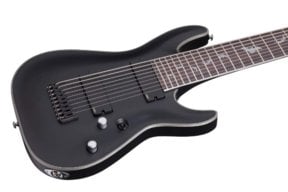
By using the concept of octave equivalency and transposing passages up or down as necessary, we can play any song in standard EADG tuning. Sure, if your favorite bass player has a 39-fret 7-string tuned to drop A#, it is cool to get your own bass just like your hero's (and if you are in a tribute band, owning one may be a job requirement). But if all you have is a standard P or J style bass, don't worry that you aren't "allowed" to play that song because your bass has the "wrong" number of strings or frets. I'd hate for any beginner who just bought their first bass (maybe a nice Squier Vintage Modified for example) get the impression they can't or shouldn't start learning their favorite songs because they don't own an extended-range instrument. Learn the notes and rhythm for now, and don't worry if you're not in the same octave as the recording; you're still learning and growing as a musician.












 )
)