• TalkBass has been independent since 1998. Add your voice.
    Create a free account to reply to discussions, view embedded media, and browse with fewer display ads.
    Join freeLog in
    Want zero display ads or expanded classifieds tools? Compare plans.

How many Basses Does Everbody bring to a gig?

I normally bring 2 - when I play in church, I normally just bring my 5 string. If I'm subbing for a friends band, they normally tell me what they want - my Pilot 5 string for most situations, the Tobias if I want to take up more sonic real estate...plus I always bring the P-bass.
 
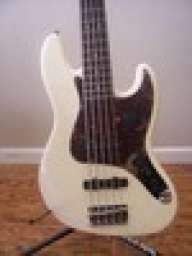
I bring 2 - Fender '08' MIA Jazz V and a Squier FVM Fretless. I don't usually bring a backup because if I break a string it's very rarely and when I do it's a G and I can play all night w/o a G string. If I do break a string I change it at break time. The fretless I bring because I use it on a couple of songs, plus another reason I don't bring another bass is because I don't have enough room in my vehicle to pack much more into it.
 
I've gone between taking just one and sometimes two.The second is for a backup,not a different sound.For all the many gigs I've had I've never had to use the backup till our last gig about 50 miles from where we live.

We had an outdoor gig with a large PA system and a pretty good sound man.I got there later than the other guys and when I got my rig set up the sound guy had me play for a while to set my sound.I play a riff that includes an open E and some notes on my B string to get the bottom.I was using a Peavey TL5 that's fairly new to me but has worked great on a couple of gigs.He gave me a thumbs up when he had it like he wanted so I wandered back to the board to say hi.He said it sounded great but there was one more thing he wanted to do.

I went back to the stage and fired my rig up again.This time when I started playing I got some big time racket when I bumped my cord.I pulled the XLR to the PA out right away and turned my amp down to check out what was making racket.Turns out the jack in my TL5 was going bad,it is a ten year old bass,so I plugged in my SX Jazz 5 and did the gig with it.Thank goodness the sound guy needed another check and also that I had a backup bass.I would rather have used the TL5 because of the punchy solid tone it has but the SX worked fine.From now on it's at least two basses to every gig for me.We would have been screwed if not for the backup.
 
I carry two basses to every gig, I normally leave my backup in the gigbag and sit it behind my rig where it is close if I need it. On larger stages I'll sit it on a stand behind my rig but normally just dont' see the need to have it out. If something goes wrong it's only gonna take me 10 more seconds to pull it outta the gigbag.

As far as soundcheck, I normally just play a little riff in the low registers and maybe go up on the D and G strings for a second. Normally just takes the FOH a minute to set me up.
 
I once played in a cover band that required 3 different tunings and it was a pain in the ass bringing 3 different basses and switching.Now I play in a band in one tuning (eflat) and I bring 2 basses,1 of which is just for back up in case of a broken string or technical problem and that one usually just sits in it's case.For my line/sound check I play the riff from "Black No.1" from Type O Negative until the sound guy tells me he's all set.
 
Cool and interesting thread...

I only ever bring one bass. If i had a double gig bag i might bring two but i wouldn't need it except for a backup. I'd like to have a P bass tone for some songs then go back to J bass, etc but it takes too much time to change and its just a hassle, much easier with one bass. With settings i've been using my outboard preamp set and just making changes with the passive tone control on my bass. That way the bottom end doesn't change...

Interesting you talked about playing open strings in a sound check. Recently i've started just playing open E, A, D, G or maybe a slow Emaj scale up and down the board, works great, and it's so much easier than trying to attempt licks to impress people:) but if it's likely i'll slap at all on the gig, i'll definitely play a riff too...
 
I take 1 for each set and we normally do 3 sets. If there's more than 3 sets, I stick with the 3rd set one. Heck, I just love playing different basses, not to mention the cool factor. I have a guitar "tree" that holds 3 basses on stage. Always different brands and styles. Almost always a Fender, accompanied by maybe a flying V, a Ventures Mosrite, a BC Rich etc. etc. etc. You know, there's always other musicians, particularly bass players, at most gigs, and they never fail to come and look and talk about the basses that I have brought. Over the years, I've made a book on each bass that I play and enter the EQ settings that I generally like with the bass. I just take a quick look at my notes and adjust the EQ accordingly. That makes for an easy transition from set to set. On small to medium gigs, I am the sound guy. On big gigs, the rigs that I play thru are big and loud enough that the FOH guys rarely put more than just a trace of me in the mix, so there's not much of a problem with FOH. :cool:
 
2 or 3... Depending on the gig. If it is a jazz gig, fretless 5 EUB, modern sounding bass (Ken Smith or Tobias)

R&B- Jazz style 5 string and 4 String for Backup
Blues- 4 string P and a Stingray
Latin- Fretless EUB and Jazz style 5 string

The bassbone is one of the most useful tools I have in my bag. Great for bring multiple basses and matching levels.

As far as soundcheck, I usually play sample parts from songs we will probably play that night.
 
It's not the number I'm looking at really, it's the reasons.

I have found and have been told a bunch of times by FOH engineers that they usually HATE it when we switch from say a Jazz to a Music Man or something to that affect.

The only time it works for me is when I'm working with someone where the FOH saves a different "scene" for each song in the set (automated board), so the mix will compensate for changes such as bass changes ect....

The thing most FOH engineers say is, the bass is basically one of the most difficult things to sit well and actually be heard in a live mix. And it doesn't help their cause when we switch, or use a lot of effects.

One guy who I was on the road with really helped me and I ended up having the best FOH tone I think ever (and from there on it always sounded better as well) when he asked me to play a whole show using one bass- unless I had to switch because of a string break or something.
Also to not touch any settings after the second song.
His philosophy was give him a consistent even sound that doesn't change and he doesn't have to fight me with the rest of the low end in the room. He can actually get it sounding good.

It's like the kick drum. Usually at most shows the kick pretty much always sounds good. Because it's low end that doesn't really change at all. So it can be dialed in and it will sit good all night long.

Later on the tour, because they changed some songs out of the set, so I had to switch basses a few times, he actually gave me two channels on the board.
When I would switch, he would mute on and un-mute the other. Each was set for their respective bass.

Also leads to another question that stems from my above experiences... How do you sound check????
Play a bunch of scales?? A slappity solo piece??? Randon licks up high???
I did some of all of those for a long time when I was told to "Hey man, stop for a second and play me your low B".
I did that and then asked to play my low E the A and so on.

He didn't need to hear a bunch of random notes, he needed to hear some "bass".
So now, for sound check all I do is play open B, E, A, D, G, D, A, E, B....
Then I play about as hard as I'm going to play on my B & E. Which is damn near how I played the open strings anyway.
Unless I'm doing a funk gig where I'm switching between fingerstyle and slap, I keep it simple.

I've been told countless times by FOH guys that it was one of the best "Bass sound checks" they ever had to work with.

I always have two basses for every gig. Never just one, and never three. I have one as a backup, in case there should be something wrong or something happens with one of them. I don't have the luxury of two basses which are exactly the same (or as close as possible), so each one sounds different. This is intentional on my part. I have never had a sound engineer tell me that it was difficult for them if I switched basses.

How I sound check is to play something in the registers of the bass that most all bass players commonly play in, which means that I don't do a lot of stuff up the neck past the 12th fret for a soundcheck of the bass sound. I'll usually play something like the Beatles/McCartney bass line to "I Saw Her Standing There" or something like that, which hits at least three of the four strings on a four string bass in common ranges we all play in. Then I'll do a little slapping perhaps. Not some gonzo licks and the most challenging stuff I can play, but just to give the soundperson some of that technique so he'll know some levels for that if he needs it. All of this happens within a minute or two, as we don't need 10 minutes of soundcheck like a drummer does.

What the engineer dials in for a bass soundcheck, IMO, is likely to change and be in flux as the band (complete) soundchecks and as we play through the set and through the night. My impression on a bass soundcheck is to get a decent signal and make sure the gear/peripheral devices and whatnot works correctly (in isolation) so that the "real" sound of the bass in context is designed to occur (in the mix with the band), can be achieved during the band soundcheck and through the evening, accounting for various changes in sound by the band, as well as changes in the room acoustics by the changing number of people in the room.

Hope this helps.
 
I usually just bring 2 - a primary bass that is either a 5'er or a 6'er depending on the need for the day, and a fretless. I can carry both in a double gig bag I have so I'm not worried about carrying a lot of cases. I usually only switch to the fretless for one or two songs and I just let my engineer know ahead of time.

When we soundcheck I just usually play the open E and A strings to know that I have tone in the house and then my levels are adjusted as we run through a few songs. I never slap/pop because that usually cuts through the house a lot louder and then my levels are set too low.

I never really run through my amp...just through the house. When I do, though, I always have my Markbass in my gig bag just in case it goes out. I usually play through two 410's or a 410 and a 212 and sometimes I will only use one cab, which is usually plenty, and leave the other cab for "just in case."
 
1 or 2. I can't think of when the last time I broke a string was (more than 20 years ago, for sure). If I bring 2, I bring fretted and fretless. I can play any song on either if I need to.
For some gigs lately I'm just playing fretless, and sometimes I just bring that.
Some gigs I switch between the 2, some gigs I'll just play one all night. Obviously if I need (or would prefer) to switch I'll bring both.
 
2, on the rare occasion that the set pretty much requires it, 3. Lately I've been getting by w/a active 4 for the quicker, busier stuff & a passive 5 when I need the low D. I could get by on one or the other in a pinch, but whenever I bring just one I regret it for one reason or another.
 
never more than 2

Fender Am Active Jazz 4 or Lull Mv4 for fretted stuff
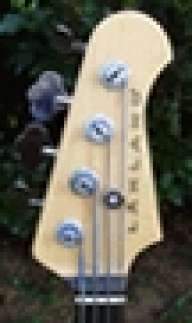
Lakland 44-02 fretless or Turner Ren 4 fretless for fretless stuff (depending on gig)

Mesa Walkabout Scout 12 with post EQ DI to FOH (when I'm lucky enough to get it) No pre/master amp changes and no bass vol or eq changes while playing .. ever! Just use hands to adjust dynamics.

Soundcheck is solid hit on E A D G, little slap/thumb to spike the signal, 4 string chord or 2, level set, and away we go !