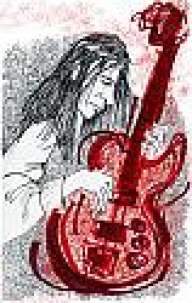
For most of my life, I've played in trios, i.e. 1 guitar, 1 bass, and 1 drummer. I did play in a trio with a keyboard player, a drummer, and myself, and occasionally switched to guitar for a few songs, and let the keyboard player cover the bottom end. My current band is 2 guitars, a drummer and me on bass. One of the guitar players also plays keys, which broadens our range of songs, and keeps it from getting cluttered. It helps too in that the two guitarists have been playing together for over 30 years, and have learned how to not clutter things up. I had to back off on my playing some, because I was too busy, being used to a trio format. It was a bit of an adjustment.
The hardest thing for bands to really get a handle on is the idea of not overplaying. There's nothing worse than 4 players all trying to be funky at the same time, and thinking that their part is the one that supplies the funk. That ain't funk, that's a free-for-all, and it sounds like crap! Me, the over-playing bass player, turned reformed ensemble player, had to teach these guys that less is more. Funk requires air, places where there are no notes, just open space. I had to work with them to get them to understand that each part, on its own, won't be that much, but when it's assembled, the result will be amazing. Each player has their own part to play, and plays only that part. We're all Beatles fans, so I told them to go back and listen to the way the Beatles assembled their music. Lucy In the Sky With Diamonds, is a perfect example. There are 4 distinct parts. None of them double or ghost any of the others. When listened to together, it works without being cluttered. In fact, many of the Beatles tunes are perfect examples of this. I'm guessing that much of that came from the excellent production work of George Martin.
Anyway, long-enough on that. Multiple guitars can work, if the egos are kept in check, and they're all good players. Will the audience notice? Probably not, they only know "it sounds good" or "it sounds like crap".







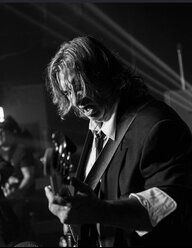
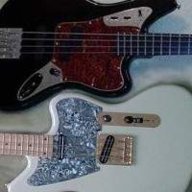

 ) to play with 2 guitars. i think some of the most powerful stuff uses drums, bass, and vocals. all my favorite bands over my life have been 1 guitar bands, maybe it's because the thing that really sells a band to me as a consumer is the drumming. most 1 guitar bands have really good drummers i think.