I'd advise younger people to learn theory, my theory knowledge is pretty poor I'm 60 so can't be bothered with it at my age, I learn new songs by ear or tabs if I can't work it out, been in different decent local bands a long time having no knowledge of theory hasn't made a difference to me but I wished I'd learnt when I was younger. So my conclusion is its definitely helpful but not the be all and end all.

Enjoy the benefits of a premium membership!
Upgrade Account
-
TalkBass has been independent since 1998. Add your voice.
Create a free account to reply to discussions, view embedded media, and browse with fewer display ads.
Join free Log in
Want zero display ads or expanded classifieds tools? Compare plans.
You are using an out of date browser. It may not display this or other websites correctly.
You should upgrade or use an alternative browser.
You should upgrade or use an alternative browser.
How much music theory do you really need to know?
- Thread starter IamGroot
- Start date
More options
Who Replied?

Music is all theoretical! In theory I can play bass, however, practically, Oh! That's Right! I CAN play bass. I know enough theory to be dangerous. If I see an unfamiliar chord I can usually work out what notes are involved. If I see the same chord on sheet music, I could also probably work out it's real name. Sight reading of sheet music is not a strength, nor is playing modes. I generally follow a chord chart and add fills and bits as seems appropriate.

You dont need to actively study it at all IMO. It will come naturally. But it's a hell of an advantage if you do learn it tho, you'll improve much faster with some theory in the back.

I'd say my theory is pretty good for someone playing rock/pop... but not up to playing jazz or studying advanced "classical". I can't imagine working with someone who doesn't have basic theory. No matter how brilliant you are at actually playing, or how strong your ear is at some point you're going to communicate with someone in the band. Like reading and writing are basic requirements for all jobs - sure you may be a brilliant surgeon but if you can't read the patient records to tell you which bit needs fixing...
Learning new stuff doesn't make you forget old stuff (like that time I took a course on wine tasting and forgot how to drive ), and you don't need to learn it all at once, but any strong player probably knows more theory than even they realise.
Over the summer I discovered Adam Neely and 12Tone's YouTube channels, and binge watched everything on them (12Tone's earler stuff isn't as polished as his later stuff, but if you go back to the beginning he covers theory from scratch). Lots I knew, Lots I didn't know, Lots I still don't understand... but on at least one occasion I woke up in the middle of the night with a sudden realisation that something 12Tone had talked about, applied to one of my favourite songs, and completely explained the core of the song in a way I'd always struggled to get to grips with. 12Tone's theory allowed me to understand the song and appreciate it even more.
Learning new stuff doesn't make you forget old stuff (like that time I took a course on wine tasting and forgot how to drive ), and you don't need to learn it all at once, but any strong player probably knows more theory than even they realise.
Over the summer I discovered Adam Neely and 12Tone's YouTube channels, and binge watched everything on them (12Tone's earler stuff isn't as polished as his later stuff, but if you go back to the beginning he covers theory from scratch). Lots I knew, Lots I didn't know, Lots I still don't understand... but on at least one occasion I woke up in the middle of the night with a sudden realisation that something 12Tone had talked about, applied to one of my favourite songs, and completely explained the core of the song in a way I'd always struggled to get to grips with. 12Tone's theory allowed me to understand the song and appreciate it even more.


Took some theory in college my little brain could not rap around it enough to regurgitate, learning jazz guitar was my ticket. Something about not playing open strings
Seems like piano and theory go hand to hand
Seems like piano and theory go hand to hand
Last edited:

I was in a band with one song written by the singer, who also played bass at home. She taught me the simple bassline by saying 'thickest string that fret' and so on. She didn't even know the names of the strings and freaked out when she saw me play the same notes on the A string - 'You're playing the wrong notes'.I tell people the amount of theory you need to know -at a minimum - is what you need to get the job done. And that depends on what type of music you play and how good your ear is.
If you know what to play by ear, then music theory isnt critical. Nice to have, but not critical. Not too many have this talent, but I know of at least two musicians that dont even know the names of the chords and they kill it every time.
If you are going to do jazz, more theory is definitely better - (knowledge and ear recognition of scales, chords, their interrelationship, cadences,etc). Should know all the modes of the major scale cold and know where to use them, plus the Minor Pentatonic and their modes. Some of the Minor modesMelodic minor, diminished, augmented, etc..
If you are going to do 3 chord blues, you probably could get by knowing the notes in the 7 chords and the pentatonic minor scale plus a knowledge of of major vs minor , 6 vs b7, etc. Maybe the relative minor and the 251 cadence. You dont need to know what the Em7#9 chord is by name, but you need to be able to cover it. Knowing a dorian scale wouldnt hurt.
All the above is a great simplification and I personally like music theory and use it in my playing.
I would be interested in your opinions.

So now that you're 60 it's time to stop learning new things?I'd advise younger people to learn theory, my theory knowledge is pretty poor I'm 60 so can't be bothered with it at my age....

It's really not hard to learn basic theory, and you'll be surprised how much a little knowledge goes a long way.

buldog5151bass
Kibble, milkbones, and P Basses. And redheads.
I think the correct way to spell this would be E G# B D F##. Enharmonically the same as what you wrote, but more cumbersome and grammatically correct. I’ll let myself out.Whoops , its the E7#9 aka Hendrix chord.. My bad. E G# B D G.
I think the correct way to spell this would be E G# B D F##. Enharmonically the same as what you wrote, but more cumbersome and grammatically correct. I’ll let myself out.
I was about to make the same comment

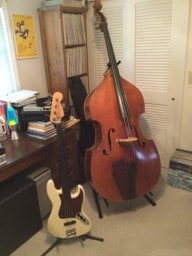
Music theory on it's most basic level is just the study of musical style. If you want to write like J.S. Bach you study as many tendencies in his style that make it sound like it does (not rules). Being aware of these things helps in performance of his music.
If you want to sound like Ray Brown or Ron Carter you should also listen to and study the chord vocabulary (and rhythmic tendencies) for the style they play in and how they choose notes within that vocabulary.
Basic theory fundamentals (chord spelling, keys, meter/rhythm, note names, accidentals) makes it possible to read music effectively and opens the door to a lot of musical knowledge that otherwise wouldn't be accessible by just using your ear.
Of course if your only ambition is to play music that doesn't require anything past three notes or chords in any song then just use your ear.
If you want to sound like Ray Brown or Ron Carter you should also listen to and study the chord vocabulary (and rhythmic tendencies) for the style they play in and how they choose notes within that vocabulary.
Basic theory fundamentals (chord spelling, keys, meter/rhythm, note names, accidentals) makes it possible to read music effectively and opens the door to a lot of musical knowledge that otherwise wouldn't be accessible by just using your ear.
Of course if your only ambition is to play music that doesn't require anything past three notes or chords in any song then just use your ear.
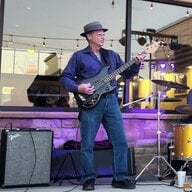
My own theory is that I really don't know any theory; does that even count as a theory? People call and ask me to fill in if their bass player can't make it, but I won't join their bands. My theory is that I must know some theory, but I don't read music and I have no desire to learn after playing guitar and bass by ear for 55 years. On the other hand, if I could go back in time, I'd do it all different. These days, it ain't gonna happen.

It all depends on where you want to go.
Pittsburgh.
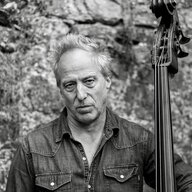

As much as you can. There is no downside to it. Anything you currently know, do, play, practice etc is only improved and you don't lose anything. Music theory is like fitness or health. It is not required to enjoy life, but it supports a better quality of life.
Plus sheet music, like computer programming always gets the chicks. So you go that going for you.
Plus sheet music, like computer programming always gets the chicks. So you go that going for you.

I think the critical need is to know enough to reduce the amount you need to know.
That sounds like paradox but it's not, it's an understanding of how to reduce an expression to a simpler form.
There was a recent example of notation where someone wanted to resolve an ugly series of grace notes in 2/4, and the simpler answer turned out to be 'use 6/8 time signature'. Sometimes it may be that locrian can be more easily seen as phrygian with a different root note.
This implies knowing these scales and timings, but it can save a person from horrors like localised 'augmented' and 'diminished' repeated often when a single and larger scope definition can make the whole thing easier and clearer.
Music uses a lot of engineering, and just as with HTML, CSS, and C code, or electronic circuit voltage references, or transposition of formulae in maths, these kinds of scope, clearly defined, make simpler and better structures that are easier to understand. It becomes easier to move from one structure to another, so it allows more complexity while still being easier.
It's interesting to note that music score programs still seem to be worse at doing this than human brains are, so understanding this makes it easier to use those too.
That sounds like paradox but it's not, it's an understanding of how to reduce an expression to a simpler form.
There was a recent example of notation where someone wanted to resolve an ugly series of grace notes in 2/4, and the simpler answer turned out to be 'use 6/8 time signature'. Sometimes it may be that locrian can be more easily seen as phrygian with a different root note.
This implies knowing these scales and timings, but it can save a person from horrors like localised 'augmented' and 'diminished' repeated often when a single and larger scope definition can make the whole thing easier and clearer.
Music uses a lot of engineering, and just as with HTML, CSS, and C code, or electronic circuit voltage references, or transposition of formulae in maths, these kinds of scope, clearly defined, make simpler and better structures that are easier to understand. It becomes easier to move from one structure to another, so it allows more complexity while still being easier.
It's interesting to note that music score programs still seem to be worse at doing this than human brains are, so understanding this makes it easier to use those too.
Does it? Who says?! ?...computer programming always gets the chicks.


