
The string needs to have solid contact with the fret wire, but it does not need to be pressed down so hard that it touches the wood of the fingerboard, indeed pressing it that hard pulls the note sharp, and will make your fretting hand tired much more quickly.If you place your finger on top of or too close to the fret the string won't have enough room to sit flat on the wood of the fingerboard and will cause it either to clank or not sound at all.

Enjoy the benefits of a premium membership!
Upgrade Account
-
TalkBass has been independent since 1998. Add your voice.
Create a free account to reply to discussions, view embedded media, and browse with fewer display ads.
Join free Log in
Want zero display ads or expanded classifieds tools? Compare plans.
You are using an out of date browser. It may not display this or other websites correctly.
You should upgrade or use an alternative browser.
You should upgrade or use an alternative browser.
how to avoid clanky noises when pushing the strings onto the frets?
- Thread starter JPK_DK
- Start date
More options
Who Replied?

Guys, thanks so much for chiming in (while I was sleeping it off here on the old continent)!
Some of you might have slightly misunderstood the issue, which is probably due to my somewhat unclear description. I guess "involuntary hammer-ons" comes closest and makes more sense than "involuntary tapping", as the problem comes from the fretting hand.
Still, most of you confirmed my suspicion that it is "bad" technique so far (and often related to timing and sync'ing) that I will need to rectify by deliberate practice!
I indeed don't want to "mask" it, and also I prefer rounds to flats
There were a number of interesting novel aspects about the subtleties of fretting in your replies as well - thanks for that!
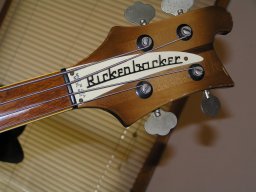
As for the action on that bass (by the way, it's a Fender Geddy Lee Jazz (MiM) and not a Rick; I think another poster had a Rick as an example): I am only the second owner of this bass, and the first hardly played it, but it seems the nut groove of the E string was/is too low directly out of the factory!?! Which means, until I fix this, I can't get the action lower (on the E string). Besides, that stupid access (non-access) to the truss rod on a Jazz is making it no fun to do adjustments... (But, I also have similar issues (clanking) on other basses with similar or lower action).
Anyway, thanks so much again - lots of input to work further with!
Some of you might have slightly misunderstood the issue, which is probably due to my somewhat unclear description. I guess "involuntary hammer-ons" comes closest and makes more sense than "involuntary tapping", as the problem comes from the fretting hand.
Still, most of you confirmed my suspicion that it is "bad" technique so far (and often related to timing and sync'ing) that I will need to rectify by deliberate practice!
I indeed don't want to "mask" it, and also I prefer rounds to flats
There were a number of interesting novel aspects about the subtleties of fretting in your replies as well - thanks for that!
As for the action on that bass (by the way, it's a Fender Geddy Lee Jazz (MiM) and not a Rick; I think another poster had a Rick as an example): I am only the second owner of this bass, and the first hardly played it, but it seems the nut groove of the E string was/is too low directly out of the factory!?! Which means, until I fix this, I can't get the action lower (on the E string). Besides, that stupid access (non-access) to the truss rod on a Jazz is making it no fun to do adjustments... (But, I also have similar issues (clanking) on other basses with similar or lower action).
Anyway, thanks so much again - lots of input to work further with!

Thank you MCF for post #24. In that pic (playing the video is not necessary for what I have to say) if the index finger was moved 1/4" towards the bridge the string would be pressed down into the top of the fret. That is the possible cause of the problem I was attempting to help remedy. Note how the medius fretting the E string leaves more than enough room for the string to curve downwards over the fret in order to create a fulcrum. The other fingers seem closer to what you may consider normal fretting. Thank you.

You are playing "down" on the strings.. Try to play across the strings. I do the same thing. Turn the treble down just a little.
when i started playing metal after playing mellower rock, i started clanking. luckily it worked with the music, but i was playing down directly toward the bass and playing very hard. the clank i was getting - your clank may be caused by something else - was the result of plucking my strings so hard that i was hitting them against the highest fret on the bass.
the solutions to that are either play sideways, as pappabass says - don't whack the strings so they hit the frets. or play softer, which can be accomplished by turning up your amp so you don't need to play as hard to get the same volume. that worked for me sometimes, but when my adrenaline is really pumping, i find i play a lot harder than i mean to. luckily my adrenaline pumps the hardest when playing very hard music, and the clank works there.
Yes, I understand, but the clanking you describe (and what @pappabass probably was referring to as well) comes from too much force (or a wrong movement) from the plucking fingers/hand (almost like popping the strings). My issue stems from the fretting fingers/handswhen i started playing metal after playing mellower rock, i started clanking. luckily it worked with the music, but i was playing down directly toward the bass and playing very hard. the clank i was getting - your clank may be caused by something else - was the result of plucking my strings so hard that i was hitting them against the highest fret on the bass.
the solutions to that are either play sideways, as pappabass says - don't whack the strings so they hit the frets. or play softer, which can be accomplished by turning up your amp so you don't need to play as hard to get the same volume. that worked for me sometimes, but when my adrenaline is really pumping, i find i play a lot harder than i mean to. luckily my adrenaline pumps the hardest when playing very hard music, and the clank works there.

Thank you MCF for post #24. In that pic (playing the video is not necessary for what I have to say) if the index finger was moved 1/4" towards the bridge the string would be pressed down into the top of the fret. That is the possible cause of the problem I was attempting to help remedy. Note how the medius fretting the E string leaves more than enough room for the string to curve downwards over the fret in order to create a fulcrum. The other fingers seem closer to what you may consider normal fretting. Thank you.
Are you saying that the middle finger in that image is good and the other three are bad, or the other way around? See I'm a little confused now. You seem to be saying that the other three fingers ('normal' in your words) are actually wrong... If you are actually trying to say that being too far from the fret could be a cause of the OP problem then I 100% agree...
Hello, Steve. I'm trying to isolate the three positions where you could fret a string. The index finger in the picture is used as an example of the problem, but only if it was sitting directly above the fret pressing the string into the crown of the fret. That means sliding the index finger in the picture until the middle of the fingernail was in line with the fret. That would be the problem. The middle finger leaves lots of room before the fret (too much in my opinion but it could still work). This would decrease the angle of the string leading up to the front side of the fret. That may compromise the contact needed for a clean note to ring. The other fingers look to be more of what you expect to see from a mature player: fingered string close to the fret not on top of fret or too far in front. Hope this helps.Are you saying that the middle finger in that image is good and the other three are bad, or the other way around? See I'm a little confused now. You seem to be saying that the other three fingers ('normal' in your words) are actually wrong... If you are actually trying to say that being too far from the fret could be a cause of the OP problem then I 100% agree...
Hello, Steve. I'm trying to isolate the three positions where you could fret a string. The index finger in the picture is used as an example of the problem, but only if it was sitting directly above the fret pressing the string into the crown of the fret. That means sliding the index finger in the picture until the middle of the fingernail was in line with the fret. That would be the problem. The middle finger leaves lots of room before the fret (too much in my opinion but it could still work). This would decrease the angle of the string leading up to the front side of the fret. That may compromise the contact needed for a clean note to ring. The other fingers look to be more of what you expect to see from a mature player: fingered string close to the fret not on top of fret or too far in front. Hope this helps.
Then in terms of finger position we are in agreement, and I think what you were trying to say is keep the fingers close to the fret as being too far back will force you to press down a lot harder (all the way to the fingerboard) in order to create a clean contact. If that's the case then we are saying the same thing, so apologies for any misunderstanding.

OK, maybe I should have done this right from the start, i.e., upload a short video...
So, assume I want to/need to alternately play E (open string) and C# (9th fret on E string), and let's just assume there is no alternative way of fretting/fingering this - here is how awful it sounds for me so far: first video with amp off, second video with amp on (to show that I am plucking E-C#).
(I am deliberately trying to position my index finger a little differently each time, and also trying to keep my other fingers from preventing to see my index finger)
So, assume I want to/need to alternately play E (open string) and C# (9th fret on E string), and let's just assume there is no alternative way of fretting/fingering this - here is how awful it sounds for me so far: first video with amp off, second video with amp on (to show that I am plucking E-C#).
(I am deliberately trying to position my index finger a little differently each time, and also trying to keep my other fingers from preventing to see my index finger)
OK, maybe I should have done this right from the start, i.e., upload a short video...
So, assume I want to/need to alternately play E (open string) and C# (9th fret on E string), and let's just assume there is no alternative way of fretting/fingering this - here is how awful it sounds for me so far: first video with amp off, second video with amp on (to show that I am plucking E-C#).
(I am deliberately trying to position my index finger a little differently each time, and also trying to keep my other fingers from preventing to see my index finger)
The only way I can emulate that effect is by plucking ever so slightly late (after fretting/stopping the string) or fretting/stopping ever so slightly early (before the pluck).
Incidentally, you might want to try keeping your thumb in contact with the neck at all times and holding your other fingers still and just touching the other strings such that the only real movement is in your fretting finger...
Last edited:
In a way, I am glad to hear that you can emulate the issue, which indicates it is indeed a timing problem. I have also tried to vary my fretting/plucking sync'ing and timing, but evidently, I can't find that sweet spot yet, which is a bit baffling...The only way I can emulate that effect is by plucking ever so slightly late (after fretting/stopping the string) or fretting/stopping ever so slightly early (before the pluck).
Incidentally, you might want to try keeping your thumb in contact with the neck at all times and holding your other fingers still and just touching the other strings such that the only real movement is in your fretting finger...
Yes, I am aware of the "flying fingers" - I wanted to keep them away such that you could see my fretting finger a bit better.
Lots to work on...

Left hand muting.
Don't raise your fretting fingers all the way off the string.
This will help to dampen the string tap noise.
Don't raise your fretting fingers all the way off the string.
This will help to dampen the string tap noise.
Last edited:

Hi, I often struggle with some clanky noises when coming from an "open" (nothing fretted yet) string to fretting a note higher up the neck (say above the 7th fret). Pushing the string from its natural position down to the frets this high up often causes a clanky noise (but also a note; a bit like when tapping I guess). Is there a way/technique to reduce this?
The action on this bass is about 3 mm. I guess lowering the action could help with this. But, what else? Is it purely training your fingers to come down gradually (yet fast), and also to get the timing between fretting and plucking more in sync?
I hope my descriptions make some sense and that you have some pointers for me!? Thanks!
It's a combination of coordination and muting (sometimes you mute with your right hand, others with your left, whatever is most convenient for each particular situation)... you'll get there, just practice. Try to do it slowly so that you identify what it is that you need to change, but in my personal case... I never did that: I just tried to play cleanly, I know it's vague but I did not have a particular point to address, I just generally tried to be cleaner, and over time it got better. I can't honestly tell you how I mute this or that, my hands just do it.
Practice, that's all.

The technique you want to practice is called "muting" (or some people call it "dampening"). Basically this means using your right and left hands in such a way, that the bass only makes the sounds you want it to make (no unwanted sounds).
There are many types of muting, but for example try this: Touch the string with one or two plucking fingers on your right hand. While these right-hand fingers are muting the string, now fret the string with your left hand. Did it make as much "clanky" sound as before, or was it quieter?
One of my teachers explained it to me, that every note should have a deliberate beginning, middle, and end. Each note should tell a story. A player with good muting is like an articulate speaker who tells exactly the story they want to tell. A player with poor muting is like an inexperienced public speaker whose story is peppered with verbal tics such as "like," "um," "err," or "uhh."
Specifically in your example, you want to play the E, then mute the E, before you fret the C#, adn then you mute the C# before you unfret the C# back to open E.
There are many types of muting, but for example try this: Touch the string with one or two plucking fingers on your right hand. While these right-hand fingers are muting the string, now fret the string with your left hand. Did it make as much "clanky" sound as before, or was it quieter?
One of my teachers explained it to me, that every note should have a deliberate beginning, middle, and end. Each note should tell a story. A player with good muting is like an articulate speaker who tells exactly the story they want to tell. A player with poor muting is like an inexperienced public speaker whose story is peppered with verbal tics such as "like," "um," "err," or "uhh."
Specifically in your example, you want to play the E, then mute the E, before you fret the C#, adn then you mute the C# before you unfret the C# back to open E.
Last edited:

JeezyMcNuggles
Inactive
- Feb 23, 2018
- 14,723
- 20,970
- Disclosures
- I suck, but nobody really notices
Woa! I just read through more of these replies. Hahaha. You literally just have to pluck the string when you fret a note. If you don't, the fret plucks it for you (you just basically hammered on the note) and thats the "clack"Hi, I often struggle with some clanky noises when coming from an "open" (nothing fretted yet) string to fretting a note higher up the neck (say above the 7th fret). Pushing the string from its natural position down to the frets this high up often causes a clanky noise (but also a note; a bit like when tapping I guess). Is there a way/technique to reduce this?
The action on this bass is about 3 mm. I guess lowering the action could help with this. But, what else? Is it purely training your fingers to come down gradually (yet fast), and also to get the timing between fretting and plucking more in sync?
I hope my descriptions make some sense and that you have some pointers for me!? Thanks!
I have pretty high action. And don't really have this problem. Well, its not a noticeable problem at least. Its not your action. Its not where your finger comes down either. You can fret the note anywhere between the frets. You just have to push harder if you're farther away from it (this is poor technique, but its the truth). Its not your finger nails. Your finger nails don't hit the the frets.
Its simply your timing. Keep playing, and it'll get better.

Happens when I play Clash, Pistols, Ramones until I consciously think about correcting it.when i started playing metal after playing mellower rock, i started clanking. luckily it worked with the music, but i was playing down directly toward the bass and playing very hard. the clank i was getting - your clank may be caused by something else - was the result of plucking my strings so hard that i was hitting them against the highest fret on the bass.
the solutions to that are either play sideways, as pappabass says - don't whack the strings so they hit the frets. or play softer, which can be accomplished by turning up your amp so you don't need to play as hard to get the same volume. that worked for me sometimes, but when my adrenaline is really pumping, i find i play a lot harder than i mean to. luckily my adrenaline pumps the hardest when playing very hard music, and the clank works there.

Hi, I often struggle with some clanky noises when coming from an "open" (nothing fretted yet) string to fretting a note higher up the neck (say above the 7th fret). Pushing the string from its natural position down to the frets this high up often causes a clanky noise (but also a note; a bit like when tapping I guess). Is there a way/technique to reduce this?
The action on this bass is about 3 mm. I guess lowering the action could help with this. But, what else? Is it purely training your fingers to come down gradually (yet fast), and also to get the timing between fretting and plucking more in sync?
I hope my descriptions make some sense and that you have some pointers for me!? Thanks!
Are you playing through an amp? There is alway going to be a sound when two metals touch, and depending on the the force behind the connection will determine how loud this noise is. This noise is not picked up and sent to an amp and or mixing board. It’s an ambient noise that as your amplified sound increases ( or when playing with a band) the less likely you are going to notice it.
If you are not playing through an amp, or you don’t want to disturb your family or neighbors but turning up your amp much, you may want to pick up a small headphone amp ($20-$30) and that should help you.

This is the result I'd expect when using bright new strings with too much high mids in the EQ on a bass notorious for clanky tones.OK, maybe I should have done this right from the start, i.e., upload a short video...
It's a great tone to get through heavy guitars or horns and likely to work great in a mix.
If you don't like this you need to change one of the parameters.
Start by not boosting frequencies on any preamp you use and severely cut around 1500 Hz.
Last edited:


