
Every week?Mine gets cleaned as often as the floor under the refrigerator.

Enjoy the benefits of a premium membership!
Upgrade Account
-
TalkBass has been independent since 1998. Add your voice.
Create a free account to reply to discussions, view embedded media, and browse with fewer display ads.
Join free Log in
Want zero display ads or expanded classifieds tools? Compare plans.
You are using an out of date browser. It may not display this or other websites correctly.
You should upgrade or use an alternative browser.
You should upgrade or use an alternative browser.
How to clean a bass
- Thread starter Raman
- Start date
More options
Who Replied?


Great debate — perennial, an oldie but a goodie.
[Ranting on] I should qualify: earlier in the thread I wrote that I was once instructed to use lemon oil for this purpose. I apologise, if, by my hand, there was any confusion. The product in focus, for me, named lemon oil, is not an essential oil, not a mood-enhancing aroma therapy recipe, or any kind of food-based oily substance that could be digested, or that might go rancid without proper refrigeration, after a while. Some mineral oils are intended to be digested — not such a good idea and beyond the point anyway.
This lemon oil in question is a product specifically engineered for one purpose — for application upon a musical instrument like a bass / guitar etc.. It is entirely inert, inorganic, merely a scented mineral oil, not unlike the valve oil recommended for use on trumpets, tubas, clarinets, etc.. Neat mineral oil will do, in both cases — just make it the good stuff that's permitted for use, as a lubricant, in kitchens.
'Fast Fret', I believe, is little more than mineral oil impregnated into a fancy, porous applicator. I may be wrong. They say, it's "[n]ot a spray! Contains no silicone. It's a liquid in an applicator. Use it on your strings, [the] back of the neck and the fretboard." I used it, once-upon-a-time — (lasts for ages so read I used it many, many times over the productive life of that applicator). But, some say, if I remember rightly, that doing so will load up your strings, marginally changing their mass by adding material, and thus adding to their weight, which, some say, does not do your overall musicality and your sound-production any favors. It does lubricate the digits. But, so does a little blood, sweat and tears, which — unavoidable for those like me
 — quickly renders fast fret more or less redundant. Who needs more mess?
  I never got a second applicator, mainly because, these days, I like to hang on to my strings, so to speak, and I'm playing safe. Fine, I guess, when strings are routinely changed — no problem. Still perhaps unnecessary, still a complication, in any event
 So, cutting to the chase, aroma therapy? — fine in different circumstances; hocus pocus and food based, fruity, citric, organic liquid lemony matter doesn't get a look in, from what I can gather. Save the lemons for your salads, your fish 'n' chips, and such; wash your hands of any grit and grime, regularly use a soft, clean cloth; and, when the time's ripe, remember to show your treasured instrument a little lovin', whichever way you see fit

The most important; change strings frequently and get/keep the gunk off your fretboard. I prefer 0000 steel wool to get the crap off the fretboard and polish up the frets. I then will wipe down all painted surfaces with turtle wax. There’s a lot of other stuff I do, but what I’ve outlined is what I’d consider the bare minimum.
I oil a fingerboard once upon purchase with a VERY light coat of oil, on/off super quick. And never do it again. Rosewood just doesn’t need it, it’s oily enough.
If you’ve got a maple board and it’s still shiny, you can just pull the strings and clean the gunk off with a terrycloth and some of that turtle wax.
Curious where did you find information that its only necessary to oil rosewood once at the beginning and never do it again. I know you said rosewood is oily enough but is there a luthier that said this?

To clarify my statement, I do not use Turtle wax on any unfinished woods.I use Turtle wax. I’ve been doing this for years. It smells good!
Or...really use my angle grinder.

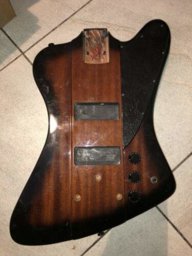
Does that method only work on Fenderbirds, or any Fender?
Front and Rear...Does that method only work on Fenderbirds, or any Fender?

I wipe it down w/ a piece of cloth after gigs, and do a more thorough cleaning/polishing/oiling (if needed) when changing strings. I use the dunlop products.
Oh, man, don't blow the mojo!!!The most important; change strings frequently and get/keep the gunk off your fretboard. I prefer 0000 steel wool to get the crap off the fretboard and polish up the frets. I then will wipe down all painted surfaces with turtle wax. There’s a lot of other stuff I do, but what I’ve outlined is what I’d consider the bare minimum.
I oil a fingerboard once upon purchase with a VERY light coat of oil, on/off super quick. And never do it again. Rosewood just doesn’t need it, it’s oily enough.
If you’ve got a maple board and it’s still shiny, you can just pull the strings and clean the gunk off with a terrycloth and some of that turtle wax.
After each play I mine down with a dry microfiber cloth, including the strings and fretboard.
Periodically I wipe the bodies clesn with a slightly damp cloth, and wax them with pire carnauba.
Whenever new strings are fitted I clean the fretboard and apply a slight dosemof lemon oil. The fretboard takes very little cleaning because I keep them pretty clean anyway and I always wash my hands before playing.
Periodically I wipe the bodies clesn with a slightly damp cloth, and wax them with pire carnauba.
Whenever new strings are fitted I clean the fretboard and apply a slight dosemof lemon oil. The fretboard takes very little cleaning because I keep them pretty clean anyway and I always wash my hands before playing.

BurningSkies
CRAZY BALDHEAD
- Feb 20, 2005
- 27,956
- 20,350
- Disclosures
- Endorsing artist: Dingwall Guitars
For the record, I'm a professional painter and since I have the tools and supplies, I usualy paint my own basses with the equivalent of a car show quality custom paint job. I try to keep my basses clean and the finish in perfect condition, so I use some of the standard cleaning methods of my industry.
Microfiber cloths are essential because they don't leave scratches on the paint and they also pull up dirt and grime and hold onto it, rather than push it around.
I wipe my bass neck and strings with a dry microfiber cloth after every time I play it, which is pretty much every day. I have a bunch of them so I toss the cloth in the laundry after each use and always use a clean one every day.
Most people really don't need to be this obsessive and can get away with multiple uses of the cloth before washing.
Once a week, I'll clean the body and hardware with "Meguiar's Quik Detailer Mist & Wipe" (or similar product from your preferred brand) and a microfiber cloth. Just spray it on, wait 5 minutes, then wipe off.
You can apply this to a maple or other painted fretboard but I would avoid using it on a rosewood or similar board that is just impregnated with oil. If you wipe the board with a clean cloth after each time you play, then it will always be clean, anyway. But if you let it go for a long time and let the grime and gunk build up, then you kind of don't have a choice.
Do not scrub or use hard pressure. Just wipe the product off the surface until everything is dry. The dust and dirt will stay in the cloth. Do not reuse this cloth until it's been through the laundry.
As an option, you can use a cleaning product that contains wax and it will leave a very thin layer of protection on your bass after you wipe off the cleaner. I don't bother with it. It isn't really necessary and I don't like the way it feels under my fingers.
Never use anything other than clean microfiber cloths. Never use water, alcohol, or harsh detergents or chemicals. Never scrub.
Disclaimer:
Everything I've said above is simply the opinion of this one, experienced professional painter. However, I know other professionals who use different methods because even experts don't always agree.
I've been using microfiber cloths for bass/guitar cleaning for years before they marketed them for much more than auto-detailing. They're fantastic at cleaning and never leave the fine swirls that cotton cloths can.
I think specifying safe and proper methods and products is very important. But how often is going to vary widely.
For example, I always play with clean hands. I wash my hands before I play. Always. And, I'm blessed to have body chemistry which seems to do nothing to strings. I get zero "gunk"/"funk" buildup on my instruments. I keep my instruments in a case or gig bag when I'm not actively playing the instrument. Basically, I almost never need to clean them. More like dust every once in a while.
But then, I know guys who's body chemistry kill strings in hours and their basses looks like they need a deep cleaning after a single gig. Crazy.
My preferred cleaner is Fender Mist & Wipe Finish Enhancer. Which, unfortunately, is no longer made. It's easy to use, doesn't leave streaks or any residue.
For example, I always play with clean hands. I wash my hands before I play. Always. And, I'm blessed to have body chemistry which seems to do nothing to strings. I get zero "gunk"/"funk" buildup on my instruments. I keep my instruments in a case or gig bag when I'm not actively playing the instrument. Basically, I almost never need to clean them. More like dust every once in a while.
But then, I know guys who's body chemistry kill strings in hours and their basses looks like they need a deep cleaning after a single gig. Crazy.
My preferred cleaner is Fender Mist & Wipe Finish Enhancer. Which, unfortunately, is no longer made. It's easy to use, doesn't leave streaks or any residue.
Last edited:


songwriter21
I have an obsession for wood. The musical kind.
I realized that I barely ever clean my basses. I dust them once every couple weeks, but that's about it.
I used to have a cleaning kit in the form of a sponge that you rubbed against the strings and the neck. It had some alcohol to dissolve patina and then a wax. It did give back some "zing" to my bass, but I also felt that it built wax on the strings. I ran out and can't say I miss it.
Are there cleaning habits that you'd recommend to keep an instrument in top shape?
Gloss finished body, satin finished neck, micro fiber cloth, and Elixir strings. Done.

I've been using microfiber cloths for bass/guitar cleaning for years before they marketed them for much more than auto-detailing. They're fantastic at cleaning and never leave the fine swirls that cotton cloths can.
I put about 10,000 hours over more than 2 decades on my "workhorse" bass. Wiping it down with a clean microfiber cloth once a week left the clear topcoat of paint with a perfectly flat, mirrorlike finish all over.
BurningSkies
CRAZY BALDHEAD
- Feb 20, 2005
- 27,956
- 20,350
- Disclosures
- Endorsing artist: Dingwall Guitars
I put about 10,000 hours over more than 2 decades on my "workhorse" bass. Wiping it down with a clean microfiber cloth once a week left the clear topcoat of paint with a perfectly flat, mirrorlike finish all over.
Exactly. I’ve worn through the neck finish on multiple basses but don’t have any wear on the bodies for that reason.

What about bassists who don’t change their strings?The most important; change strings frequently and get/keep the gunk off your fretboard. I prefer 0000 steel wool to get the crap off the fretboard and polish up the frets. I then will wipe down all painted surfaces with turtle wax. There’s a lot of other stuff I do, but what I’ve outlined is what I’d consider the bare minimum.
I oil a fingerboard once upon purchase with a VERY light coat of oil, on/off super quick. And never do it again. Rosewood just doesn’t need it, it’s oily enough.
If you’ve got a maple board and it’s still shiny, you can just pull the strings and clean the gunk off with a terrycloth and some of that turtle wax.

What about bassists who don’t change their strings?
If you change your underwear as often as you change your strings...


