• TalkBass has been independent since 1998. Add your voice.
    Create a free account to reply to discussions, view embedded media, and browse with fewer display ads.
    Join freeLog in
    Want zero display ads or expanded classifieds tools? Compare plans.

How to cut through the band?

I haven't read all of the posts so I'm unsure if this has been mentioned before but...

I recently did the series/parallel mod to my a J bass and now that thing in series cuts through the mix like a hot knife through butter. It won't be a scoopy J bass tone, it's more pbass/humbucking tone but that may be part of your issue. The scooped J sound just gets buried sometimes.

I'm in a six piece band, me, drums, two guitars, keys, lead vox and four total singers and now my J sits in the mix really well.
 
Last edited:
  • Like
Reactions: michael_t
Just to throw something in.. yes, adjust your tone to emphasize the mids (especially some upper mids), try different strings (steel roundwounds are great for zing!), compression, be sure that you and the guitarists aren't standing for very long in each others sonic space (freq ranges) as little as possible (for instance, you might go low when you hear the space clogging up), but the other thing I'd ask about is your playing technique. A lot of cutting through has to do with your attack.

The more I play (and I've been playing close to 40 years), the more I drive each note with INTENTION, attacking each note with adequate force to really punch out notes. It's true whether you finger pluck or use a pick. Focus on sounding the notes intentionally, with force (unless of course the music calls for something different)

Something to consider when you're sifting through the good advice found in this thread.
 
Been playing for awhile and have had fender ..GK, Acoustic and just this year i got an Ampeg pf500..in the studio and live i never have been as clear and as defined but still deep & bassy as i am now. I think Ampeg has a distinctive mid growl or bite..i was shocked after our studio sessions came back..i am in the mix like never before ..same notes same everything as before,,,and live, its like the bass just has its own territory without losing any of the deep end i so much love. My playing has become so dif, so much more fun cause that sound i was chasing in my head for all these years is coming out my cab now. i spent about a week reading about the Ampeg EQ and worked with my tone settings on my bass. I am stoked that now its my bass strait into my amp, only 1 pedal for a slight boost that keeps my tone the same just adds a lit volume and slight dirt.
 
  • Like
Reactions: One Drop
I would first wonder how the recording was made .. ? a couple mics in the room .. ? what kind of mics .. ? or straight from the board with no room mics .. ?? a mix of both .. ? and where in the room .. ? or a video from a cell phone cam .. ? there are so many variables it is hard to nail down a specific tone from 1 recording .. ?? the boomyness/muddiness could be the room , more so than how it sounds on the stage and/or dance floor ... !? I used to use my wireless and walk around the room trying to get the sound I wanted " everywhere" ... which is pretty hard to do given the changes in the room as people come in .. !
if I like my sound on stage , I'd hope it comes thru the PA similarly ...
 
  • Like
Reactions: Dirk Rockbottom
How come I hear so many guys here saying they scoop their mids because they sound terrible? When I boost my low mid, it sounds sort of "boomy". I kind of like the high mid better than the low mid.
Thanks,
Dirk

I play in a metal band and I have learned over the course of my playing with these dudes (2 loud guitars, blasting drums) that STAGE sound and PRACTICE/SOLO sound are very, very different animals.

When I am playing by myself, my bass sounds totally rad with the mids all scooped out, bass and treble up, tone knob somewhere in the middle, etc. Smooth with a bright twang to it, really sick. However when I use that tone on stage, I can't hear myself at all and I do not cut through the mix. My sound is muddled and vacant, only occasionally pushing through during quiet parts.

When I dial in a stage tone that works and I leave my bass and my amp set up that way and go into practice alone, my tone sounds weird: punky, bright, sour, full in the middle ranges but not as deep or articulate as I like. But that doesn't matter. When you're surrounded by other instruments, the sound LITERALLY changes. It's like a hot sauce on its own versus in a pot of chili.

I've learned that MIDS are the key. Namely, high mids. Low mids are kind of muddy and flat if you ask me. Also, you are going to want to at least experiment with cranking your tone knob. You might not like the sound you get with it turned up when you're playing by yourself but it doesn't matter. On stage this will help you be punchier and brighter. I would say you HAVE to crank your tone knob but that is only my recommendation.

My stage tone is Lows and High's at 2 o clock (slightly up), Low mids at 7 o clock (almost all the way down), High mids at 5 o clock (almost all the way up). Tone knob and volume on my P-bass pickup all the way up.

I hear active circuitry helps but I only have my American P so I don't really know.

Hope this helps. I am by no means an expert and I myself am still working on my stage tone. If you can, get some live recordings of your band or put a good mic in the audience somewhere.
 
Last edited:
You will never get a different tone, unless you're open to, and willing to get a different tone. I see the above statement as your only problem. There is a tone control on your bass that you don't want to use, a tone control that holds your solution :). That might sound flippant, but I believe it to be true. If you want to cut through more you will most likely have to surrender your idea of what sounds good, and what sounds like crap. Or experiment with different playing technique. What sounds great by itself doesn't always sound great in a band mix.

I agree with this in the main.

Not to seem too critical, but the idea of having 'your tone', whatever it might be, independent of the mix and the other instruments in the mix, whether it be from your backline or FOH, is a bit of a nonsense IMO.

It's the old bedroom vs. live tone conundrum and a really easy way to not get a good live tone that makes you and the band sound great.

This is true if you want to blend in or cut through, or both depending on your technique and ability to change it and your EQ on a gig.
 
  • Like
Reactions: Marko 1
I loved the tone rolled all the way off for a long long time. In most situations you will never cut through. Turn that sucker up. Thats really about the only way. You just become part of the undefined low end if you dont. You need to look at how your sound fits in with your band and not how you sound solo.

If you really want to cut through get a Stingray.
 
So many ways to get your J to sit well in a mix, things like technique being equal:

-Tons of clean power and a superb rig or FOH setup

-OD

-Growl, accentuated with the right strings and favoring the bridge PUP

-A well designed preamp and judicious EQ, whether onboard or outboard

-compression, whether naturally occurring from certain tube amps driven decently or from an outboard device

-favouring and fattening up one of the PUPs on a passive J by rolling off one of the PUPs somewhat. This works great in sparser mixes

-Various combinations of the above

None of these solutions involve rolling your tone knob off completely.
 
Certainly lots if things to try. My $.02, and something other jazz bass players say sometimes, is to be aware that diming both volume knobs has a really different tone than running them rolled back even just to 8 or 9. My fave JB tones that cut thru are variations on the volume knobs but never at 10. 8 on the neck pu and 5 on the bridge with tone at 5. Or 5 on neck, 9 on bridge and tone at 3. I rarely play both pickups on 10, tho some guys leave their knobs like that all night. +1 on Chromes. Love 'em on P and J basses.
 
I'm trying to think of something to add to this conversation other than the "boost mids" thing, which is good advice.

You might also try experimenting with your right hand a little. All else constant, the further forward you play (toward the neck), the broader and larger the tone. The further back you play (toward the bridge), the more focused and angular the tone becomes. A lot of guys, self included, can do most of the EQ management they need during a gig simply by adjusting their right hand forward and back.

Last item - try turning your amp down just a little and digging in a little harder, especially if you are playing further back. That may add some focus to your tone that you aren't hearing now.
 
  • Like
Reactions: Dirk Rockbottom
You will never get a different tone, unless you're open to, and willing to get a different tone. I see the above statement as your only problem. There is a tone control on your bass that you don't want to use, a tone control that holds your solution :). That might sound flippant, but I believe it to be true. If you want to cut through more you will most likely have to surrender your idea of what sounds good, and what sounds like crap. Or experiment with different playing technique. What sounds great by itself doesn't always sound great in a band mix.
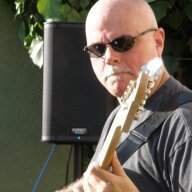
This cat is all over it!! Also I agree with Dan Reeves. That tone knob can be your salvation. A extremely famous Luither told me many years ago that "if the instrument has the highs /mids punch bass etc inherently in it you can always roll it off or out (ie tone knob/ treble/ mid ) But you CAN'T PUT IT IN IF IT AIN'T THERE" Hence using bright strings, ash/maple basses, and onboard pre-amps with guess what, a Tone knob are all tools that can help you and your bass cut through any mix; or blend with the mix; if those tones are there.. I have Nordstrand pre's in all my basses except my Lakland & P bass and that tone knob has saved me numerous times. A real subtle small turn can make a huge difference in whether your tone is crystal clear and poppy with huge defined bass or a muddy thump thump.. and sometimes you may need both!! I personally am not a fan of the flats cause I play a bit of everything and flats, me, and slap dont mix. When I need a thumpier/less defined "ie flat tone" I roll off the tone knob and/or right hand palm mute my strings and play with my thumb to get that effect.. Amplification is another story.. Ill leave that alone..
 
Don't be reluctant to back off on the bass frequencies, even though it seems counterintuitive to a bass player. Then when the tone starts feeling a little empty, fill it back in again with the mids of your choice, depending on the band, room, and volume level. The lowest frequencies work best at low volume, in a soft room (like a bedroom, perhaps). Live, your low lows should be used strictly for balance, almost an undertone.

My own rule of thump is that if it sounds too good and fat close to the amp, there is a good chance you sound like ass out in the fat part of the auditorium. Be very concerned. This is why room players never seem happy with their live tone—the circumstances couldn't be more different, and the problem requires a different solution. You have to be able to imagine what your tone is actually going to do in traffic, not in isolation.

There is no clarity at the low end of the sound spectrum, especially amidst the clutter of a loud band. Learn to love your mids—they make you feel even louder. They are lower than you think.
 
Last edited:
I think every body is on the right track with theirs suggestion's but I think if you used an amp with 2 or 4 speakers you will clean up your over all sound.I use an ampeg 450 head with 410 cab and I can rumble as well as remain very clean. That's my two cents for what its worth. good luck and enjoy the ride.
 
  • Like
Reactions: Dirk Rockbottom