• TalkBass has been independent since 1998. Add your voice.
    Create a free account to reply to discussions, view embedded media, and browse with fewer display ads.
    Join freeLog in
    Want zero display ads or expanded classifieds tools? Compare plans.

Double Bass I give up!

ptg

Mar 16, 2008
640
1,771
I apologize in advance for this long thread as I'm posting to vent and not really expecting any answers since there are none to give.

In essence, this is a bit of a homage to all of you double bass players out there.

Back in the day when I was young :o before there was slapping and tapping on electric basses, I was considered a slightly above average player. Now it's all passed me by and I'm an old hack who gigs here and there...

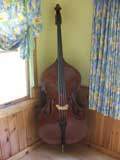
Many years ago my wife surprised me with a beat up double bass that she found in the back of a store. It's a 1940's German plywood bass that sounds great but had major damage and needed a new bridge. But the result of the damage makes it so the bridge cannot be set in its proper place. So, it plays great up to thumb position and then the action is so high well... I'm sure an experienced player may be able to deal with it. Also, the strings are on the outer edges of the neck, again from the damage, and it's a little bit difficult or so I am told by people who can really play.

When I got the bass, I took lessons for a while. He was a nice guy but made me so paranoid, I could never relax. I would start to play and he would stop me and move my first finger 1/16th of an inch and say, "That's better!" I was so worried about my intonation that I couldn't concentrate on anything else and it just wasn't fun.

Years later I tried a second time with a teacher who was a 2-hour round trip away. He insisted I learn to bow before anything. I've been playing the electric since I was a kid and I couldn't even get a note out of this instrument! Add to that I have a bad back and I left every lesson in a great deal of pain.

A few years ago I tried one more time with someone I met through Talk Bass. Great guy although a 3-hour round trip ride. I tried for, I don't know, a few months but (and this is all on me) just got so frustrated I stopped.

So (to start wrapping up the rant) yesterday I thought that maybe I'll pick up a new cheap bass that's easier to play - maybe a Thompson or something. Excitedly, I picked up the bass to play along with a couple of songs. Within 15 minutes my back and hands hurt and I still was playing it like an electric bassist would. I said, "Enough!"

Honestly, I don't know how you guys do it!! I've been playing a fretless electric for 100 years and really love the upright and was so anxious to play one. I knew the transition would take work but I never thought I would be so inept at an instrument that I already had some knowledge on.

:crying::crying::crying:

Whew! I'm done! I just had to vent AND let you guys know how under appreciated all of you amazing players are! Give yourselves a round of applause! Or maybe some vodka in my case ;)
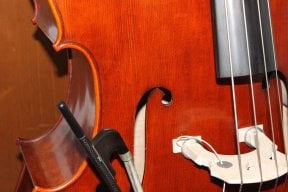
 
Many years ago my wife surprised me with a beat up double bass that she found in the back of a store. It's a 1940's German plywood bass that sounds great but had major damage and needed a new bridge. But the result of the damage makes it so the bridge cannot be set in its proper place. So, it plays great up to thumb position and then the action is so high well... I'm sure an experienced player may be able to deal with it. Also, the strings are on the outer edges of the neck, again from the damage, and it's a little bit difficult or so I am told by people who can really play.


Reads like you were done in by a poorly setup instrument, (Was it ever setup properly?) and the lack of locally available teachers who understood how to get the best out of you.


Anyways, if the desire is still there you could continue in a new direction with some changes to your approach. If the desire is no longer there, well that's fine too.
 
A bit over a year ago I started on the DB after 35 years on BG. I too thought it would be a fairly easy transition. After all I was decent on fretless.

With a decent bass (Shen SB80) and a great teacher I still am nowhere near being able to do on DB what I can on BG. I have, thanks to the great teacher, avoided the pain you have had. It can be frustrating but it is also very rewarding. In addition to learning a new instrument, I am becoming a better musician.

Try and get your bass properly repaired. Even if you don't stick with you can then sell it for a decent price. Try and get a teacher who listens to you.

Good luck.
 
My hat is always off to anyone who plays DB well, or even gives it a good try. Although I can make a fretless sing pretty well, I've always known that the Db would be beyond my capabilities.

To the OP, doubtless a hard to play DB would be utterly impossible for me. Maybe the new one will be better with some time and patience. If not, you gave it a solid try and that's more than most of us do. No shame in that.
 
Have you thought about playing a Dean electric DB . Less stress on the fingers ,easier intonation,ect and it won't drain the wallet . Put the other bass in the corner and ease your mind .
 
Thanks for all the nice words!

I don't know if I have it in me to try again. I love the instrument and I am still the type of person who cries when I listen to a beautiful piece but, unfortunately, that love of music does not necessarily translate to talent.

I did try a few inexpensive EUBs years ago but they sounded like fretless basses and not uprights. Has that changed?

I wish I was a kid again and could start playing the instrument when I had the patience and time to play for hours and hours each day.
 
How long exactly have you been playing DB?

I also come from electric and fretless bass and I didn't have so much trouble making the change to DB, 3 years ago now. Now I also play classical. It wasn't easy either and it needed (and still needs) hard work. But it was less tough then I expected.

Lots of it has to do with setup. The time that the string needed to be 6 inches from the board is long gone.
Also it has to do with expectations. Don't expect it to be easy and prepare yourself for some years of devotion.

My only frustration sometimes is the live amplification of the DB. But that is a problem every player has I guess.
 
t has to do with expectations.


Yes, that's what I've always suspected it was. I don't play either the BG or DB, but I've spent enough minutes playing around with a DB to know that it would almost be like starting over for me, even though my odd fretless bass is much more like a DB than a fretless BG.

Seems like every now and then we see OPs from guys from the BG side saying things like: "Hi. Our leader wants to start doing jazz and he wants me to learn DB. We have our first jazz gig in three weeks. What's the best way for me to learn DB by then? And where can I get a cheap one?"

LF, you expected the jump to DB to take quite a while and you're not disappointed at where you are in three years. Probably not at all true for guys like the fictitious one I quoted, above. Seems to me it would be better for BG guys to think of it like learning the tuba, where they might naturally expect not nearly as much carry over from playing bass on BG.
 
I agree with Damon's statement as well. The most important thing is proper technique- I also agree with the notion of managing ones expectations- these are both well handled with a good teacher. It takes work, time and guidance.

Check out a book by Kenny Werner called "Effortless Mastery"- it has a chapter devoted to "quitting"- and lots of other great musical advise that is not instrument specific.

Joe
 
I'd check out getting the bass set up by a decent luthier. Even if you have to drive a day to get it done, it's worth it.
Also, investigate the Rabbath Technique. It's a little friendlier for Electric Bass guys. You do have to practice with a bow to make it work.
Finally, getting a good teacher is very, very important. This is not a good DIY instrument. Again, even if you have to drive a good ways for a quality teacher, it's worth it.
Don't give up! 2/3rds of my gigs this weekend were DB-it does pay off financially as well as musically.
 
The double bass when played properly is eaiser on the body than the BG by far.

Wow! I am truly shocked to hear anybody say this! All I ever read about is all the hand/neck/back damage that occurs over time playing the DB.


"Check out a book by Kenny Werner called "Effortless Mastery"- it has a chapter devoted to "quitting"- and lots of other great musical advise that is not instrument specific."

Thanks! I am depressed quite often and will definitely check this out!


"I'd check out getting the bass set up by a decent luthier. Even if you have to drive a day to get it done, it's worth it.
Also, investigate the Rabbath Technique."

I've had the bass checked many times and it's the best it can be. It's a shame because I like the sound but it's never going to play any better due to the extensive past damage. If I find it in me to give it another try, I think I would have to buy a new bass. Are the Thompson basses that String Emporium sells a good starter? They seem nice to me but, truly, I have no idea.

All the lessons I've taken were using Simandl; I know nothing about Rabbath although I've heard of it. Without driving anyone too crazy, what is the basic difference between the two?

Thanks, again, for all the responses. Sorry to be so needy but your encouragement is really appreciated.
 
I'd say, what you need to get rid of first is (apart from a bad setup on your instrument :-) ) any of the past experiences and their negative energies blocking you from realizing your potential.

In short, if you consider an (or any) instrument hard (and who wouldn't, after your teacher- and other- experiences?), it will be harder. Still happens to me now and then, I trick myself into thinking "gee, I had these 4 days off, my arm strength will be gone" and guess what- iron arm after 5 minutes. Most days though, I experience the opposite. Like- I had these 2 weeks off (just recently, influenza, you know) and I notice "Hey, that feels nice to play again". Be sure that it will be ok, and it is, and no iron arm comes up.

Kenny's book is great and I liked it a lot and it helps me often, but Victor Wooten's book "The Music Lesson" is as well and opened up another angle to things for me (That's a recommendation). Instead of thinking "I want to be able to, but I can't", try and think "I can already, I just have to figure out how".

Try first and find out how much pressure you actually do need in your left hand- it ain't all that much. And then, try and generate that pressure without the thumb, instead by using the arm and weight. Combination of thumb strength and arm weight will get you much further than brute potato-squeezing force.

Than, rediscover the beauty of EASY things. One nice and beautiful note, for example. Like, if you're into growl, the G on the E-string. Approach the instrument like a child would approach a toy. See what you can to with it. Don't worry about technique already here, that's a little later.

If you mastered the fretless electric, or if you got fluent and somehow proficient on it, there's no reason to believe you can't make it on upright. Give yourself time. Avoid being judgmental. Critical, ok. But be nice to yourself. And SMILE. Heck, even cycling in the rain in November feels better with a smile than with a frown.

I don't know if any of this helps. But what's to lose?

Best
Sidecar
 
I've had the bass checked many times and it's the best it can be. It's a shame because I like the sound but it's never going to play any better due to the extensive past damage.

I don't understand this. My teacher's bass was pretty much TOTALLED when he got hit from behind on his way home from a gig one night, when it got repaired he said it sounded BETTER than before, because a lot of bad repair work got corrected.

Sure, it may be that the repair bill is bigger than the value of the instrument, but you want to make sure that that is actually true before dismissing it. The work I had done to my bass in 2005 cost about the same as I paid for the bass in 1989, the sum of both amounts is only about half of what I could get for it now.
But a good repair by a good luthier should improve both sound and playability. Set up is set up and set up alone may not be enough to ameliorate "extensive past damage", have you ever taken it in and asked "how much to completely renovate this instrument?"

As far as "Wow! I am truly shocked to hear anybody say this! All I ever read about is all the hand/neck/back damage that occurs over time playing the DB." take a look at the bass section of most symphonies, especially the world reknowned ones. Most of those bassists joined as young people and will retire from performing and still teach etc. That's after playing for 50 or so years. You see that kind of physical affect if you DON'T have someone who themselves has a good physical approach help you. Even if it's another bassist and not a "formal" teacher.
 
I am horrible with a camera but I will try to post some pics tomorrow; please bear with me. It was something about when the back and neck were damaged that the bridge cannot be set properly. I was told once that to really have it done right, the repair would be more than the value of the instrument.

As far as location, I live in Suffolk County on Long Island in New York. I don't know if anyone here is familiar with this neck of the woods...

Thanks, too, to Sidecar. Very uplifting.

You are all being very supportive and my heart is telling me to give it another try but my head is saying, Are you crazy?

But my mission for tonight will be to try and find my camera.

Thanks again!
 
All the lessons I've taken were using Simandl; I know nothing about Rabbath although I've heard of it. Without driving anyone too crazy, what is the basic difference between the two?

.

Here's Hans Sturm, Professor of Bass at Ball State, discussing the fundamental differences.
Hans Sturm discusses the Rabbath technique - YouTube
I grew up playing Simandl as well-that can be a dry way to get going. If you opt for trying the Rabbath Technique, I'd get the George Vance Progressive Repertoire for the Double Bass Vols. 1-3. I've had college students make great strides with the study of those books and Rufus Reid's The Evolving Bassist
 
As far as location, I live in Suffolk County on Long Island in New York. I don't know if anyone here is familiar with this neck of the woods...

You're not too far away from Manhattan and David Gage or Samuel Kolstien. Both are great shops that can do great set up work on your bass. There should also be a plethora of teachers to choose from there as well.