• TalkBass has been independent since 1998. Add your voice.
    Create a free account to reply to discussions, view embedded media, and browse with fewer display ads.
    Join freeLog in
    Want zero display ads or expanded classifieds tools? Compare plans.

I saw this on Reverb

The frequency edges don’t go far enough for me. I would never say want to cut my bass off at the knees at 150, that would be ridiculous. Also, when using a lpf as an effect, 150 is an ugly frequency to end up with. I would want to get to somewhere between 60 and 90. On synths you normally go straight down to 20hz. And bringing it back slowly as an effect, there is a LOT of mojo that happens between 40-100hz

Good news! The Low side has no LPF on it, so none of the low frequencies are lost. Just split down different outputs.
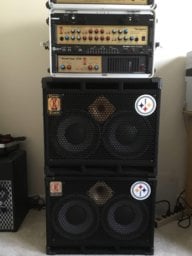
 
In the next few weeks, I am going to purchase a hi-lo pass filter and was saving up for the Tech 21 Q strip or the Broughton filter. While I was perusing Reverb, I came across this and was wondering if anyone is familiar with this pedal or company. One thing I do like about this are the selection of outputs. This looks interesting.

SUBQ - filter based preamp / crossover

Close, but not the same as bi-amping. Having actually bi-amped back in the day, this pedal does not take into consideration different cabs and amps used, each with their own characteristics.

That said, it sure beats schlepping around 250lbs pounds of amps and cabs to gigs. To your point of using with a pedalboard, that is going to have a huge effect to the pedals you have and give a ton of additional sounds to your palette.
 
If on a budget and only looking for HPF, get a Broughton for $70 or an FDECK for a little more. They are perfect for that. If you need the LPF too, get the Broughton. Honestly, they are just that good.
 
there is a LOT of mojo that happens between 40-100hz

Don’t know about mojo.

20-60Hz is considered the sub bass range. More felt than heard and difficult to hear clearly. Most bass amp instrument cabs aren’t capable of going lower than the low to mid 50s anyway. So you can almost always safely cut frequencies below 55Hz without losing anything except mud unless you’re going through the FOH subs.

60-250Hz is what’s generally considered the bass range. Most of “the bass” heard in contemporary music lies between 90-200Hz. Boosting in this range is what’s most often responsible for unwanted boominess.
 
Don’t know about mojo.

20-60Hz is considered the sub bass range. More felt than heard and difficult to hear clearly. Most bass amp instrument cabs aren’t capable of going lower than the low to mid 50s anyway. So you can almost always safely cut frequencies below 55Hz without losing anything except mud unless you’re going through the FOH subs.

60-250Hz is what’s generally considered the bass range. Most of “the bass” heard in contemporary music lies between 90-200Hz. Boosting in this range is what’s most often responsible for unwanted boominess.
Aye this again. Open E’s fundamental frequency is around 40hz, as your name suggests you know quite well. 50%ish percent of an open E is tied up in the fundamental, as bass is harmonically poor with relatively few overtones. You have to be very careful with content below 100hz I agree completely. You don’t generally want a subby bass and a subby kick or you will get mud. But the sound of modern music is 100hz and below. Modern music generally doesn’t feature a lot of bass guitar. Even “rock” bands like Coldplay and maroon 5 mostly stopped playing real instruments like 10 years ago.
 
May be a little late to this party but I think a lot of people in general are missing the versatility in this. While there are many ways you can digitally split your signal (or using multiple analog devices) at a set frequency of your choosing, there is nothing else out there that will do this in one unit with this size/form factor. If this is combined with a summing pedal with phase correction functionality at the end of a chain it is essentially taking the core feature of most historically great bass specific pedals and applying it to your entire board.

Set both pots to the same value, say 180Hz, and you are given the ability to send everything above that value one way and everything below a different one. For example, I simply send everything above the threshold through to the rest of my board while sending everything below directly to a summing blender and then to a preamp/DI.

Using a traditional mixing pedal like the OBNE or the Xotic works well for blending two complete signals together, but the fundamental issue with most pedals that fail on bass as we all know is the low-end loss. Why water down your effected high end signal with a dry one if you don't need to?

This pedal can ensure NO effect will drop your low-end.