• TalkBass has been independent since 1998. Add your voice.
    Create a free account to reply to discussions, view embedded media, and browse with fewer display ads.
    Join freeLog in
    Want zero display ads or expanded classifieds tools? Compare plans.

I thought playing fretless was easy!

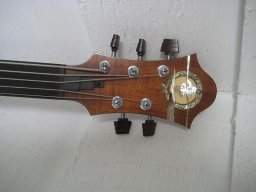
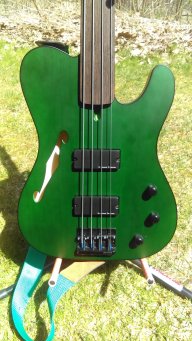
C89E4E1F-565A-4F0C-BC39-3429134857E6_zps0i6hs5ju.jpg
89B20841-5A91-4900-AA65-95E1730FCEA1_zpslkw2wnkg.jpg

Not really relevant, but I thought I'd share.
 
I used to play fretted pretty much in the middle between frets, I would guess a lot of people do. That makes lined fretless feel/look like you're playing a fret high because now you're playing on the lines not in the gaps. Even muscle memory of the position on the same scale is off. I moved my positioning on fretted to almost on the fret and it makes going back and forth easier. Jaco's played a fretted in his video series exactly ON the frets.

when you play fretted you should always practice and perform playing the note as close to the fret wire as possible

1) this is where the best tone is located
2) you wont get sloppy fret buzz

plus this technique helps when you do switch over to fretless because you are already used to the stretches.. it helped me with my transition immensely! its good to even run through simple chromatic runs and string skipping in order to get the spacing for the proper intonation in your hands.

a proper bridge set up and string height is key in playing fretless.. its all about that MWAHHHH..
 
  • Like
Reactions: Emanuel Apascaritei
There are good reasons to play in the same place (close to the fret) on both fretted and fretless. If you play in the middle between frets you actually have to press the string a bit further down, which is both harder and also actually stretches the string a bit more, which may make intonation harder. Coming from guitar, I used to start out playing between the frets, but on bass, playing close to or almost on the fret works better.
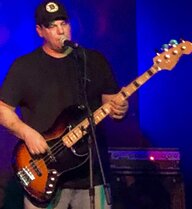
Yes for sure. I have really good intonation on fretted because I trained myself at a young age to play right up on the fret. It does make a difference.
 
  • Like
Reactions: derg
I think it's easier to play unlined fretless. The lines throw me off since I'm not used to playing on the line (where the fret would be on a fretted). I like unlined with the side dots as a reference to the major notes.

That´s my thinking also. I´ve played a Stingray 5 fretless without lines long ago and I remember it was easier than this one.
 
  • Like
Reactions: Spirit of Ox
I'm not an experienced fretless player - yet. But I'm getting there.

IME, playing with proper intonation - and this is probably the biggest challenge of all, at least for a novice player - boils down to two things: 1) developing one's ear to a very fine perception of intonation, and 2) developing one's muscle memory; then fusing one to the other.

As to the former, all the standard "develop your ear" advice would apply. As to the latter, it really falls into the "10,000 strokes" category of discipline that pertains to athletes, especially baseball players (batters), golfers, tennis players, etc. whose success at the game consists largely of mastering a particular repetitive physical technique, i.e. "the swing".

The 10,000 strokes reference means that you'll eventually "get there" by practicing proper technique, over and over and over and over and over and over and over and over and over and over...until it becomes practically second nature. That's the power of muscle memory.

Not only does an accomplished fretless player not need to look at the fret lines, he doesn't even need to look at the instrument. By that point, his hands and fingers instinctively know exactly where to go in order to hit the notes that he wants. He doesn't even have to think about it anymore.

MM
 
Last edited:
Whatever you decide regarding lines, you'll eventually want to be able to play in tune (mostly) without looking at the fingerboard. You can practice this with the help of a tuner. I use the Sonic Research Turbo Tuner. The point is to (1) play a bass line (2) periodically check the tuner's reading against the note you intended to play and (3) make appropriate changes. Over time you'll become more accurate.

Personally, I've also found that over time I'm not as troubled by slight degrees of variation from correct pitch as I used to be. Of course, this may just be rationalization.
 
  • Like
Reactions: Emanuel Apascaritei
I've been playing bass 18 years...been toying with the idea of trying out a fretless, and I'm pretty sure that if I ever did, I'd probably buy one with the fret lines as training wheels. I'm pretty good with pitch and using my ears, and I've played DB in the past! But the idea of going fretless on an electric bass is somehow daunting to me.
 
  • Like
Reactions: Emanuel Apascaritei
Personally, I've also found that over time I'm not as troubled by slight degrees of variation from correct pitch as I used to be. Of course, this may just be rationalization.
Or maybe not...
Any equal-tempered instrument will exhibit small variations from 'correct' pitch on some notes in some keys.
Ironically, fretless players are able to make the microtonal changes necessary to correct unpleasant pitch deviations from just intonation.

Not only does an accomplished fretless player not need to look at the fret lines, he doesn't even need to look at the instrument.
I was speaking to Michael Manring about this in a recent lesson. He told me he pretty much always looks at the fingerboard. I didn't feel so bad after that... I work on not looking, both for the muscle-memory and ear-training aspects - but I still look a bunch. If that's the biggest technique flaw I have in playing in tune, I can live with it...
 
  • Like
Reactions: Emanuel Apascaritei
Thanks for the tip. I would restring it in a moment if it was mine. Now it´s strung with D`addario nickels....dead D´addario nickels.

I recommend La Bella Low Tension Flexible Flats. Stainless steel light gauge flats that feel and sound awesome!

Fretless technique is a little different but not too much. You'll want to use your pinky more wherever you used your ring finger - the distance is perfect for two frets, so you don't have to worry as much about being out of tune. I rarely look much anymore and I've only been playing fretless for about 4 months. Also, you can play with a lot less tension / squeezing compared to fretted.

Regarding why the lines are confusing (I agree by the way - I have them too: see profile pic) I believe it's because on fretted you play between the frets, but on fretless you play on the frets. I know that unless I'm paying enough attention, my brain starts to play tricks on me. For example if I play a G on the line, I will sometimes hesitate / get lost regarding where the G an octave up is - it's almost like my brain couldn't decide which side of the line my finger was on lol It's just a weird visual effect I get when having switched from fretted to fretless, and it often goes away pretty quickly once I get groovin'.
 
  • Like
Reactions: Emanuel Apascaritei
As much as I adore fretless tones, they can be not worth the effort in certain mixes; especially those with heavy guitar wash. I mean you can do it, but what's the point?

I use my fretless almost exclusively at church. When everyone is there, we have

2 guitars (acoustic and electric)
2 keyboaords (mostly piano and then a synth/pad/Hammond)
bass
drums
3-4 vox

I can "mwah" it out and draw smiles in that setting pretty easily. The "fretless-ness" isn't lost in that big mix.

Fretless is particularly awesome with horn sections and in more intimate small group settings. IME. GL and MWAH!

Last week it was me, the acoustic guy, piano and 2 guys singing. It was REALLY nice in that situation. We received number of comments on how much people enjoyed that service.
 
But I´m getting better day by day.
Been playing fretless for almost 30 years. Unlined for 26 of them (I, too, find the lines distracting). Gigging fretless regularly for a little over 20.
I'm starting to see some improvement. ;)

Seriously, though: it's a never ending process. It takes many years to develop and constant effort to maintain good intonation and tone. Just like any instrument, it takes a lot of work to play it well.
 
I went lined because I don't get to practice as much as I'd like. Sure, it may be a crutch, and I don't always look, but I like the quick reference when I need it. I also intonate my fretless as I do my fretted. Check the open string, 12th "fret" harmonic, 12th "fret" fingered and adjusting at the bridge.

Since we're posting pics...

16785871907_ae83e1f484_z.png