• TalkBass has been independent since 1998. Add your voice.
    Create a free account to reply to discussions, view embedded media, and browse with fewer display ads.
    Join freeLog in
    Want zero display ads or expanded classifieds tools? Compare plans.

Double Bass I was shopping for an igloo

It did take a hot knife to pop the top, but since I’d never removed one before, seemed normal to me!
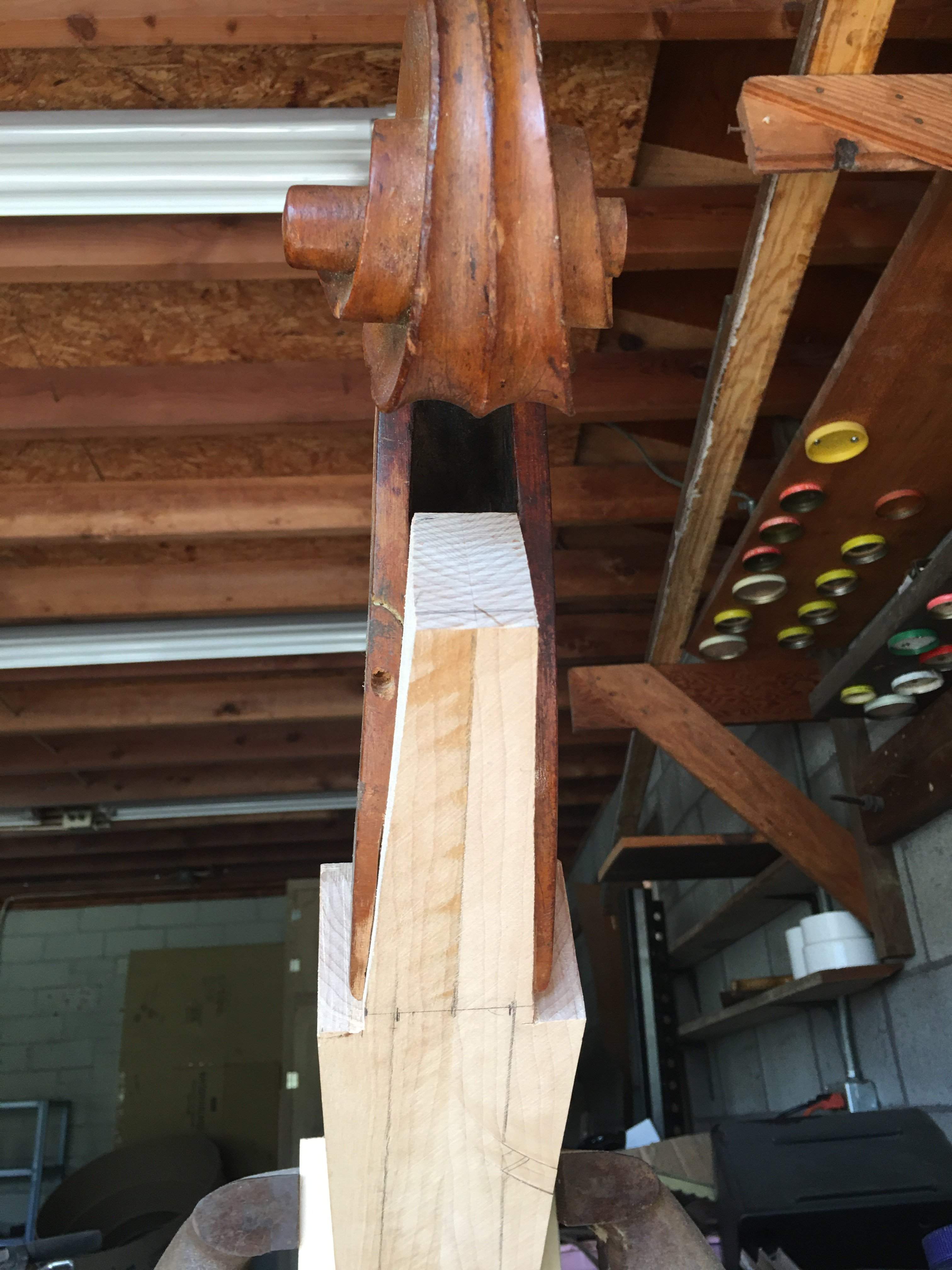
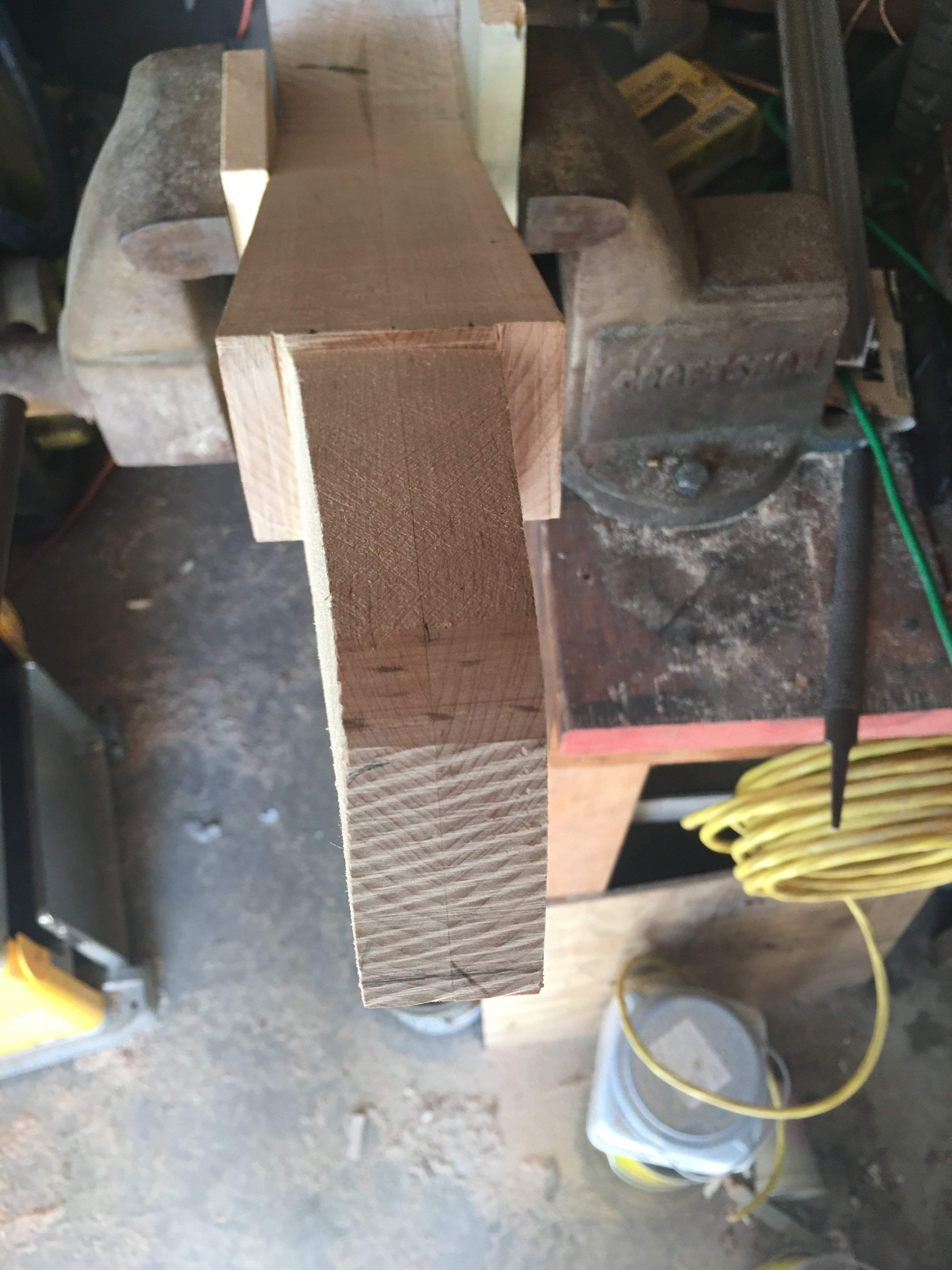
Here are a couple shots of my graft shaping, the first neck stub was just for practice. Unintentionally, so was the second
F0F6D5A3-D2BC-42D2-8AC2-9552F2196BC5.jpeg
5FE8D645-E709-455E-B2ED-EF68394267A2.jpeg
 
American Standards often had a square corner block for the lower bout. The upper one was usually triangular in profile but for some reason they left the lower one square. My guess is that it had something to do with their process for laying up everything in the mould or the cutout pattern in the mould. 'Lay down the first one and and a clamp centers itself well, but by the time you get the rest of the pieces in place, the clamp is offset and wants to slip, so a square allows it to hold better.

I will often glue an additional triangle or such to either the corner blocks or the neck block when doing repairs that are difficult to clamp. After the glue sets and everything is good, then I'll remove the "helper block". This is extremely useful around the neck joint where complicated curves make delaminations difficult to secure solid.
 
'Not trying to be controversial or contradict anyone here, just offering more perspective on lost historic items. Here is a photo from my 1940 American Standard that I just shot. I had to use a mirror to get the right angle, but you can clearly see the upper corner blocks are square and they have round compression marks from the big heavy steel clamps used at the factory. The body of this bass has never been opened up and is factory original. The lower c blocks have been shaped to a more traditional triangle shape.

DSCN9458.JPG
 
Interesting stuff James. I don't see a problem with it. It's a tiny bit of extra material, doesn't mean much.

Yup- 'never been at a gig when the bandleader looked at me and said, "$#@%! You brought the one with the square blocks ???? W T F- go home and get the other one or you're fired!"
 
A pic of the stealthy, View attachment 3815413 Slowey bridge that came with my basket-case bass. I’ve had a hankering to preserve the hokiness of the package as purchased, but I anticipate some pushback here.
I’m probably going to cut a bridge out of some wild cherry wood we’ve had in the barn for 30 years.

I'd keep this. If you put a magnetic pickup on the bass this bridge could be your anchor for the ground.
 
A pic of the stealthy, View attachment 3815413 Slowey bridge that came with my basket-case bass. I’ve had a hankering to preserve the hokiness of the package as purchased, but I anticipate some pushback here.
I’m probably going to cut a bridge out of some wild cherry wood we’ve had in the barn for 30 years.
Whoa nelly! Looks like something you'd find on @dhergert 's bass ;)
 
Thanks Casey,
Actually I’m just a grandpa wanting to jam with grandkids, four of them are fiddlers! I’m still learning about I,IV,V’s!
Awesome build project.

All the fancy bass stuff we obsess about means nothing if we don’t have musicians to play with and you have four right off the bat!

I, IV and V, roots and fifths, played with passion will do the job!
 
Last edited:
My Grandpa used to declare this kind of neglect or deterioration the work of “grasshoppers”. He was a gracious man.
View attachment 3816803I’ve been intimidated by this skin cancer from the get go. I would like to hear some ideas from you folks.
There is a fantastic Facebook group called ‘Double Bass Luthiers’ that cover this type of thing. Super interesting to hear the best bass luthiers in the world (Arnold Schnitzer, Jeff Bollbach etc) kick around bass repair and solutions. They answer questions.
 
JEEEEEEEESSSSSUUUUUSSSSSS.

OK. Block is roached. Fit a new block. Not fun.

For the neck set, I see three options, presented in order of preference:

Sink a bolt through the heel and a captive nut in the block to have a removable neck.

Overlaid button graft for a permanent neck set. Ugly but generally stable.

Take off the back and painstakingly graft in new plies to reconstruct the button. NOT FUN.