• TalkBass has been independent since 1998. Add your voice.
    Create a free account to reply to discussions, view embedded media, and browse with fewer display ads.
    Join freeLog in
    Want zero display ads or expanded classifieds tools? Compare plans.

Ibanez RS824 restoration

MPU

Sep 21, 2004
3,703
10,692
56
Valkeala Finland
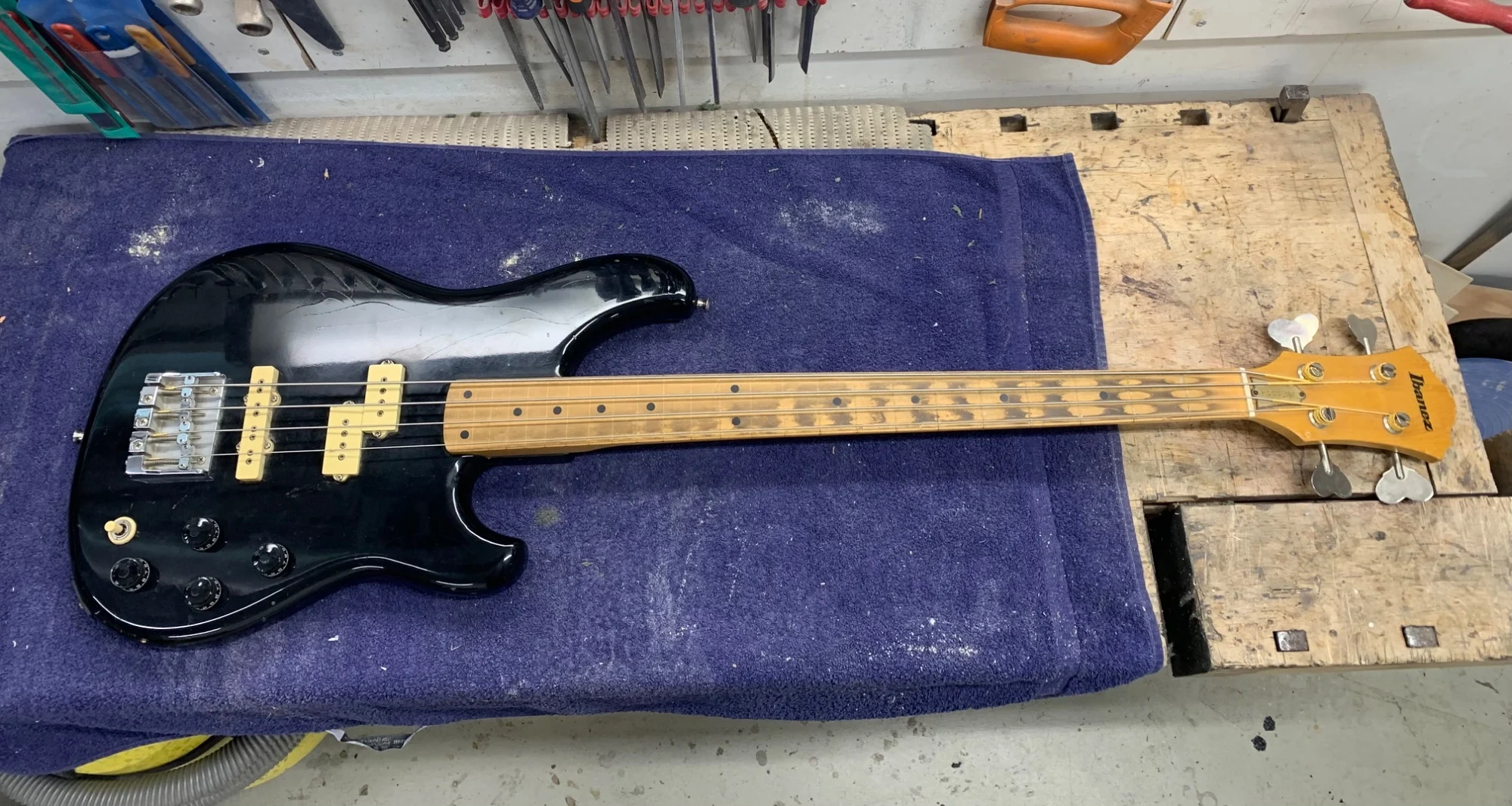
I bought a mistreated RS824 from 1980. The fretboard was wrecked when defretting and it was deep gouged when sanded.
IMG_0298.png


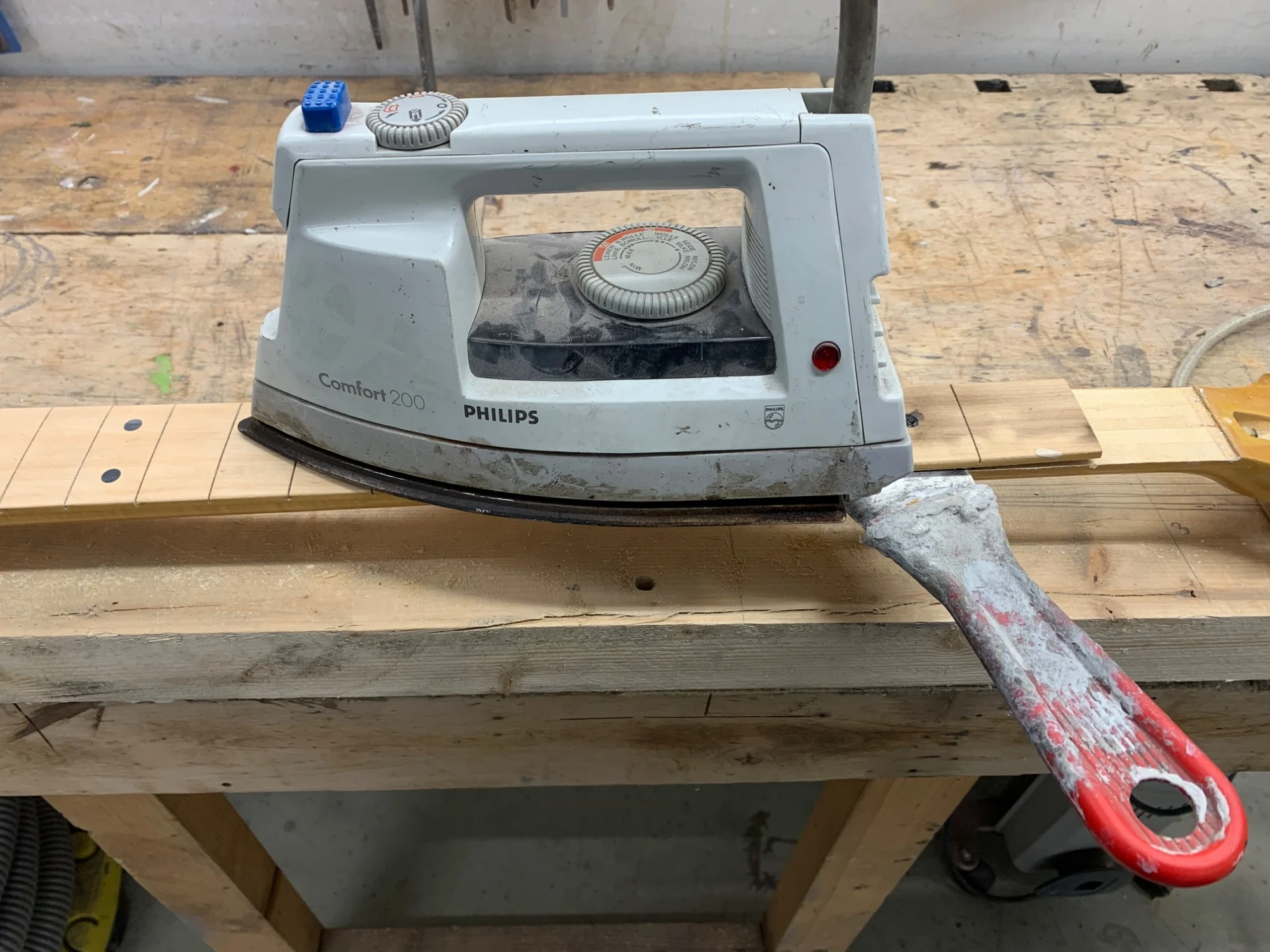
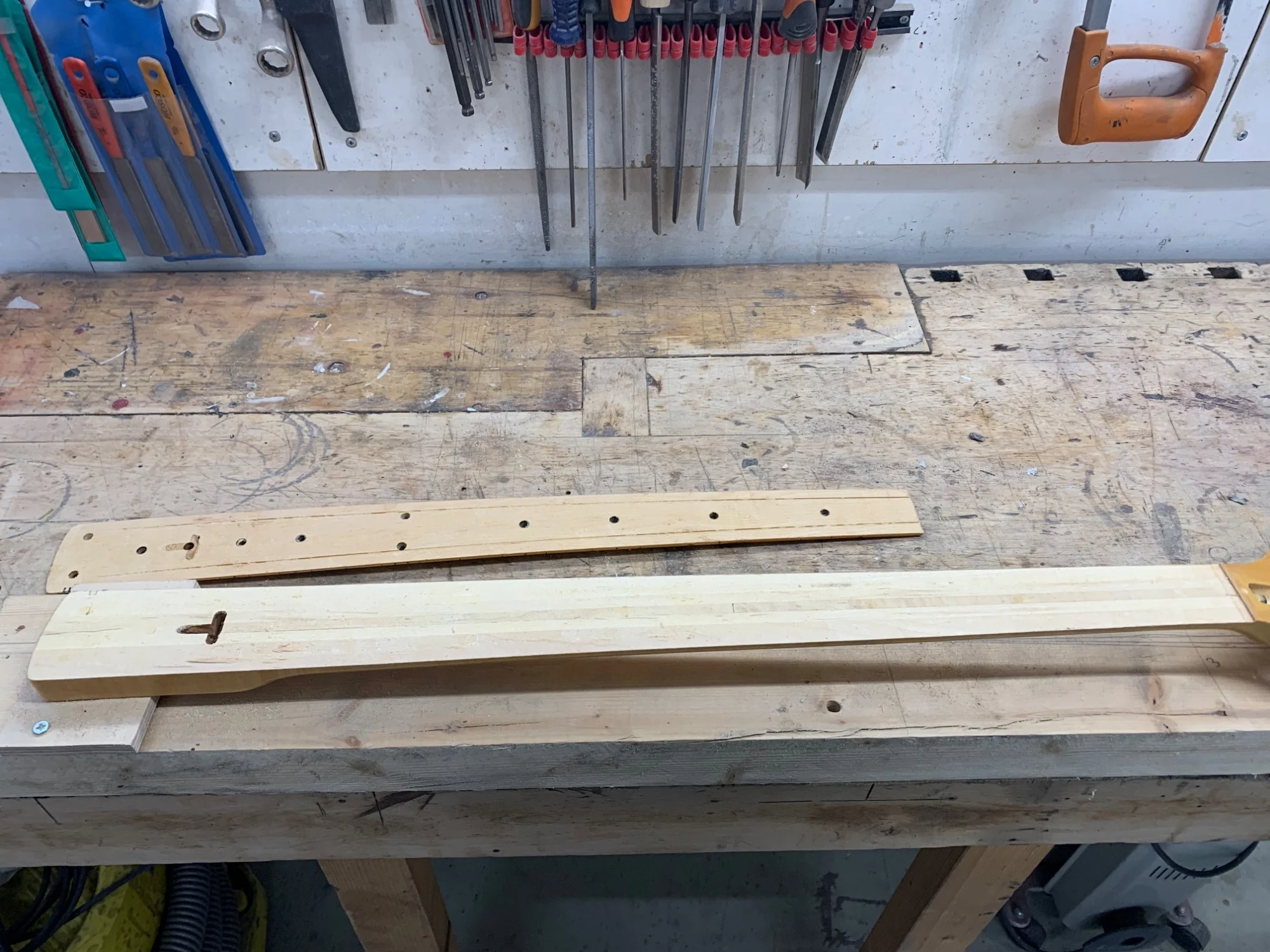
I had to replace the fretboard. Out came my shop iron and after 20min of heating and careful prying the fretboard was off.
IMG_0299.png


IMG_0300.png


I had thought that RS824’s had Tuned Response necks but I found no traces of steel bars in the neck.

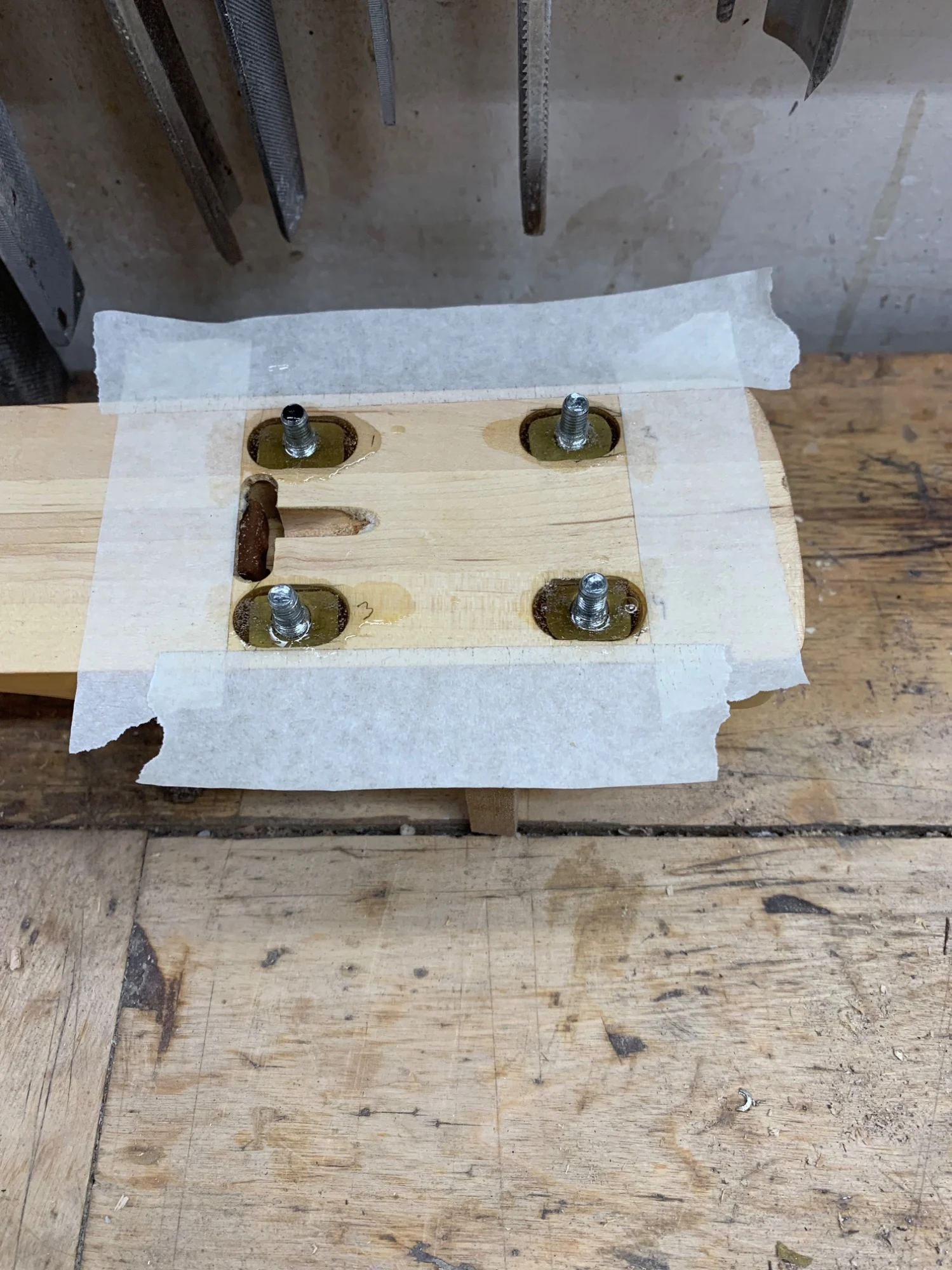
While the fretboard was off I installed brass blocks for machine screws.
IMG_0301.png


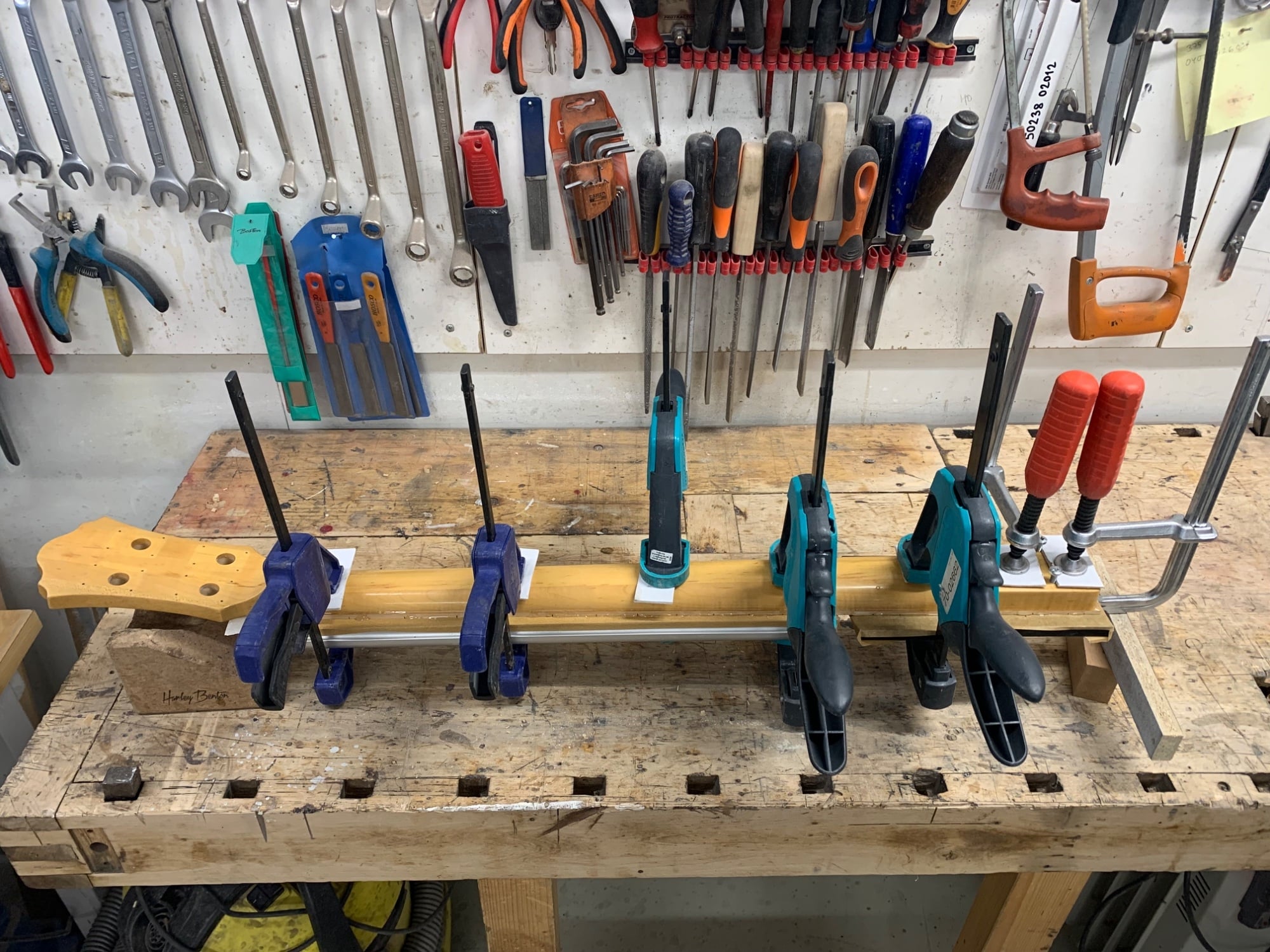
New fretboard is thermo aged maple. I sawed the fret slots, radiused the board and glued front dots before epoxying the fretboard.
IMG_6259.jpeg


Today I final sanded the fretboard and pressed the frets in the slots. I used Titebond in the slots to seal the end grain. Tomorrow morning I’m filing and shaping the fret ends. Then it’s time for polyurethane clearcoat. I’m not looking for perfect finish, I want the age to show. More pics tomorrow.
 
Last edited:
I bought a mistreated RS824 from 1980. The fretboard was wrecked when defretting and it was deep gouged when sanded.

View attachment 7471620

I had to replace the fretboard. Out came my shop iron and after 20min of heating and careful prying the fretboard was off.

View attachment 7471628

View attachment 7471627

I had thought that RS824’s had Tuned Response necks but I found no traces of steel bars in the neck.

While the fretboard was off I installed brass blocks for machine screws.

View attachment 7471630

New fretboard is thermo aged maple. I sawed the fret slots, radiused the board and glued front dots before epoxying the fretboard.

View attachment 7471631

Today I final sanded the fretboard and pressed the frets in the slots. I used Titebond in the slots to seal the end grain. Tomorrow morning I’m filing and shaping the fret ends. Then it’s time for polyurethane clearcoat. I’m not looking for perfect finish, I want the age to show. More pics tomorrow.

Nice work, Marko! It's refreshing to see that somebody else in the world is brave enough to do Scary Neck Surgery on a bass neck. I get a regular stream of requests looking for any Luthier who does this kind of work. Particularly fingerboard and truss rod replacement on more exotic instruments. Hardly any Luthiers will touch them. There's steady work available for someone who wants to specialize in bass neck rebuilding.
 
Neck is ready for clearcoat. I’m trying to keep the finish pretty thin. The neck has pretty thick polyester finish so it should be pretty easy to blend and hide the refinish. I thought about trying to colour match the fretboard to the neck with stain, but when filling the fret ends with ca the colour looked close enough. The fretboard is changed so it may show, especially when the colours are pretty similar, fretboard is a bit more grayish when the neck is yellower.

IMG_6261.jpeg


The neck got brass blocks, the body will get an aluminium block. I’m trying to route, thread and mount the block later today.

IMG_6260.jpeg
 
Last edited:
Well done for saving one of those. They are heavy and the assymetrical body offset is not pretty BUT.... Nothing can beat it in the studio. Zero deadspots, super comfy neck, top hardware. If you look at the 86 George Benson concert on Montreux, the bass player has one of those 80´s Ibanez. If I could take only one bass for recording, that would be the one.
 
Well done for saving one of those. They are heavy and the assymetrical body offset is not pretty BUT.... Nothing can beat it in the studio. Zero deadspots, super comfy neck, top hardware. If you look at the 86 George Benson concert on Montreux, the bass player has one of those 80´s Ibanez. If I could take only one bass for recording, that would be the one.

Zero dead spots? Really? Can you elaborate, @Bertr ?

That is appealing.

Beautiful job on the fretboard restoration, @MPU !

.
 
I have to say that I like doing neck surgery and don’t think it’s difficult at all.
Same. The first one was a little scary, but went well. After that, seeing just how easy it actually is to do, I have since replaced a a couple truss rods and fret boards. Slow and steady with a little attention to detail makes for a successful job.
 
I have to say that I like doing neck surgery and don’t think it’s difficult at all.

Same. The first one was a little scary, but went well. After that, seeing just how easy it actually is to do, I have since replaced a a couple truss rods and fret boards. Slow and steady with a little attention to detail makes for a successful job.

I have to say...you are inspiring me to fix this Squier neck that has a broken truss rod. I currently have zero money in it, so if I destroy it, it won't be any real loss. Hmmm... 🤔

20260411_130526.jpg
 
  • Like
Reactions: Lo-E and joeLowB
Yep,
Zero dead spots? Really? Can you elaborate, @Bertr ?

That is appealing.

Beautiful job on the fretboard restoration, @MPU !

.

I have the same one but with 2 band preamp (which was not very good so I removed it). Actually it´s on longterm loan to a good friend.
The infamous 7th deadspot on the G string on Fenders is not there. Nor anywhere up to the 24th fret. I suppose it´s a question of neck (headstock+laminated neck - you can see the 3 parts at theback of the neck+ EXTREMELY heavy body).
I would NOT play that on stage (not having the talent of Benson´s bass player, well... let´s just say that there are better looking basses)
I used GHSL 3045 (40-95). Sounded fantastic.

I tell you a funny story. I used to live in Paris and spent some time in the GTR shops in Pigalle in the mid 90´s. Once I was talking to a guy in a shop full of MM, Fenders etc.... I mentioned that I had one of those. He says to me 'You don´t want to sell it? I know some pros who are looking for those as studio workhorse.

(I think I´m gonna call my friend next week....)
 
Last edited:
  • Like
Reactions: joeLowB
The infamous 7th deadspot on the G string on Fenders is not there. Nor anywhere up to the 24th fret. I suppose it´s a question of neck (headstock+laminated neck - you can see the 3 parts at theback of the neck+ EXTREMELY heavy body).
I would NOT play that on stage (not having the talent of Benson´s bass player, well... let´s just say that there are better looking basses)
I used GHSL 3045 (40-95). Sounded fantastic.

Very helpful... thanks for the details

.
 
Fretboard after four coats of 2k urethane, sanded after two coats. Colour match is nowhere near perfect, but I don’t think it will bother me. Original finish is satin, which is nice because I don’t have to polish the fretboard. I’m planning to sand it with 2000 grit and leave it there. I also polished the bridge, tuners and screws.
Tomorrow I’m going to do the sanding and fret leveling, crowning and polishing. I filed and ffinished the fret ends before clear coating. I used medium size frets, I prefer smaller frets.


IMG_6263.jpeg


IMG_6265.jpeg
 
Last edited: