
Just on the verge of becoming "officially" a working bassist (not tending bar or writing code.. actually playing the bass and getting paid for it). Long story short, I have become worried that the market for a bass-player who's playing and gear style are definitively in the realm of "Fender" "Round-tone" "Basic Groove" is maybe nonexistent? This comes to mind as I see bassists in good groups and working bands with good contracts and gigs and notice that their axe's more resemble butcher-block cutting boards and sound like a mallard with a head-cold flying south for the winter. It seems the strings are ever thinner and more numerous every time I look. Is there room for a blues/R&B/honky-tonk Fender "Round-Toned" player like me? 4 heavy gauge strings only? Or... do I need to go to Williams Sonoma and shop for some end-grain kitchen furniture and break out my uncle's old duck call?

Enjoy the benefits of a premium membership!
Upgrade Account
-
TalkBass has been independent since 1998. Add your voice.
Create a free account to reply to discussions, view embedded media, and browse with fewer display ads.
Join free Log in
Want zero display ads or expanded classifieds tools? Compare plans.
You are using an out of date browser. It may not display this or other websites correctly.
You should upgrade or use an alternative browser.
You should upgrade or use an alternative browser.
Identity Crisis
- Thread starter honkyfunk
- Start date
More options
Who Replied?
...
Is there room for a blues/R&B/honky-tonk Fender "Round-Toned" player like me? 4 heavy gauge strings only?
...
Unless your definition of working bassist is playing in a successful band that needs that very tone, I have to say realistically no, not really. To be an in demand pro bassist and make a decent living I think you can't be a one trick pony, no matter how much we may consider the trick in question to be a good and mandatory one to have in your toolbox. Too many already have your tone in said toolbox, in addition to many others, so someone looking for a bass player for a project may choose the more versatile player.
I would add that many who seem to be playing multi-string, custom, active basses also have a more traditional, passive bass in their arsenal. Though not always. Some of those boutique basses even have active/passive switches.
That said, I'm not a working bassist myself, in that playing bass is not my main source of income, so I get along just fine with only passive four string basses.
Neither am I, I'm quite happy to have a well paid day job to fund the music interest. While it would be great fun to play more I don't want the pressure of having to find enough work as a musician.

I used to have 'my own sound', nowadays I feel like a chameleon. If old school sound is you, then there's absolutely no problem staying that way as long as you're gigging and have food to eat. 
Just on the verge of becoming "officially" a working bassist (not tending bar or writing code.. actually playing the bass and getting paid for it). Long story short, I have become worried that the market for a bass-player who's playing and gear style are definitively in the realm of "Fender" "Round-tone" "Basic Groove" is maybe nonexistent? This comes to mind as I see bassists in good groups and working bands with good contracts and gigs and notice that their axe's more resemble butcher-block cutting boards and sound like a mallard with a head-cold flying south for the winter. It seems the strings are ever thinner and more numerous every time I look. Is there room for a blues/R&B/honky-tonk Fender "Round-Toned" player like me? 4 heavy gauge strings only? Or... do I need to go to Williams Sonoma and shop for some end-grain kitchen furniture and break out my uncle's old duck call?
If you really are "on the verge" of going pro, you will be far more able to answer this question than 99% of the people posting on this forum.
And, again, if you really do have an offer on the table, and said offer knows what your sound and capabilities are, then obviously the answer is yes.
I used to have 'my own sound', nowadays I feel like a chameleon. If old school sound is you, then there's absolutely no problem staying that way as long as you're gigging and have food to eat.
This is exactly it. IF you are going to be a "professional" anything, it means you are going to mke a living at it and that means it's a BUSINESS.
And you are CEO of that business. Probabaly CFO, VP of marketing, Director of Research and a bunch of other jobs as well.
This means that you have to identify something to sell. The rule in business is : Nothing ever happens until somebody sells something.
And to sell something you have to identify a product, the market for that product, the prospects for growth or even continuance of that market as well as other possible markets you might expand into later.
So in the case in point, the product is bass playin in Old School, solid groove, Fenderish style. The question then has to be is there enough demand for that product to support your business. And will that demand continue for a period of time.
Music like many other businesses are very fad-driven. You aren't making copper pipe that has stayed the same for centuries. Today they can't get enough of one thing and tomorrow they don't want any but want something else.
So right here you have to make a decision. Are you going to follow the demand and adapt your product to the demand or are you going to attempt to DRIVE the demand to your particular product. Neither is more correct, but the latter is much more difficult, though rewards can often be extreme compared to the former.
Point is that YOU are CEO of the business. The decision whether or not to invest company funds and the time it takes to learn to play it the way people want in a butcherblock bass is YOUR decision and you'll have to justify it by the return that investment brings back in.
Business is so complex and there is such variety, nobody can tell you what these decisions should be. All of them are in a sense "correct" because you can find examples of ALL of them where they have been made to work. But that isn't the question. The real question is which way is best for YOU. And sadly only YOU can answer that one and that depends on your exact situation and views.
The imporant message is that the "right" way to go usually takes a few mistakes trying the "wrong" ways first, but the businesses that turn out sucessfull in the end are the ones that make the mistakes, learned from them and kept trying.

Obviously, it comes down to the band and what they/you are shooting for. Modern Praise music, fusion funk, etc. you better have the more modern tones to offer. Wide swath cover band you need almost every bass tone in the known universe. But I'm noticing recently A LOT of popular bands on TV and video where the bassist is playing some version of a P or J type bass, some with 5 strings, and laying down a basic rich and thick classic tone. Personally, I like using a variety if the tunes call for them. But the tunes run the show and have the final say, IMHO. Good luck and keep thumpin'.
It's pretty much about you and what sounds you're able to produce, and willing to produce for the gig(s) you want or need.
I saw Darryl Jones live with Miles back in the 80's and he melted my face off with a display of chops and volume that was just staggering. I've heard him with the Stones and it was a completely different thing.
I saw Darryl Jones live with Miles back in the 80's and he melted my face off with a display of chops and volume that was just staggering. I've heard him with the Stones and it was a completely different thing.
- Oct 18, 2012
- 6,683
- 5,538
- Disclosures
- Endorsing Artist: Fender, Spector, Ampeg, Curt Mangan, Nordstrand Pickups, Korg , Conquest Sound
I see working bassists using all types of gear, all brands, all styles, etc. There is no right or wrong. Play what YOU like.
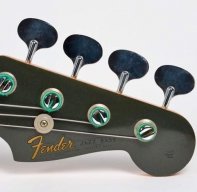
It's art. There are succesful people in all styles of music, and there are people who aren't. But it's not usually because of their tone or their bass - it depends on what they have put into it.. and a little luck usually too.
But if you are a Fender-lovin', round-tone-havin', basic-groovin' kind of player, then that is who you are. And there is nothing wrong with that. There will be people who like your style (and your instrument) and people who don't, but that goes with anyone and anything. Best not to worry about that and just concentrate on the music. So in the words of a bumper sticker I once saw..
"Be what you is, cuz if you be what you ain't, then you ain't what you is."
But if you are a Fender-lovin', round-tone-havin', basic-groovin' kind of player, then that is who you are. And there is nothing wrong with that. There will be people who like your style (and your instrument) and people who don't, but that goes with anyone and anything. Best not to worry about that and just concentrate on the music. So in the words of a bumper sticker I once saw..
"Be what you is, cuz if you be what you ain't, then you ain't what you is."

My main bass is an active 6 string. But I have no problems playing a passive P bass if the music calls for it. I have just as much fun playing Motown as I do playing prog-rock. If you want to make money playing bass, you have to be willing and able to take a variety of gigs.

MDBass
Supporting Member
- Nov 7, 2012
- 8,590
- 14,890
- Disclosures
- Endorsing Artist: Dingwall-Fender-Bergantino-Dunlop-Tech 21-Darkglass-Nordstrand
Unless your definition of working bassist is playing in a successful band that needs that very tone, I have to say realistically no, not really. To be an in demand pro bassist and make a decent living I think you can't be a one trick pony, no matter how much we may consider the trick in question to be a good and mandatory one to have in your toolbox. Too many already have your tone in said toolbox, in addition to many others, so someone looking for a bass player for a project may choose the more versatile player.
This is right on the money for the most part; it's not really that you're at risk of losing a particular gig to a more versatile player as much as more versatile players will simply be suited (and get called) for more gigs.
I'm fortunate enough to make a living as a live and studio side man, and my gigs run the gamut from indie/pop and alternative rock/metal to hip-hop and latin, all of which obviously require very different tones and playing styles.
That being said, there will ALWAYS be gigs that call for a traditional style (read, looks like a Fender) bass played simply and musically with good sound and solid time


Just on the verge of becoming "officially" a working bassist (not tending bar or writing code.. actually playing the bass and getting paid for it). Long story short, I have become worried that the market for a bass-player who's playing and gear style are definitively in the realm of "Fender" "Round-tone" "Basic Groove" is maybe nonexistent? This comes to mind as I see bassists in good groups and working bands with good contracts and gigs and notice that their axe's more resemble butcher-block cutting boards and sound like a mallard with a head-cold flying south for the winter. It seems the strings are ever thinner and more numerous every time I look. Is there room for a blues/R&B/honky-tonk Fender "Round-Toned" player like me? 4 heavy gauge strings only? Or... do I need to go to Williams Sonoma and shop for some end-grain kitchen furniture and break out my uncle's old duck call?
You will take all those guys' gigs if you play great time and sound great. Sounding great, in general, means a P or a J type. Sorry to the "all music is art" crowd, but playing a bass that has inappropriate frequency response all over the place ain't art. You show up to the gig with a P or J, the sound man will love you. Show up with a dual parametric mids preamp, soapbars, and mahogany EVERYTHING, the sound man will want to murder you. That stuff can sound really cool in the right context, but a working top 40 band is not it.


