
Can't like enough. It does take some getting used to, and it helps to have good (not the best but not the cheapest) gear as well. Your hearing/health are worth the investment. The wired system I use at church cost me about $375. That's with Westone dual driver IEM's, a Rolls PM50S and an extension for the Westone cord. The BEST money (and probably the least) I've ever spent on gear.

Enjoy the benefits of a premium membership!
Upgrade Account
-
TalkBass has been independent since 1998. Add your voice.
Create a free account to reply to discussions, view embedded media, and browse with fewer display ads.
Join free Log in
Want zero display ads or expanded classifieds tools? Compare plans.
You are using an out of date browser. It may not display this or other websites correctly.
You should upgrade or use an alternative browser.
You should upgrade or use an alternative browser.
In-ear or floor monitors??
- Thread starter pbassman1217
- Start date
More options
Who Replied?
I think once you go to a proper IEM solution where band mates can individually control their mix it is nearly impossible to go back to floor monitors.
Impossible. All the years of wedges and lost hearing...so sad. Even a jazz trio gig seems loud to me now. When I take my ears out after church, the people talking is louder than listening to my mix - and I hear everything perfectly.
It's a no brainer.

@SteveC
Yes I learned this the hard way. The band I toured with for 2-3 years we was complete in ears with individual mixes run through our Iphone or Ipad. I then started helping a couple bands that had the wedge for monitors and couldn't hear anything. Finally convinced them to try and order some cheap IEM sets. They love it and it just makes life as a musician or vocalist so much easier.
Yes I learned this the hard way. The band I toured with for 2-3 years we was complete in ears with individual mixes run through our Iphone or Ipad. I then started helping a couple bands that had the wedge for monitors and couldn't hear anything. Finally convinced them to try and order some cheap IEM sets. They love it and it just makes life as a musician or vocalist so much easier.
@SteveC
Yes I learned this the hard way. The band I toured with for 2-3 years we was complete in ears with individual mixes run through our Iphone or Ipad. I then started helping a couple bands that had the wedge for monitors and couldn't hear anything. Finally convinced them to try and order some cheap IEM sets. They love it and it just makes life as a musician or vocalist so much easier.
Being able to mix yourself via iPhone is also amazing if you can afford it. And it's not THAT much considering the benefits.

I didn't see anyone bring it up (maybe missed it), but which mixer you use is key. If I was going around to different venues with different systems all the time, IEMs would not work for me. I simply can't interrupt the show a dozen times to ask the FOH soundtech to adjust my mix (and I play in a small time bar band so detailed sound checks are not possible.)
Both bands I play in happen to have the XR18 digital mixer and I use the XairQ app on my phone to control my own mix. It's pretty great! For the band I play keys in, I'm hardwired, the bass band I go wireless (sadly we're on hiatus cuz of the lead singer's health problems).
Even with a relatively quiet drummer, it can be a blessing. We did a gig last weekend in January with a brick wall behind us, hardwood floors and a tall wall about forty feet in front. Our sound guy said it was the single worst room he's ever had to mix in. The reflections were horrible, the drummer and guitar player could barely hear anything, the drums were super loud despite the drummer doing his best to hold back. (and our singer loves to hear himself really loud in his floor monitors!!) With my in ears, I just took the bad room out of the equation.
Of course amps need to be mic'd (or DI'ed) for this to work, but I've never felt the need to add drums into my monitor mix, I always can hear them just fine through my earbuds. It's one way of making sure I don't crank my monitor volume up too high.
Both bands I play in happen to have the XR18 digital mixer and I use the XairQ app on my phone to control my own mix. It's pretty great! For the band I play keys in, I'm hardwired, the bass band I go wireless (sadly we're on hiatus cuz of the lead singer's health problems).
Even with a relatively quiet drummer, it can be a blessing. We did a gig last weekend in January with a brick wall behind us, hardwood floors and a tall wall about forty feet in front. Our sound guy said it was the single worst room he's ever had to mix in. The reflections were horrible, the drummer and guitar player could barely hear anything, the drums were super loud despite the drummer doing his best to hold back. (and our singer loves to hear himself really loud in his floor monitors!!) With my in ears, I just took the bad room out of the equation.
Of course amps need to be mic'd (or DI'ed) for this to work, but I've never felt the need to add drums into my monitor mix, I always can hear them just fine through my earbuds. It's one way of making sure I don't crank my monitor volume up too high.
The best mixers I've seen and used are the Mackie DL1608 and 32 channel boards. You can set up your own wireless network with a router and band members can download the Free Master Fader Application and use on their Apple devices. Simplistic and works great. I've installed this system in 4 different churches that I've helped with. All have loved them.

Good point.I didn't see anyone bring it up (maybe missed it), but which mixer you use is key. If I was going around to different venues with different systems all the time, IEMs would not work for me. I simply can't interrupt the show a dozen times to ask the FOH soundtech to adjust my mix (and I play in a small time bar band so detailed sound checks are not possible.)
We are a small time band and provide our own PA 95% of the time (as most UK bands do) so have full control of our IEM mix (which being vocals only is not exactly complex).
When we have a provided PA and sound guy we (reluctantly) use the floor monitors and let the sound guy do his thing.
I wouldn't trust some of the sound guys with the IEM sliders, our guitarist never changes levels without warning us first. I'm not convinced all sound guys would be quite so careful with our hearing.
Hmmm.. This is interesting, my (now defunct) band was also "small time" but half the venues we played had PAs and SEs. Using IEMs was never an issue in those places. Our singer always used them, he was quite mobile and required them, and I started using them about a year ago. Wouldn't a limiter eliminate any risk from a sloppy slip of a slider? (Genuinely curious, I've read limiters are what save your ears but your comment is the second or third I've read in the last few days regarding IEM risk with unknown SEs.)Good point.
When we have a provided PA and sound guy we (reluctantly) use the floor monitors and let the sound guy do his thing.

Strangely, there are musicians who do not like IEM at all, but none in this thread.
I myself prefer a good stage sound done with cabinets to IEM mixes - and i prefer IEM to a bad stage sound.
If the band is really set up for IEM and all the amps that are not needed are off the stage, it is much easier to
get a good sound, both for FOH and on stage. No 4x12 screaming into the drum's overheads and no problem making that chick with the decent, high voice audible, where usually the gain of the mic needs to be set so high that it picks up feedback from the stage noise.
The big downside is, if you prefer to play loud, you're used to feel the music with your body as much as you hear it with your ears. That's gone with IEM. And that's why Tecamp invented the Pleasureboard and numerous brands have 'butt shakers' for the drummer's seat.
In one of my current bands, the singers use IEM and the guitars have attentuators. The drummer has a serious medical issue and is forced to play on e-drums - that's why we can set the sound as silent as we wish. The lead guitar plays a 30w Orange head with 212 cab that is set to half power. As soon as that is saturated enough, we have our mark for the volume.
I myself prefer a good stage sound done with cabinets to IEM mixes - and i prefer IEM to a bad stage sound.
If the band is really set up for IEM and all the amps that are not needed are off the stage, it is much easier to
get a good sound, both for FOH and on stage. No 4x12 screaming into the drum's overheads and no problem making that chick with the decent, high voice audible, where usually the gain of the mic needs to be set so high that it picks up feedback from the stage noise.
The big downside is, if you prefer to play loud, you're used to feel the music with your body as much as you hear it with your ears. That's gone with IEM. And that's why Tecamp invented the Pleasureboard and numerous brands have 'butt shakers' for the drummer's seat.
In one of my current bands, the singers use IEM and the guitars have attentuators. The drummer has a serious medical issue and is forced to play on e-drums - that's why we can set the sound as silent as we wish. The lead guitar plays a 30w Orange head with 212 cab that is set to half power. As soon as that is saturated enough, we have our mark for the volume.

s0c9
Supporting Member
Yes, it would. If you are wireless IEM then you already have that.. as most have built-in limiters in the receivers. I can't find any that don't, but hesitate to say "all". There are fixed (non-adjustable) limiters on cheaper models - like the PSM200, which can lead to "pumping" as they kick in an out - but fully adjustable on the higher end models (PSM900/1000, Senn G3..) You can fix "pumping" by setting up your gain levels correctly, so your ears will be protected if the singer drops his/her mic.Wouldn't a limiter eliminate any risk from a sloppy slip of a slider? (Genuinely curious, I've read limiters are what save your ears but your comment is the second or third I've read in the last few days regarding IEM risk with unknown SEs.)
If you are WIRED then you should ABSOLUTELY have a brick-wall limiter between the audio source and your buds.
Heretics.Strangely, there are musicians who do not like IEM at all, but none in this thread.

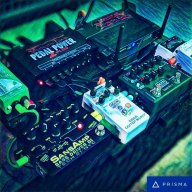
Xr 18 all the way baby! +1View attachment 1042566 Love the in ears. I have custom molded inserts, so the sound is amazing. Coupled with a Berringer x18, Mackie, or other board, you can get your own personal monitor mix to set with an iPhone or iPad. This makes hearing everything so much easier. I had to go back to wedges and it sounds like a muddy mess, and I have no control over my personal mix I was never so happy to go back to the ears. I've added a screen shot of my iPad when the system is going. I have lots of control over my sends and EQ. I love it. I think this was either a Berringer x18 or x32 board here.


