• TalkBass has been independent since 1998. Add your voice.
    Create a free account to reply to discussions, view embedded media, and browse with fewer display ads.
    Join freeLog in
    Want zero display ads or expanded classifieds tools? Compare plans.

Is anyone using Heavy string sets on a Rickenbacker bass?

I just got a new Ric 4003 and am loving it, but am wanting to try some different strings than the nickel ones on it now. I'm planning on ordering some Rotosound 66 SS strings for it soon, and am thinking of trying the heavies. Realizing that I may have to alter my setup a little, I may stick with the standard gauge for now, as I'm really just wanting to hear the Rotos on it, without doing a lot of tweaking.

On my 6 string electrics, I sometimes think the heavy stings sound better. If anyone is using heavies on a Ric, how well does the guitar & neck react to them? How does the string tension feel, similar or different? Is there a noticeable difference in sound? Thanks.
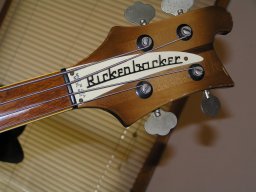
 
I think you'll be fine. The 4001 basses didn't hold up as well as the 4003 series. I use the stock Ric round wound strings but when I got the bass a few years ago it had Elixirs on it. Heavier than I like. The bass is a 2004 and had been strung that way for years with no issues. SS strings as a rule will be brighter than nickel. Possibly a bit louder, too. So many other factors go into what creates your unique sound that only you can answer. Hope this helps.
 
  • Like
Reactions: Iristone and Zener
Actually for heavy strings on a Ric, I prefer this instead:

168749_ts.jpg

I know, it's fretless . . . .
 
  • Like
Reactions: Zener and jamro217
I don't own a Ric, but would do it with a 4003 and not worry about it. Research string tensions of the other brands too. Some strings have very different tension and are the same basic type of string.
Back in the day a friend of mine bought a 4001. It was a group of several Bass players using the same Bass in a jam room sort of thing. I had the Ric on loan for a week or so and put some Roto 66's on it. All the other Bass guys were pissed! The Ric came with flats on it and the rounds just killed everyone's groove except the guy who actually owned it. He and I loved it because it sounded more like Geddy and Squire. LOL
 
  • Like
Reactions: Zener and GTHintz
What you guys are saying is sounding good to me. Sounding brighter, and more like Geddy & Squire would not be a bad thing. I'm wanting that Rick twang. I have another bass for the deeper stuff.

J Wilson - What's that thing tuned to? I can picture flea playing that, in his underwear of course.

I may get lucky on the heavies. Since the bass got here and acclimated, the small amount of relief in the neck seems to have straightened out to almost flat. There's still a little, and just a slight amount of string buzz. If the heavier strings pull just a little more relief into the neck, it will not be a problem, and I may get away with not even having to adjust the rods. The heavy Rotos don't really appear to be all that much heavier then the standards.
 
  • Like
Reactions: GTHintz
@michael_t, Thanks! Great info! That's an 8% increase. If it pulls a little more relief, that should be perfect. I already ordered a set of heavies, and a set of standards to have as a backup, that will likely go on my old Kramer aluminum neck. I think the heavies are going to sound great on the Rickenbacker.
 
Strings on an electric 6 string (I'm assuming guitar) typically run from 10 to 20 pounds of tension on a string - a 12 E string is about 20 pounds (depends a bit on scale length). Really light gauge bass strings run about 35 pounds per string, heavier ones can get up to around 60. If you wonder why guitars use such light tension strings, try bending notes on a bass - you don't get very far trying to do that with regular bass guitar strings. So, I'd suggest that even light gauge bass strings are (in the guitar sense) extra heavy tension wise - if you're going heavier because normal bass strings feel too "slinky", go for it, but if you're guessing you'll like heavier strings because you like heavier guitar strings, that may not transfer from guitar to bass as much as you think it would.

Sonically, the difference between gauges isn't all that much - the difference between new and broken in strings is MUCH bigger than the difference from one gauge to the next. People here will argue about whether heavier or lighter gauge strings are brighter sounding - you'll find folks on both sides of that argument; both are convinced they're right - the point is the difference is small enough that people can't reliably hear it, but.....in changing strings, they can fool themselves into thinking that a new set of strings is brighter because of the gauge, when in reality it's just that they're....new.
 
Last edited:
I think you'll be fine. The 4001 basses didn't hold up as well as the 4003 series. I use the stock Ric round wound strings but when I got the bass a few years ago it had Elixirs on it. Heavier than I like. The bass is a 2004 and had been strung that way for years with no issues. SS strings as a rule will be brighter than nickel. Possibly a bit louder, too. So many other factors go into what creates your unique sound that only you can answer. Hope this helps.

Good post. The 4001s neck was not as stout as a 4003. In fact,mWhen ‘I bought mine back in the 70s,Mathew owners manual issued dire warnings about using strings other than Rickenbacker Brand strings designed “‘specifically” for Rickenbacker basses. Using and other strings would void the waranty. Sheesh….
 
  • Like
Reactions: jamro217
@micguy ... I agree with you 100% on both of your paragraphs, and did think about that. Liking .011s on a six string may not translate to liking heavier ones on the bass. And agree that the difference between new and broken in is significant & noticeable.

On guitar it seems that when switching from nines to elevens and back, the heavier strings give a little more something, maybe sustain. It always seemed to me that more metal rather than less should be better, as long as they're still comfortable to play.

@dbsfgyd1 ... thanks, glad to hear about the neck strength. Mine does have the double rods, and I'm glad. About the factory strings. Imagine if you had to use Fender strings on your Strats & Teles, Gibson strings on your Les Pauls & SGs, Martin strings on Martins. NOT. I've violated all of those already. Haha.

JJP ... good question. I just got the Ric, but I asked the store rep when I bought it, and he said the standard long scale is what to use. That's what I ordered earlier. If it proves wrong, I'll update. I know it does seem to be borderline.
 
Dumb (Ric) newbie question. Can you use "plain old" strings on the 33.25" scale Ric? Something I would put on a "standard" 34" scale instrument?
I just got the Ric, but I asked the store rep when I bought it, and he said the standard long scale is what to use. That's what I ordered earlier. If it proves wrong, I'll update. I know it does seem to be borderline.
Worry not: there's quite a bit of afterlength at either side - i.e. between bridge saddles and ball-end anchoring at one end, and between nut and E-string tuning post at the other - of the speaking section of the string, which translates to plenty of room for a conventional long-scale set to be used without the fat part of the thickest strings ending on the post.
 
  • Like
Reactions: JJP_1984_LB50
@micguy ... I agree with you 100% on both of your paragraphs, and did think about that. Liking .011s on a six string may not translate to liking heavier ones on the bass. And agree that the difference between new and broken in is significant & noticeable.

On guitar it seems that when switching from nines to elevens and back, the heavier strings give a little more something, maybe sustain. It always seemed to me that more metal rather than less should be better, as long as they're still comfortable to play.

The thing that bigger strings absolutely give you is… they’re louder. All else being equal, louder will always sound bigger, better, fuller, more sustained (especially if there’s a drive pedal or a tube amp involved.)

Of course, with a bit more gain added early in your signal chain, you can easily offset that advantage - but if you’re not thinking about what is going on, you can easily fall into the “bigger strings sound better” mental trap.

If you need evidence that skinny strings sound OK, listen to some ZZ Top. Billy Gibbons plays 7’s.
 
Folks, we need to review the history:
1) 4001's and the earliest of 4003's had the double "hairpin" truss rods. They had Maxima nickel flats in @ 40-55-75-105 gauges. That's all the rods would take. I know: I have a 4002 (yes, "2", not "1" or "3") with the hairpins.
2) The flats, tension wise, which came on the 4001's OEM have about the same tension as a set of 45-105 NPS rounds. (The math is hashed out in other threads) I played a set of GHS Boomers 45-65-85-105 on my 1976 4001 with no issues.
3) At one point, Rickenbacker changed from the hairpins to a double truss rod that is more conventional in its structure. You can use just about any reasonable set of strings on it.
4) Recently, Rickenbacker has again changed, this time to a single conventional truss rod. Again, you can use just about any reasonable set of strings on it.
5) By "heavies," do you mean the 50-105 set, or something even heavier, like Jamerson bridge cables? Remember that with the slightly shorter scale (33 1/4 compared to "Fender standard" 34), you may or may not devolve to thump on the heavier strings.
6) Personally, I would never use more than a 45-105 set on a Rickenbacker, but not for tension reasons. It is for tone reasons: if you want the clank, growl, grind, and top end of that school of playing a Rickenbacker, anything heavier than a 45-105 set of stainless rounds will damp the tone. If you want the mellow, flats, Sir Macca tone, you get that from the current incarnation of the Optima RB flats set, the spiritual successor to the Maxima OEM flats. If you want a more versatile tone, then you need a 40-100 or 45-105 set of good nickel plated steel rounds that have a good midrange, like Boomers, Progressives, Pressurewounds, etc. D'A strings have a lower mid scoop to their tone which exacerbates the lower mid/upper bass natural scoop of the maple body of a Rickenbacker, and do not blend well.
 
@iiipopes Thanks for the info. No, I wasn't thinking of anything heavier than the Rotosound "heavy" set, 50-70-85-110. I ordered one set of those, and one set of Rotosound "standard", 45-65-80-105, with one being for the new Ric, and one for the old bass. Do you really think that much is going to dampen the strings a noticeable amount? If so, I'll put the heavies on the old bass. I am into the clank, as you described above, but have not had the Ric long enough to experiment with it, so I'll take your opinion on it. Thx again.
 
Dumb (Ric) newbie question. Can you use "plain old" strings on the 33.25" scale Ric? Something I would put on a "standard" 34" scale instrument?
Long scale (34") strings work just fine on a Ric. The space between the nut and the tuners will take up the same amount of string as a bass with a longer scale length and a smaller peghead. At the bridge end there isn't much extra string. String through bodies (like Fender Telecaster basses) use an extra 2 inches or so at the bridge to accommodate travelling through the body. The length of the strings an instrument uses isn't always a direct match for the scale length. Hope this helps.
 
  • Like
Reactions: JJP_1984_LB50