Ive been considering shiming my neck pocket for a while since my strings are as low as they can go and the relief is fine but the action is still too high towards the higher frets. Ive been reading quite a few threads on 'shiming' and heard that shiming can create an "hump" on the neck of your bass due to the wood conforming to the tiny gap created from the shim. I was wondering has this happened to any one? and if so how severe was this so called "hump"? also if anyone has any suggestions on shiming feel free to comment. thanks.

Enjoy the benefits of a premium membership!
Upgrade Account
-
TalkBass has been independent since 1998. Add your voice.
Create a free account to reply to discussions, view embedded media, and browse with fewer display ads.
Join free Log in
Want zero display ads or expanded classifieds tools? Compare plans.
You are using an out of date browser. It may not display this or other websites correctly.
You should upgrade or use an alternative browser.
You should upgrade or use an alternative browser.
Is shiming dangerous?
- Thread starter frochahcho
- Start date
More options
Who Replied?
Shimming usually involves putting a piece of something about the thickness of a business card under the neck as near to the bridge as you can, so, under the back screws. This creates an angle that brings the strings closer to the higher frets for a given bridge height. If you higher frets are the problem, it sounds like you need to see if there is already a shim in there and take it away.
And no, it's not 'dangerous', thousands of basses are shimmed with no ill effect
And no, it's not 'dangerous', thousands of basses are shimmed with no ill effect
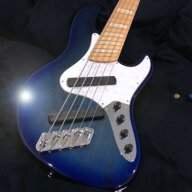
If a shim is required, you don't have much choice - I've never heard of any problems caused by a shim & many factory basses are shimmed...
You can make a tapered shim that fills the complete neck pocket (more work, but "safer" - if there's any truth to the hump scenario)...
You can make a tapered shim that fills the complete neck pocket (more work, but "safer" - if there's any truth to the hump scenario)...
A shim is perfectly safe and many, many Fender basses have left the factory with a shim.
Occasionally a neck will develope a hump or 'ski-jump' at the end of the fingerboard, but that isn't really related to a shim. Generally, it's a result of the neck compressing at the body joint due to many years of pressure from string tension. If a neck is prone to ski-jumping, it's likely it will do it with or without a shim.
Occasionally a neck will develope a hump or 'ski-jump' at the end of the fingerboard, but that isn't really related to a shim. Generally, it's a result of the neck compressing at the body joint due to many years of pressure from string tension. If a neck is prone to ski-jumping, it's likely it will do it with or without a shim.
Thanks for the input. One more quick question question, how are you supposed to tell how thick the shim should be.... (The bottom of the finger board to the bottom of the E string is about 4 mm.)
I'm not sure why I ever even bring this up as I generally have to put on the damn flame suit. Much of this simply gets back to how demanding the owner wants to go.
There are rare issues that crop up with shims. But more significant is the forethought used upon employing them.
The occasional issue is that some shims can "settle". Often the reason for sandpaper is not so much to grip but to prevent an possible settling or compression. This is not a common issue yet it may occur with certain items that can compress over time as can a poorly designed shim may shift. This is one reason why sandpaper is often used (& also thickness control). Remember that the surfaces are wood and not planed to a tight tolerance. Some time back I had seen brass shims sold with their thickness inscribed on them. Although this is an expense that could be avoided I had wondered why such a thing was sold and had been told by several people that simply using any cardboard of heavy paper can lead to a compression in an area where the tolerances were measured in ten thousandth(s) of an inch or less. Matchbook covers and things of that sort may be things to avoid. Additionally differing levels of exacting construction can vary in amplified instruments.
There are rare issues that crop up with shims. But more significant is the forethought used upon employing them.
The occasional issue is that some shims can "settle". Often the reason for sandpaper is not so much to grip but to prevent an possible settling or compression. This is not a common issue yet it may occur with certain items that can compress over time as can a poorly designed shim may shift. This is one reason why sandpaper is often used (& also thickness control). Remember that the surfaces are wood and not planed to a tight tolerance. Some time back I had seen brass shims sold with their thickness inscribed on them. Although this is an expense that could be avoided I had wondered why such a thing was sold and had been told by several people that simply using any cardboard of heavy paper can lead to a compression in an area where the tolerances were measured in ten thousandth(s) of an inch or less. Matchbook covers and things of that sort may be things to avoid. Additionally differing levels of exacting construction can vary in amplified instruments.

You can't easily measure how thick a shim should be. Just start with a business card thickness and adjust from there.
Thanks for the input. One more quick question question, how are you supposed to tell how thick the shim should be.... (The bottom of the finger board to the bottom of the E string is about 4 mm.)
Usually a very thin shim goes a long way - because the new "angle" created in the pocket translated to quite a shift in the location of the headstock - I'm sure there's a mathematical formula, depending on the length of the neck... I usually start small (approximately business card thickness) maybe .020" (20 thousandth of an inch)...
BUT I AIN'T NO EXPERT... I've only shimmed 3 necks & my last one was a tapered shim - .020" to .000"
I used a high density plastic for the shim, worked by hand with a sanding block to achieve the taper...
You might need to experiment to find the proper thickness...

Business card material is good because it is denser than other types of cardboard. When I have installed shims, I usually use 2 thicknesses, and then can re-set the bridge pieces back to their middle positions for full adjustment.
The shim should be about 1/2" wide and fit the bottom of the neck pocket side to side. I can't imagine it causing the neck to change shape - you are talking about bending the last 3 inches of the neck - I don't think so!
Be sure to check your truss rod for proper relief after that also - it is always a balancing act between relieve and saddle heights.
The shim should be about 1/2" wide and fit the bottom of the neck pocket side to side. I can't imagine it causing the neck to change shape - you are talking about bending the last 3 inches of the neck - I don't think so!
Be sure to check your truss rod for proper relief after that also - it is always a balancing act between relieve and saddle heights.

Guys, avoid compression by using soda cans. You can cut them different lengths and ramp them to the tail end. Very thin, three or four would equal a business card.
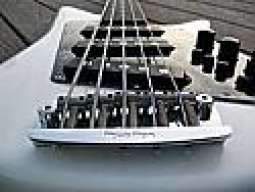
I've found that plain old masking tape, or blue painters tape works fine. Very thin, and you can overlay it and taper it up to the end of the neck. Can be as gradual as you have time to invest doing.
Sure, paper tape is fine. If it compresses over time you will notice it and add another strip. People use picks with good results too. I should have said earlier that compression of business cards will be minimal and really isn't an issue. My preference is aluminum can and build a ramp shim, you get taper and fine thickness control using it.
I cross hatch it with sand paper, and a layer at a time put one drop ca glue on it and let it set before adding the next. Just to ensure slippage is not a problem.
I cross hatch it with sand paper, and a layer at a time put one drop ca glue on it and let it set before adding the next. Just to ensure slippage is not a problem.
okay just took the neck off my bass, ended up finding a shim already in there so i replaced that with a little thicker material and i havnt noticed any changes... ill try doubling it and see how it works. also i had a bit of trouble getting the screws back in after taking the neck off. any suggestions on that? (mabe put some wd40 on the screws?)

no wd40 on the screws!!! i'd rub the screw threads on either a bar of soap or a candle to help with the friction.

DO NOT USE A POWER SCREW-DRIVER TO WORK WITH THE SCREWS ON A BOLT ON NECK! This has resulted in an over-torquing of the screws cracking the paint/ clear poly finish, stripping the holes, etc. Once you start getting finish cracks around the neck insertion point the Bass is VERY hard to sell and often even if pictured with the neck off the body folks simply don't want to pay what it's worth.
You won't need anything like WD40 with a proper tool for the screw-head (you want to avoid making the heads ugly also). You WANT the resistance of wood to steel.
Whenever work on an instrument is considered, always get the right tools and think through the issue. It's unfortunately all too easy to ruin re-sale value fast with a few errors.
If a shim is already in place I would say that it's appropriate for you to seek some advice from someone who really knows a great deal about work on musical instruments. Find someone who works at an ethical small store, etc - rather than an "assembly oriented individual" at a large retail chain. The evidence of a pre-existing shim should be a "red-flag" to get some professional opinions
You won't need anything like WD40 with a proper tool for the screw-head (you want to avoid making the heads ugly also). You WANT the resistance of wood to steel.
Whenever work on an instrument is considered, always get the right tools and think through the issue. It's unfortunately all too easy to ruin re-sale value fast with a few errors.
If a shim is already in place I would say that it's appropriate for you to seek some advice from someone who really knows a great deal about work on musical instruments. Find someone who works at an ethical small store, etc - rather than an "assembly oriented individual" at a large retail chain. The evidence of a pre-existing shim should be a "red-flag" to get some professional opinions
before i'd do a shim i'll simply take off and reattach then neck - sometimes redoing the joint can make it better without shimming.
okay will try the soap or candle. why dont bass/guitar makers make it so that shiming isnt neccesary? just the saddle to be raised or lowered..
Latest posts
-

-

-
 I asked for feedback here a little while ago, and this is what it turned into
- Latest: instrumentlevel
-

-
