• TalkBass has been independent since 1998. Add your voice.
    Create a free account to reply to discussions, view embedded media, and browse with fewer display ads.
    Join freeLog in
    Want zero display ads or expanded classifieds tools? Compare plans.

Is sustain such a many splendored thing?

I love sustain and would never use a foam mute however: I have high mass bridges on basses with less sustain than cheap bridge basses so I don't think it makes as much of a difference as others say it does. I use my right hand to shorten the notes of my choosing, I often mute the strings as the snare hits for space and drama. I play fretless with flats and my right hand gives the sustain or space I need.
 
My band prefers me to get as little sustain as possible. They said try to keep it under 1 millisecond if possible.
giphy (49).gif


:)
 
Eat more burritos or subs and shovel some dirt and bulk up those palms. Ever heard of right hand muting?

It's okay. You can move to the next note. You do not have to wait for the note to die.

Unless you are to lazy to fret with the right hand. Foam, some lard on the strings should shorten the sustain. A capo may help for more difficult keys. Use the left hand to hold beer or a cigar.
 
To me, sub lows are good in recordings, but on a stage, they are just not good on a number of levels unless the sound system is perfect.
Even then, the kick drum needs its
Territory.
I am greatly interested in this subject and would love to hear your thoughts

I generally agree. I like to hear the distinct notes what the bass is playing.

Then again I just saw this massive sub reggae:

upload_2023-3-24_0-11-20.jpeg
 
On a bass, I really don't need it. I actually have foam under the bridge on most of my basses right now.
I absolutely love hearing a note die out semi slowly.
If you look at Mr Jamerson, you will see what I mean.
Secondly, I know that high mass bridges contribute to sustain, from experience, I know that they change the low end profile. My unscientific experience is, sub lows are enhanced a bit. To me, sub lows are good in recordings, but on a stage, they are just not good on a number of levels unless the sound system is perfect.
Even then, the kick drum needs its
Territory.
I am greatly interested in this subject and would love to hear your thoughts

J l mattox
As others have mentioned, I'd rather have lots of sustain that I can shorten when needed vs. not having sustain when I need it.

BTW, @jellymax, I love your Flesh Gordon power pasties avatar! :thumbsup:
 
What do you exactly, precisely mean about sustain*? And why it is so sought after? Bass string rings x-seconds when you pluck it. That's it. Played since 1975 and forums sustain talk is still mystery to me. Enlighten me.
Of course you can and should manipulate it when needed. But 99,999 % you need to make it shorter than the string naturally rings on a basic bass guitar.

*Latin: sus-, meaning "up," plus tenēre, meaning "to hold"
 
Last edited:
Sustain is a good thing. Good technique, so that you can mute is even better. There are situations where you want a single note to ring out; during a break to accentuate another instrument or the last note of a song.

The main reason I use a compressor pedal is to get a bit more sustain, although I don't like what it does to my tone. I'm learning to use very light plucking to keep a note going without people hearing the additional notes being plucked.
 
Totally agree. We get all enamored with sustain when much of what we play requires the opposite. Same thing goes big time in acoustic guitars, where I also spend a lot of time. Massive sustain just doesn't work for many styles.

This is why I always make snide, snarky comments on the various "tonewood" threads here, regarding SOLID body electric instruments. What songs do you play where you're gonna play one note and just let it ring forever? And how do you know your additional 2.8 seconds of sound, in that song with that one LONG note, is better than the next person's lack of 2.8 seconds?

Ok, OML. (Off my lawn...) ;)
 
I agree 100% with the OP. I've never, ever played a bass that wouldn't give me the sustain I needed (except for dead spots of course but lots of people around here don't seem to think dead spots even exist so...;)).

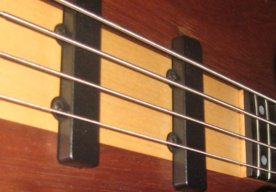
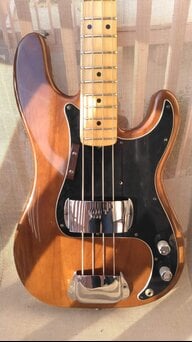
Even a foam muted P-bass with LaBellas gives me all the sustain I need as long as I place the foam slightly further back than Fender used to back in the day. I attach the foam in a slanted position over the point where the strings leave the saddles which preserves slightly more sustain but still dampens overtones and creates a bouncier attack. In fact, shaping the attack is FAR more important to me than the sustain. This also affects how I use compressors, not for sustain or for levelling the dynamics but to shape the attack.

Seriously, what genre of music needs 20 seconds of sustain from the bass guitar??? Or even 10 seconds for that matter? (I'm sure someone will be around shortly to tell me though :laugh:).

In fact, ending the note at the right time is far more important to me than sustain. The timing of note endings is often the main difference between a good bass player and a beginner. The groove is in the endings. Endless sustain is anti-groove in my world. Of course having a bass with amazing sustain won't do any harm. I'm just saying I don't find it necessary, or even an issue at all. At least not with any of the hundreds of basses I've played over the years.

I also agree about what the OP says about sub bass. For most musical genres bass guitar isn't really about deep lows but about getting the mids right.
 
The only situation I feel the need of bigger sustain is in bigband, when there's common low walking line decorated with occasional high long note. The high note is in this context hard to hear and fast to expire. That, however, is not what is generally meant by sustain, I think.

As a Fender guy, I feel that the nice idea of extreme sustain, which modern instruments are often designed to have, is very often compensated by too plain dynamics with dull transient. When I pop the G string and don't hear the brutal Marcus Miller head-tearing sound, that's a sign for me that the bass won't sing. I know well that others might have other opinions, with much greater results than mine.