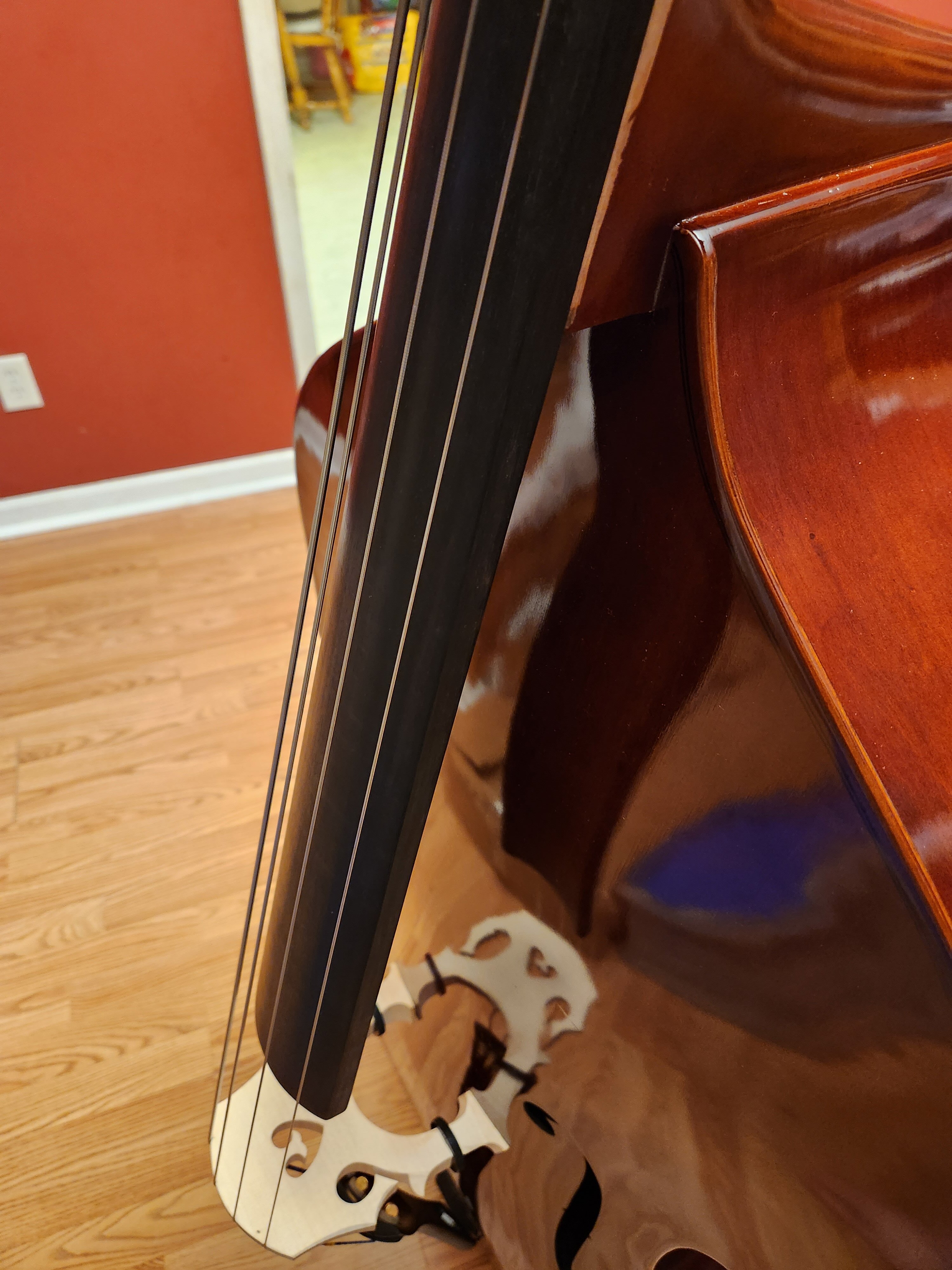
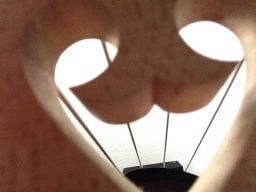
Oh. I missed that, but Don's right. Your bridge is leaning forward, which happens sometimes when you tune up, the strings bring the crown of the bridge with them a little bit.
Tune everything down about a whole step and then lay the bass on it's back and get down by the endpin, put your pointer, middle, and ring fingers over the bridge, between the strings and gently pull it back toward you until the edge of the feet closest to you are touching the table. Not a big deal, but you don't want to play it like that and we all have to do this now and again, so it's good practice. Then tune back to pitch, obviously.
The feet should be expertly shaped to the arch of the top. They may not be, but it'll be easier to tell once the bridge is seated properly. Leave that to the luthier when they remove material from the bridge to bring your adjusters into play. The middle of the feet should align to the notch in the F-Holes and it should be centered. You may or may not want to press your luck, but the luthier would for sure set this correctly after reshaping your bridge. They would probably also check your soundpost shape and position and you should let them, it can be like turning on a light switch, especially if it wasn't fitted properly to begin with.
Another trick for a rainy day is to draw in the slots with a #2 pencil before you put the strings on. It will leave a little graphite debris behind that will serve as lubricant for the strings, so that they don't pull the bridge when you tune them up. I do the same thing in the slots on the nut, but it's probably not as important, since the nut isn't going to move. If you want to try this, just make sure to do one string at a time. If you loosen all of them, the sound post will fall. There's no risk of that as long as 3 of the strings keep tension at a time.
Luthier can do all of this, but basic string and bridge maintenance is a necessary field skill. Getting your bass to cooperate with you will make learning and playing a lot easier and more fun.