• TalkBass has been independent since 1998. Add your voice.
    Create a free account to reply to discussions, view embedded media, and browse with fewer display ads.
    Join freeLog in
    Want zero display ads or expanded classifieds tools? Compare plans.

is this two or three tone sunburst?

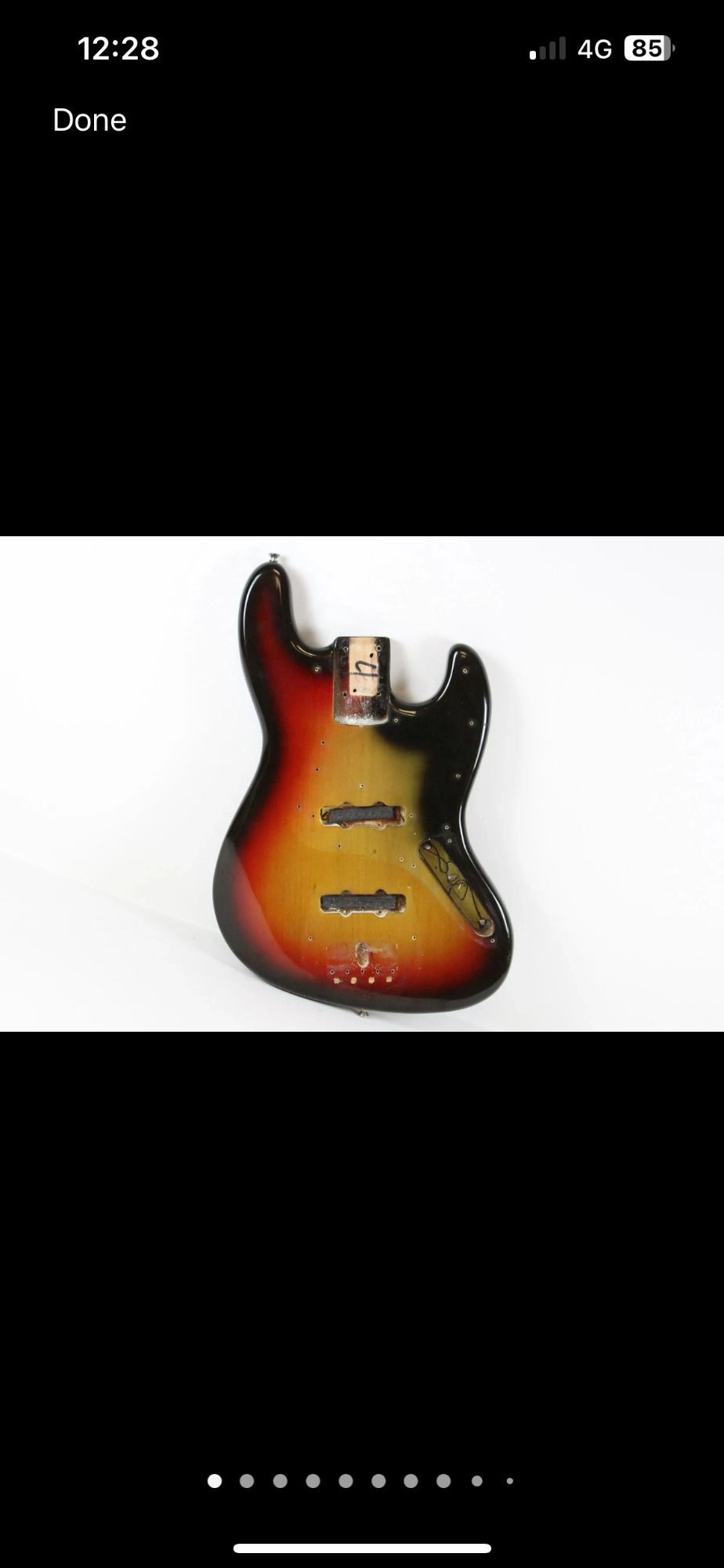
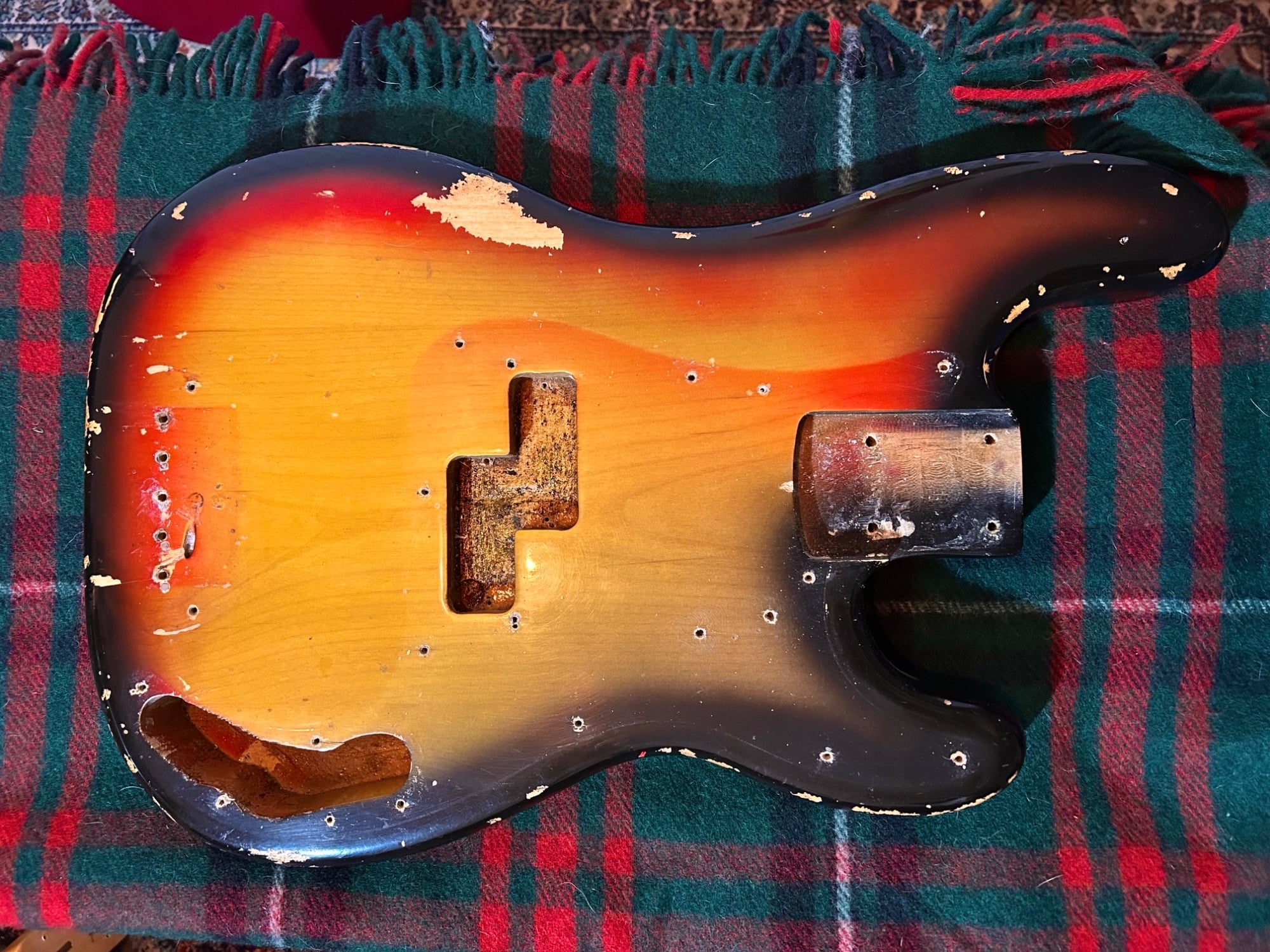
It’s two tone. The black has been hazed over the yellow to create the illusion of a red band - or as the Japanese factory does so often, replicate a faded three tone burst from the sixties. Ironically the reds Fender used up to the early 60’s were very strong pigments and generally didn’t fade.. If it was genuinely red it would be obviously red. Why would you change guns to spray a red band for it to end up being questionable as to whether it’s red or not? Dudes in the booth probably pump out 20+ a day and this fake three tone saves time and money,. As for the lower bout having no “red” that’s because NO Fender P or J ever had red there because it was always fitted with a guard therefore hiding the red. Fender’s policy was always to save that 9 inches worth of red paint coz you were never gonna see it anyway. On top of not wasting red there, the guy painting that section of the body saves approximately ten seconds of time by not bothering to feather out the black. Pic 1: a three tone 74 body with no red wasted under the guard, pic 2 my 68 P body with no red wasted under the guard.
IMG_1083.png
IMG_1033.jpeg
 
Last edited:
  • Like
Reactions: sonic boogaloo
I've played a mid-90s JB-62 as my main bass for the past 20 years. Great instrument! Mine is one of those basses other bassists try, then ask if you're interested in selling it. At some point I replaced the PUs with Fralin noiseless, but I've often considered reinstalling the original (Fender USA I believe) set - the Fralins are great (and silent) but miss some of the grit and drive.

Also, that's a 3-tone sunburst.
It's consistent with the original 1962 JBs. On your bass just observe the difference between the area under the pick guard and the rest. Back in the day, Fender saved some extra pennies by not "wasting" red paint by spraying where it wouldn't be seen.
If it had the US pickups, it is a JB62-US. It has an alder body (instead of basswood) and different tuners. And different pickups…

My guess would be 3-tone btw. There’s just to much red to be 2-tone.
 
D
It’s two tone. The black has been hazed over the yellow to create the illusion of a red band - or as the Japanese factory does so often, replicate a faded three tone burst from the sixties. Ironically the reds Fender used up to the early 60’s were very strong pigments and generally didn’t fade.. If it was genuinely red it would be obviously red. Why would you change guns to spray a red band for it to end up being questionable as to whether it’s red or not? Dudes in the booth probably pump out 20+ a day and this fake three tone saves time and money,. As for the lower bout having no “red” that’s because NO Fender P or J ever had red there because it was always fitted with a guard therefore hiding the red. Fender’s policy was always to save that 9 inches worth of red paint coz you were never gonna see it anyway. On top of not wasting red there, the guy painting that section of the body saves approximately ten seconds of time by not bothering to feather out the black. Pic 1: a three tone 74 body with no red wasted under the guard, pic 2 my 68 P body with no red wasted under the guard. View attachment 7406816View attachment 7406817
Amn, beat me
It’s two tone. The black has been hazed over the yellow to create the illusion of a red band - or as the Japanese factory does so often, replicate a faded three tone burst from the sixties. Ironically the reds Fender used up to the early 60’s were very strong pigments and generally didn’t fade.. If it was genuinely red it would be obviously red. Why would you change guns to spray a red band for it to end up being questionable as to whether it’s red or not? Dudes in the booth probably pump out 20+ a day and this fake three tone saves time and money,. As for the lower bout having no “red” that’s because NO Fender P or J ever had red there because it was always fitted with a guard therefore hiding the red. Fender’s policy was always to save that 9 inches worth of red paint coz you were never gonna see it anyway. On top of not wasting red there, the guy painting that section of the body saves approximately ten seconds of time by not bothering to feather out the black. Pic 1: a three tone 74 body with no red wasted under the guard, pic 2 my 68 P body with no red wasted under the guard. View attachment 7406816View attachment 7406817
Damn, beat me to it.
I just posted and deleted this.

Two-color or two-tone.
Where the black fades away allowing the main color to show, it might appear to be a different tone, and it is, but it isn't a different color.
 
I hadn't heard that, but it jives with how my '72 P looks under the pg. Red fades more quickly with exposure to light than the other two colors, but it looks like the lower part of the body never had any red (you can see the remaining patch of red near the neck, and a hint near the jack).

That's right, red was intentionally never sprayed on the lower area. More significantly on your bass it's clear as day that red was applied to the entire upper areas, even where the pickguard covers it up, protecting it from sunlight fading. Note that the red at that spot is still vivid compared to the rest of the red.
 
  • Like
Reactions: WRM and shojii
If the "red" we see is actually a fading of the "black", why isn't it also present on the lower bout?...

Yeah, the notion that a 2-tone sunburst somehow morphs into 3-tone is absurd. The opposite can happen though, but usually only on the side that was way more exposed to sunlight. Normally that means the front fades, but not the back nearly as much.