• TalkBass has been independent since 1998. Add your voice.
    Create a free account to reply to discussions, view embedded media, and browse with fewer display ads.
    Join freeLog in
    Want zero display ads or expanded classifieds tools? Compare plans.

JP Basses 12-string all finished!

Kcorren said:
At what point does a Guitar become a Bass?

At what point does a Bass become a Guitar?


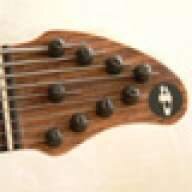
you'd be better off showing the entire instrument, so we can see in fact 3 concepts blended together.

wicked, but I think the luthier has a termite problem at his shop :smug:
Invalid Link Removed
 
Originally Posted by YC8
The important thing is music, not the instrument.
14_string_electric_1.JPG
14%20str%20solid%20hands.jpg
 
Kevbroce said:
Anyone care to explain that to me? The first 4 strings? Whats the point?
Having additional low strings that do not run over the fingerboard is an old concept:

"
[FONT=&quot]For lutes with more than six courses the extra courses would be added on the low end. Due to the large number of strings lutes have very wide necks, and it is difficult to stop strings beyond the sixth course, so additional courses were usually tuned to pitches useful as bass notes rather than continuing the regular pattern of fourths, and these lower courses are most often played without stopping." [Wikipedia]

This concept has been around for centuries, and today, many instruments are still built along the same lines. for more info, you can visit Greg Miner's website : http://www.harpguitars.net/


[/FONT]
 
Congratulations Guys. An Amazing Collaboration.
It looks absolutely flawless; Such an elegant design with Virtuoso workmanship !

How is it possible For JP to make such an uber-ERB look so beautifully balanced ?
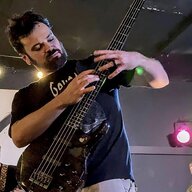
-And JP actually looks comfortable playing her.
Astounding !
-Bill
 
glen9 said:
Having additional low strings that do not run over the fingerboard is an old concept:

"
[FONT=&quot]For lutes with more than six courses the extra courses would be added on the low end. Due to the large number of strings lutes have very wide necks, and it is difficult to stop strings beyond the sixth course, so additional courses were usually tuned to pitches useful as bass notes rather than continuing the regular pattern of fourths, and these lower courses are most often played without stopping." [Wikipedia]

This concept has been around for centuries, and today, many instruments are still built along the same lines. for more info, you can visit Greg Miner's website : http://www.harpguitars.net/


[/FONT]


AHHH Makes sense, thanks.