
• TalkBass has been independent since 1998. Add your voice.
    Create a free account to reply to discussions, view embedded media, and browse with fewer display ads.
    Join freeLog in
    Want zero display ads or expanded classifieds tools? Compare plans.

LAG guitars - they key to a functional ABG?

getBAK

Supporting Member
Sep 21, 2006
2,124
3,938
San Jose, CA
www.levijack.com
Not sure how much LAG guitars is on ya'll's radar but wanted to put them on the radar
They are basically using an acoustic guitar fitted with a effects processor and oscillators bonded to the underside of the top to project effects through the guitar. No external amp, no speaker
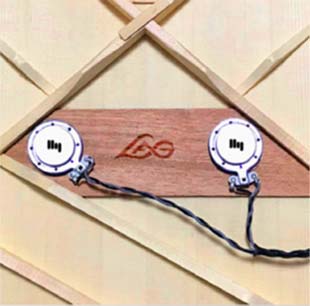
actuators.jpg


It works well


Here's where it gets interesting for us. the oscillators can be used as a volume booster for the guitar.

The main problem with ABG's has always been volume output...

I will say that at NAMM they did have an ABG prototype, but they were trying to show off the effects. This was basically the guitar module pasted onto the ABG and worked poorly - as soon as you started to get the volume boost it dropped into a feedback loop. But something like this actually built for Bass, and primarily for volume boost.
Here's the company that makes the electonics Applications


... When one of you guys gets rich off this, you owe me a 5 string ABG :)
 
Not sure how much LAG guitars is on ya'll's radar but wanted to put them on the radar
They are basically using an acoustic guitar fitted with a effects processor and oscillators bonded to the underside of the top to project effects through the guitar. No external amp, no speaker
actuators.jpg


It works well


Here's where it gets interesting for us. the oscillators can be used as a volume booster for the guitar.

The main problem with ABG's has always been volume output...

I will say that at NAMM they did have an ABG prototype, but they were trying to show off the effects. This was basically the guitar module pasted onto the ABG and worked poorly - as soon as you started to get the volume boost it dropped into a feedback loop. But something like this actually built for Bass, and primarily for volume boost.
Here's the company that makes the electonics Applications


... When one of you guys gets rich off this, you owe me a 5 string ABG :)


Hmmm....So, it senses the vibration of the bridge, sends a signal through an on-board amp, and drives oscillators attached to the top.....

That sounds like the pure definition of feedback. Literally. It probably works somewhat for adding mild tone shaping effects, but I doubt it would work well for increasing the output volume of an acoustic instrument, particularly an acoustic bass. As soon as you took your fingers off of the strings, it would go into a roar by itself. Unless they are sending the signal through a serious gate......to limit the volume.
 
Last edited:
When I tried both - the volume booster on the acoustic guitar worked well - and was significan louder.
For the ABG - you are absolutely correct unusable in boost mode.
... I figure that is more of a programming question - get the compression, EQ and noise gating right. But I'm far from an expert on such things.
 
Forget it. A few years ago I met one of the engineers in charge of this technology. When he told me about it, I asked if an ABG version was in their plans, but he told that it was physically impossible (because low frequencies need more power, and the technology is not efficient with low frequency).

Yes, that's another factor. The lower the frequency, the more electrical horsepower is needed to pump that top.
 
When I tried both - the volume booster on the acoustic guitar worked well - and was significan louder.
For the ABG - you are absolutely correct unusable in boost mode.
... I figure that is more of a programming question - get the compression, EQ and noise gating right. But I'm far from an expert on such things.

Maybe, but the system would be really sensitive to feedback over a wide frequency range, not just a few narrow bands. By the time you limit and gate all that, what would be left?
 
Oh well - back to the hard reality that you really need a body the size of an upright bass, to have a viable acoustic bass
Yes, but my tiny Taylor GS Mini-e Bass sounds louder than the Tanglewood big jumbo ABG that I had before it, I suppose the quality of the instrument making also matters. And I wonder if Taylor could use the same construction method that makes the GS Mini so loud for its size and apply it to a much bigger ABG?
 
I'll just say - any time I see an ABG, I pick it up and pluck the E string, than I pick up the closest Acoustic Guitar and do the same. In all my years, I've never found remotely competitive volume output.
If I didn't want an ABG to succeed, I wouldn't bother.

Oh, yeah, I completely agree. The current state of the art ABG's don't have enough volume/output level to compete with acoustic guitars, banjos, mandolins, etc. The contentious topic I was referring to is Why that is. How can the design be changed to make them louder? Building the body much bigger, like the size of an upright bass, is one answer. But it's not the only answer.
 
  • Like
Reactions: Beej
I've never seen LAG guitars or this exact system before, but Tonewood Amps has been around doing something similar for some time now. I've never tried one, but a friend had an early model when they first came out that sounded neat adding some reverb effects and whatnot.

 
Last edited:
  • Like
Reactions: gtirard
I've never seen LAG guitars or this exact system before, but Tonewood Amps has been around doing something similar for some time now. I've never tried one, but a friend had one that sounded neat adding some reverb effects and whatnot.

I didn't know them. It seems to be a module you can add to a regular acoustic guitar, whereas the LAG system is pre-mounted on LAG guitars only.

Lava guitars also have an equivalent system, pre-installed on Lava guitars only (like LAG).

But none of the 3 (Lag, Tonewood Amps, or Lava guitars) offer ABG products.

There's a reason: as the engineer behind the Lag system explained to me, the laws of physics make it impossible to make such a system work for a bass. Period.

Also, you'll notice that none of the 3 brands communicate on making a quiet instrument much louder, but rather on adding effects. Even if this technology could work for the low frequencies of an ABG (which it doesn't), it wouldn't make a bass much louder.

Last, the LAG system have been available for a long time now, so I truly believe that if it was possible to adapt the system for a bass, we would have it by now.

By the way, I've seen a different application of the same principle, applied to cabs (ultra flat cabinets), and they also lack low frequencies and power.
 
  • Like
Reactions: NKBassman