That’s not true.Y'all just woke up wanting to argue over something...


TalkBass has been independent since 1998. Add your voice.
Create a free account to reply to discussions, view embedded media, and browse with fewer display ads.
Join free Log in
Want zero display ads or expanded classifieds tools? Compare plans.
That’s not true.Y'all just woke up wanting to argue over something...
So. Please stop using those terms. They are wrong.

No I didn’t!!!Y'all just woke up wanting to argue over something...

i'm gonna start calling my early takamine 12-string a 'cease and desist' guitar because that is so much more funCF Martin also sent a cease and desist letter to Takamine over their copying of the CF Martin logo on their acoustic guitars. Takamine complied and no lawsuit was filed, but the early Takamine guitars are still referred to as “lawsuit” guitars.
Edit: I guess it’s easier to say “lawsuit” guitar rather than “cease and desist” guitar.


No I didn’t!!!
View attachment 7429448


The G&L headstock looks like a bottle opener to me. And that little point looks like it could snap off very easily if impacted. I wish they had come up with a different solution.So Anyway, I might have missed it in the comments, but I think the best one is Fender VS Fender.
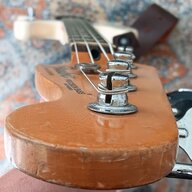
I read where Fender Corporation sent G&L and C&D letter about their headstock design. As a result, there's the 'wing' or maybe it's a 'finger' on the G&L headstock after a certain date.
BTW- I think this is a great way to wake up!

But that dosent mean just saying "no it isnt".Look, if I argue with you, I must take up a contrary position.
ChatGPT get many things wrong and state their errors with confidence.Wrong, in Gibson's case. And easily researched... try ChatGPT rather than believing a YT "expert".
Fender: mostly
- In the late ’60s–’70s, Japanese makers (FujiGen, Tokai, Greco, Fernandes, etc.) made very accurate Strat/Tele/Jazz Bass copies.
- Fender’s original body shapes weren’t strongly protected at the time, and many design elements had slipped into the public domain.
- Instead of mass lawsuits, Fender took a business solution:
- Partnered with FujiGen in Japan
- Launched Fender Japan in 1982
- Licensed the designs and trademarks
- Ironically, those early MIJ Fenders are now considered excellent and helped revive Fender’s quality reputation during the CBS-era slump.
Bottom line: Fender largely absorbed the copy market rather than fighting it in court.
Gibson:
Gibson took a much more aggressive legal stance.
1977:
- Gibson’s parent company (Norlin) sued Ibanez in U.S. federal court.
- The issue wasn’t the Les Paul body—it was the “open-book” headstock shape, which was protected.
- The case settled out of court in 1978, but it scared manufacturers enough to:
- Redesign headstocks
- Move away from exact copies
This moment is often called the end of the “lawsuit guitar era.”
Aftermath & legacy
- Japanese brands shifted from 1:1 copies → original designs
- Companies like Ibanez, Yamaha, ESP, Tokai went on to become major innovators
- Today, many lawsuit-era Japanese guitars are:
- Highly collectible
- Valued for build quality that sometimes rivaled or beat U.S. guitars of the time
One more twist: Gibson kept litigating
- Gibson later tried similar arguments against:
- PRS (Singlecut) → lost
- Dean / Luna / Heritage → mixed results, many claims weakened
- Courts increasingly ruled that single-cut body shapes are functional and generic, not protectable.

They have my address if they want to come and get them.
Godin changed the design of their Summit (LP shaped) electric guitar because of Gibson’s threats.Gibson has a registered U.S. trademark for the LP body shape (and others) and does send cease and desist notices to retailers that sell replicas and replica kits.
These are essentially a threat to sue and many retailers won’t sell these products once they receive notice.
Gibson has a registered U.S. trademark for the LP body shape (and others) and does send cease and desist notices to retailers that sell replicas and replica kits.
These are essentially a threat to sue and many retailers won’t sell these products once they receive notice.
I think, of all the TB threads I’ve perused over the years, this one is the worst
lol, threads.....just cause you can doesn't mean you should...
Cat --> pigeonsY'all just woke up wanting to argue over something...