Can we try an experiment to see if a clear and defined pattern will develop or not and we wasted time here.
For those of us shopping online or looking for that perfect sounding J or P or PJ bass with a neck without any dead spots on it and balanced sustain. The only thing to look for is the wood grain of the neck if we can't play it, maybe there is a specific grain pattern that is bullet proof on neck without any dead spots and balanced sustain.
Lets narrow down the criteria to these only:
1) Fender 34” 4-string, must be one-piece neck only, maple neck only, could be quarter or flat sewn, head stock shape must be Fender or Fenderish with inline tuning matching Fender dimensions only.
2) 4-Bolt square classic heel pattern only.
3) Carbon fiber or metal rods are optional, since vintage stuff never had any.
4) Anything painted where we can’t see the grain even the head stock does not apply we need to see pictures of grain head to toe on all 4 sides.
5) Fat finger does not apply, lets leave it out.
6) Tuning pegs do apply, if you found a specific grain pattern that has dead spots but each time you change to heavier or lighter ones or different alloy tuners adn no more dead spots then it’s an optional component to look for that grain, but not a deal breaker, we are still focusing on grain orientation as primary pattern.
7) Truss rod in the heel or head stock does apply for sure 100%.
8) Fingerboard: Ebony, Maple, some version of Rosewood all apply, no exotics, and no flames or curly woods.
9) Thickness of fingerboard does apply as secondary component, so lets make the standard at 5mm, if it’s thicker, lets see if a pattern will develop with thicker fingerboards vs. neck grain.
10) Neck shape, thickness or radius does not apply, even though it does have a huge effect, we’ll focus on neck shape later and only if we arrive at any specific grain as bullet proof.
11) Neck dive does not apply.
12) No boutique basses either except Fender Custom Shop, must be mass-produced where they don't sit on perfect wood blanks for 10 - 20 years,
13) Lawsuit years do apply, kits under license from Warmoth…etc.. Do apply as well if they match all criteria.
No scientific discussions please, it will steer us into wrong direction in arguing too much what does effect dead spots, lets only focus on people posting their perfect necks with at least 4 pictures of each side with enough close ups on all 4 sides from head to toe, mounted or un-mounted necks, so we can breeze thru many pages of pictures to see if we can narrow it down to some type of grain pattern or not.
Please post pictures only if your neck is well balanced tonally and not even a single sign of dead spots, or even half dead spot, lets keep the threshold very high on this exercise.
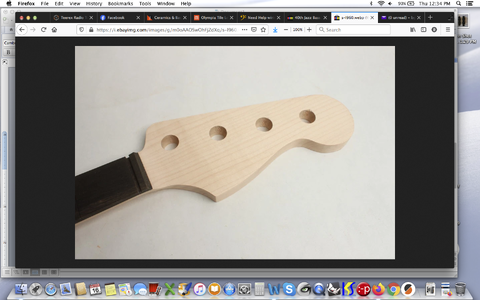
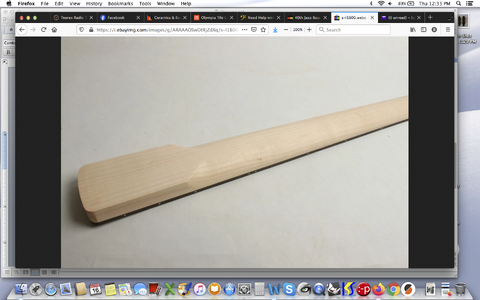
As a side bet, I would start with two possible soft targets that we might find useful as reference point, one with straight line grain, very hard to find those unless it’s Fender Custom shop, and second soft target is one with zig-zag tree pattern in the middle, much easier to find especially with vintage stuff. Both examples are attached.
Lets also focus a bit more on grain orientation around D & G string portion of the neck since it’s the most common area for dead spots.
For those of us shopping online or looking for that perfect sounding J or P or PJ bass with a neck without any dead spots on it and balanced sustain. The only thing to look for is the wood grain of the neck if we can't play it, maybe there is a specific grain pattern that is bullet proof on neck without any dead spots and balanced sustain.
Lets narrow down the criteria to these only:
1) Fender 34” 4-string, must be one-piece neck only, maple neck only, could be quarter or flat sewn, head stock shape must be Fender or Fenderish with inline tuning matching Fender dimensions only.
2) 4-Bolt square classic heel pattern only.
3) Carbon fiber or metal rods are optional, since vintage stuff never had any.
4) Anything painted where we can’t see the grain even the head stock does not apply we need to see pictures of grain head to toe on all 4 sides.
5) Fat finger does not apply, lets leave it out.
6) Tuning pegs do apply, if you found a specific grain pattern that has dead spots but each time you change to heavier or lighter ones or different alloy tuners adn no more dead spots then it’s an optional component to look for that grain, but not a deal breaker, we are still focusing on grain orientation as primary pattern.
7) Truss rod in the heel or head stock does apply for sure 100%.
8) Fingerboard: Ebony, Maple, some version of Rosewood all apply, no exotics, and no flames or curly woods.
9) Thickness of fingerboard does apply as secondary component, so lets make the standard at 5mm, if it’s thicker, lets see if a pattern will develop with thicker fingerboards vs. neck grain.
10) Neck shape, thickness or radius does not apply, even though it does have a huge effect, we’ll focus on neck shape later and only if we arrive at any specific grain as bullet proof.
11) Neck dive does not apply.
12) No boutique basses either except Fender Custom Shop, must be mass-produced where they don't sit on perfect wood blanks for 10 - 20 years,
13) Lawsuit years do apply, kits under license from Warmoth…etc.. Do apply as well if they match all criteria.
No scientific discussions please, it will steer us into wrong direction in arguing too much what does effect dead spots, lets only focus on people posting their perfect necks with at least 4 pictures of each side with enough close ups on all 4 sides from head to toe, mounted or un-mounted necks, so we can breeze thru many pages of pictures to see if we can narrow it down to some type of grain pattern or not.
Please post pictures only if your neck is well balanced tonally and not even a single sign of dead spots, or even half dead spot, lets keep the threshold very high on this exercise.
As a side bet, I would start with two possible soft targets that we might find useful as reference point, one with straight line grain, very hard to find those unless it’s Fender Custom shop, and second soft target is one with zig-zag tree pattern in the middle, much easier to find especially with vintage stuff. Both examples are attached.
Lets also focus a bit more on grain orientation around D & G string portion of the neck since it’s the most common area for dead spots.