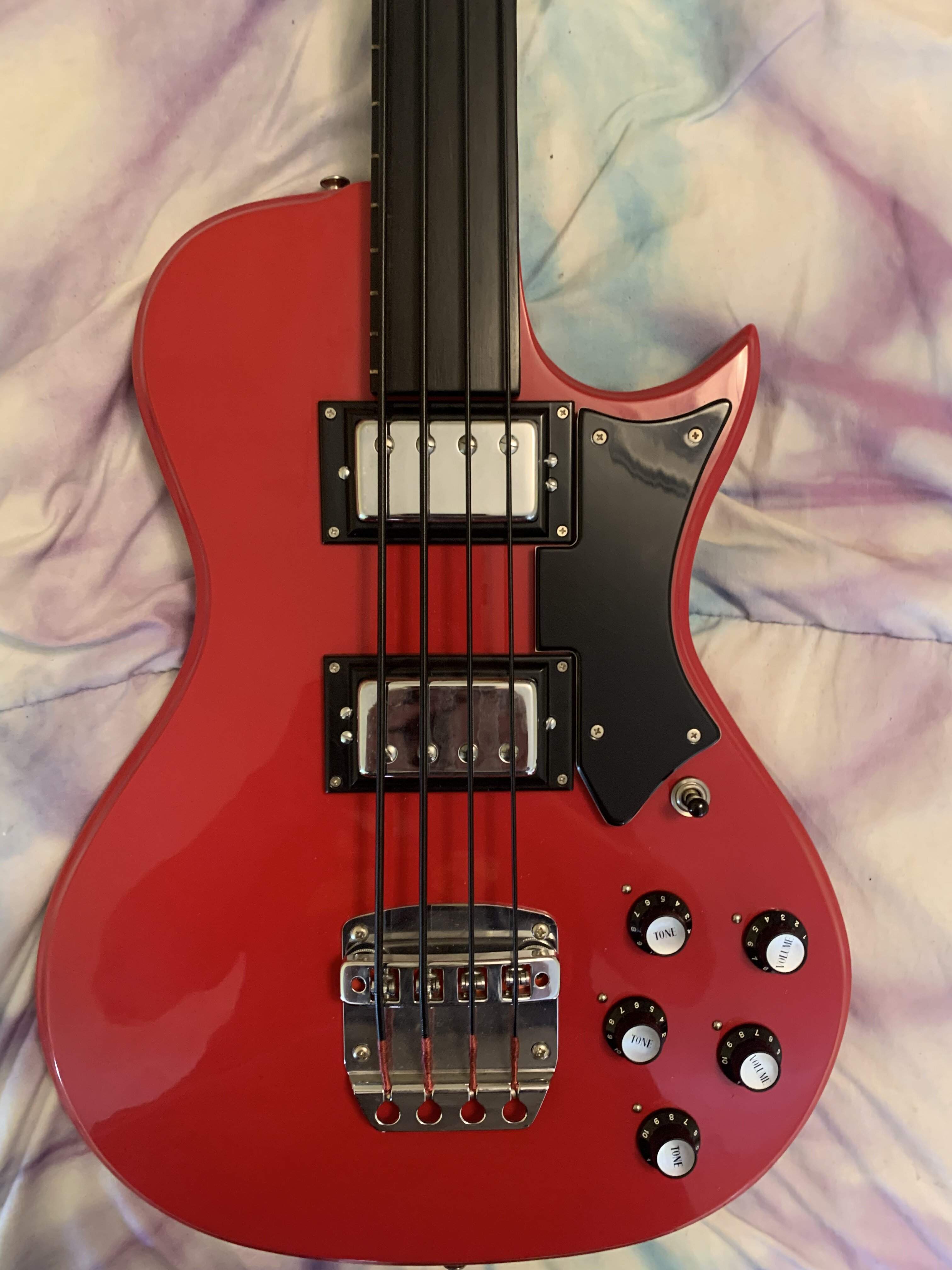
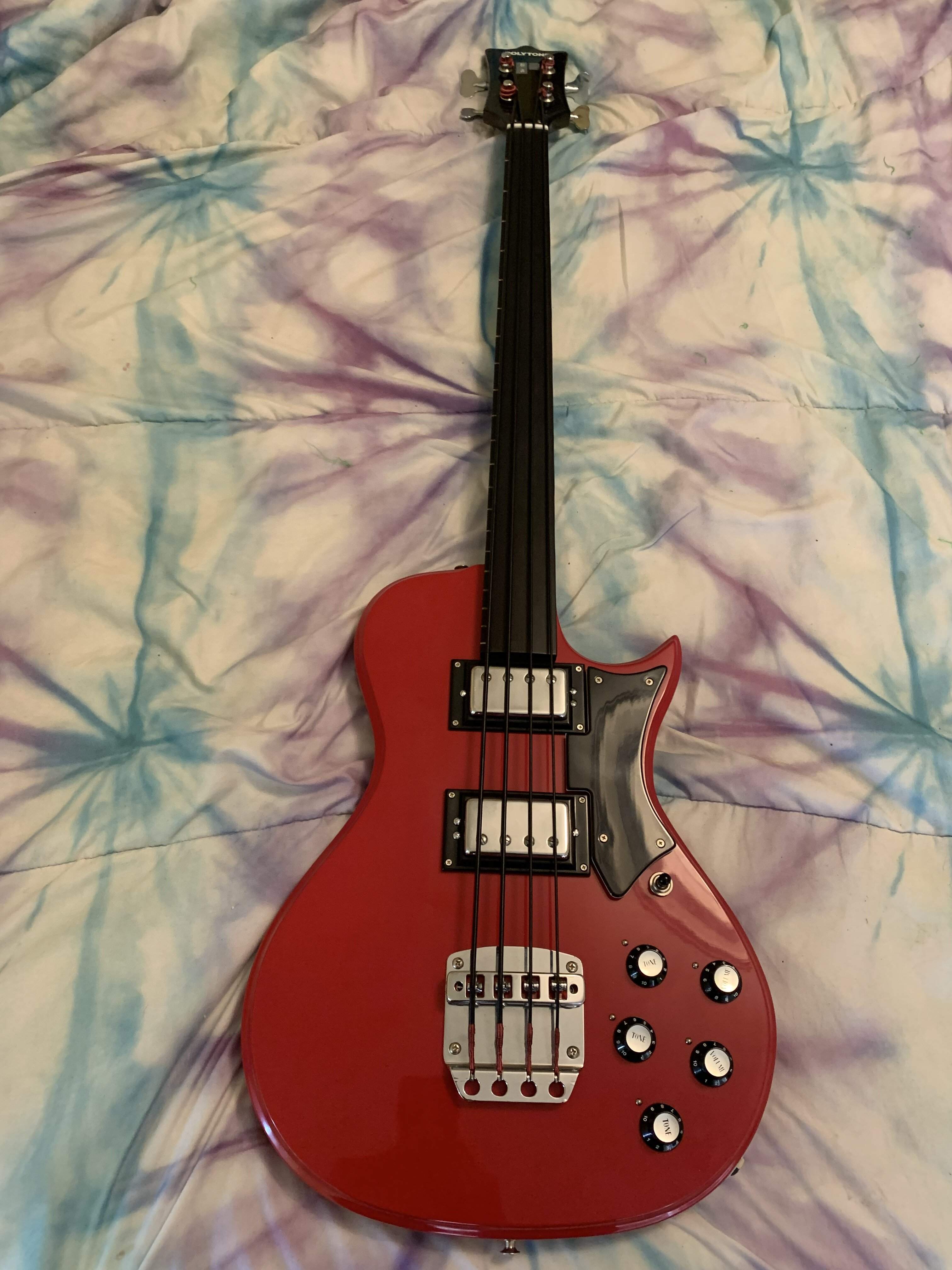
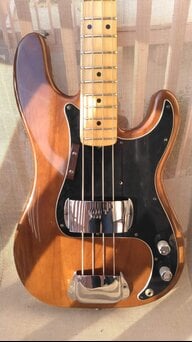
Jazz Bass Special, out of Fender Japan in medium scale:
An excerpt from an article by
rexbass on the Jazz Bass Special appears here:
"Some folks have requested that I write about the original run of Fender Jazz Bass Specials, and I am happy to oblige. One of these was my first decent bass, and they have remained one of my favorite basses of all time. I have owned bunches of them, making me a pseudo-expert.
If you are not familiar with these, Jazz Bass Specials were made famous by Duff McKagan of Guns N Roses, and later of Velvet Revolver. These basses were made by Fender in Japan in the early years that were known for the best MIJ guitars, and were of better quality than the ones produced in the US. They were originally produced from 1985 to 1987 (or so). The ”special” part of the Jazz Bass Special is that it has a Precision Bass body shape with a Jazz Bass profile neck and a P/J pickup configuration.
The bodies are probably basswood, as they are light. They have a control cavity routed in the back so there is no pick guard. The necks all have a glossy black head stock, and a rosewood fret board. They were available fretted or fretless. The backs of the maple necks were either clear coated, or painted glossy black.
Often times, the knobs were replaced, too. They came with F-logo plastic knobs that had a nubbly rubber grip around the edge. Good luck finding replacements if they are missing, because Fender does not sell them, and I never see them for sale on eBay. I am thinking about re-issuing them myself. Anyway, these are great basses. They sound good, play very well, and generally come in under 9 pounds. I would pick up one of these original Japanese Jazz Bass Specials before considering one of the low-quality newer re-issues."
The most intriguing thing to me is that this bass, in medium scale - even though it looks like black paint from a distance - is actually a transparent black dye, allowing the beautiful grain of the swamp ash that lies beneath to shine through. The standard basswood bodies were all painted solid black. The swamp ash body with the transparent dye is what classified this bass a custom order or as they say in Japan "order made" back in 1986-87.
You can see the "order made" stamp in the neck pocket here:
Stu Hamm "Urge I" Early Prototype or employee build?
From Wikipedia: "There was also a short-lived Urge Standard which was made in Mexico between 1993 and 1999, featuring a medium 32" scale length, two standard Jazz Bass pickups and passive circuitry with dual concentric volume and tone for each pickup."
With this in mind, I have no idea what is up with the standard jazz bass controls on this bass. The pots are not stacked and appear factory. Also the EMG pickups - which appear to be factory installed - are active, not passive. It is also very odd about the location of the input jack. If anyone has any further thoughts or has any explanation for this I would love to find out more. Has anybody even seen another bass like this one?
I have been in touch with John Page of John Page Guitars, who worked for years at Fender and was the production guru assisting Stu on the Fender side with the design and build of this Urge I model. He was also the creative force behind the Fender Performer bass as well. After taking a look, John told me that yes, this was either an early prototype of the original Stu Hamm Urge I, or else it could possibly be a special employee build. As you might suspect, a lot of the guitar manufacturers allow the employees to do one-off designs based on many of the production models. It could fall into this category, but either way, it certainly may be a one-of-a-kinder.