

Enjoy the benefits of a premium membership!
Upgrade Account
-
TalkBass has been independent since 1998. Add your voice.
Create a free account to reply to discussions, view embedded media, and browse with fewer display ads.
Join free Log in
Want zero display ads or expanded classifieds tools? Compare plans.
You are using an out of date browser. It may not display this or other websites correctly.
You should upgrade or use an alternative browser.
You should upgrade or use an alternative browser.
Double Bass Lightness of touch (DB forum thread)
- Thread starter Chris Fitzgerald
- Start date
More options
Who Replied?It's a misconception that you need to 'dig in' to get power or speed.
Think Tai Chi as adverse to Karate. Float like a butterfly, sting like a bee.
Even though this video has been posted twice in this thread I am still unconvinced.
Is that really what you want to sound like? I can’t imagine wanting to sound like that but to each their own.
When I think of players with “a light touch”, I think LaFaro, Red Mitchell, NHOP, Kelly Sill etc. Bass players who gained dynamic range by lightening their touch. More dynamics = more articulation = more opportunity to musically phrase things = more excitement. If you looked at a VU meter on a mixing desk of those guy's bass lines the pin would be bouncing up and down. If you looked at a VU meter of his playing it would just be -----------. Also, I'm not gonna touch his idea that digging in is a gendered concept other than to say that is really silly. (Is he inferring that all women play with a soft touch? ***)
Maybe it’s just his youtube recording or something and his sound really popping in the back of the room like he says… but I am unconvinced since I am just getting a lot of indistinct midrange in his videos and zero attack. For what it's worth this is what I sound like playing straight ahead jazz acoustic in a bar with a tasteful drummer recorded by an iPhone.

Even though this video has been posted twice in this thread I am still unconvinced.
Is that really what you want to sound like? I can’t imagine wanting to sound like that but to each their own.
When I think of players with “a light touch”, I think LaFaro, Red Mitchell, NHOP, Kelly Sill etc. Bass players who gained dynamic range by lightening their touch. More dynamics = more articulation = more opportunity to musically phrase things = more excitement. If you looked at a VU meter on a mixing desk of those guy's bass lines the pin would be bouncing up and down. If you looked at a VU meter of his playing it would just be -----------. Also, I'm not gonna touch his idea that digging in is a gendered concept other than to say that is really silly. (Is he inferring that all women play with a soft touch? ***)
Maybe it’s just his youtube recording or something and his sound really popping in the back of the room like he says… but I am unconvinced since I am just getting a lot of indistinct midrange in his videos and zero attack. For what it's worth this is what I sound like playing straight ahead jazz acoustic in a bar with a tasteful drummer recorded by an iPhone.
Lol no I don't want to sound like that at all.. I was just found what he was saying about 'digging in' humorous.
 I would like to be able to develop a big fat tone without having a big fat hand or a big fat technique.
I'm leaning far more towards the school of Christian Mcbride.
If anyone could 'dig in' like a beast with his sheer physical size and mass it's him, but he shows it's not required for either a nice big tone or speed.
I play guitar too and don't really want to turn my fingers into drum sticks.
Last edited:
And.. having spent a lot of time involved in martial arts, it's various branches and philosophies I 100% agree with Chris's philosophy which he put's very nicely here:

And speaking of Mr. McBride... (copied from another thread)
CMB is a very large man. Here's a picture of the two of us with the bass of mine that he borrowed for the concert he played here (click on thumbnail to enlarge):
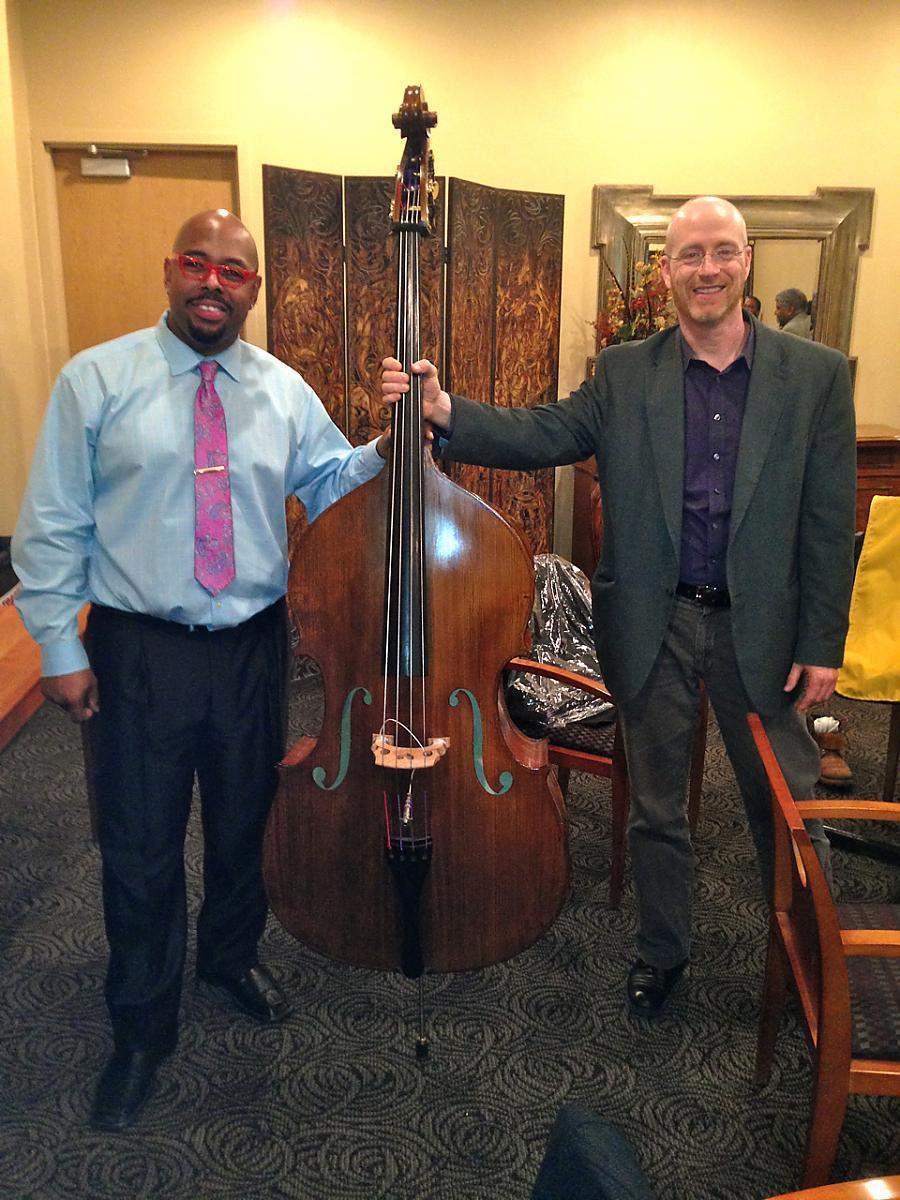
I'm about 6' 1" and 180 lbs, although the oversized jacket makes me look a little more substantial. When I stood next to Christian without the jacket, we looked like a linebacker and a wide receiver standing side by side. He is a powerfully built person, and when he plucked the bass strings on the concert, the adjacent string that he landed his finger on drew back a considerable amount. He made it look easy, but for someone my size to do the same, a lot more arm would be involved!
CMB is a very large man. Here's a picture of the two of us with the bass of mine that he borrowed for the concert he played here (click on thumbnail to enlarge):
I'm about 6' 1" and 180 lbs, although the oversized jacket makes me look a little more substantial. When I stood next to Christian without the jacket, we looked like a linebacker and a wide receiver standing side by side. He is a powerfully built person, and when he plucked the bass strings on the concert, the adjacent string that he landed his finger on drew back a considerable amount. He made it look easy, but for someone my size to do the same, a lot more arm would be involved!
And speaking of Mr. McBride... (copied from another thread)
Christian is a very large man. Here's a picture of the two of us with the bass of mine that he borrowed for the concert he played here (click on thumbnail to enlarge):
View attachment 4891549
I'm about 6' 1" and 180 lbs, although the oversized jacket makes me look a little more substantial. When I stood next to Christian without the jacket, we looked like a linebacker and a wide receiver standing side by side. He is a powerfully built person, and when he plucked the bass strings on the concert, the adjacent string that he landed his finger on drew back a considerable amount. He made it look easy, but for someone my size to do the same, a lot more arm would be involved!
Fantastic Chris.. As you can see I have found your technique videos series and have already begun working my way through all 15 or so hours worth. What a trove of information that just suits perfectly my mental make up and disposition..
I bought Tao of Jeet Kune do when I was 18.. and have experimented with and applied the principles I found in there with every aspect of my life ever since. and it has made me the ultimate self teacher.
"I don't need to be taught.. I just need to see, and the thing will teach itself" - Me -2022
“A powerful athlete is not a strong athlete, but one who can exert his strength quickly. Since power equals force times speed, if the athlete learns to make faster movements he increases his power, even though the contractile pulling strength of his muscles remains unchanged. Thus, a smaller man who can swing (pluck) faster may hit as hard or as far as the heavier man who swings slowly.” — Bruce Lee
Last edited:
I didn’t read the whole thread. But I remember Sam at David Gage recounting stories of Charlie Haden hanging in the shop. Sam hit the bass hard. I was always taken back by his right hand attack on the bass. Charlie would always tell him “you’re hitting the strings too hard. You’ll never get a big sound by forcing it’”. Of course we are all thinking about this every time we play. Over the years I have gradually dropped my string height and softened my attack. I have discovered that localized sound and projected sound (in front of the bass) are very different things. Hard attack seems louder to the ears of the player standing above the bass, but a softer more considered pizz sounds far richer and dynamic in front of the bass. Have you ever experienced the phenomenon of handing your bass to a non-player to let them pluck a few notes only to find they draw a surprisingly good tone in front of the bass? They don’t even know how to really pizz yet but the bass sound great? I attest this to a light touch. The OP recalls a gig when the light touch seemed to be really working. I think we’ve all had gigs where we suddenly noticed the bass was ‘playing itself’. That just us getting out of the way and letting the bass fully function.
Something I have been developing in my practice is vibrato. I always bowed like Edgar, little or no vibrato, and loved the plaintive (I used to say Shaker-furniture-like simplicity) tone. But I started to notice I was missing something important and began working on vibrato. This in turn made me stop using open strings. I always relied heavily on open strings for safety and convenience. Focusing on drawing tone and color out of both hands really changed my pizz tone and made me far more conscious of playing through the entire note. High string height was making me choke my notes off prematurely. This in turn made me further research a lighter more productive touch.
Something I have been developing in my practice is vibrato. I always bowed like Edgar, little or no vibrato, and loved the plaintive (I used to say Shaker-furniture-like simplicity) tone. But I started to notice I was missing something important and began working on vibrato. This in turn made me stop using open strings. I always relied heavily on open strings for safety and convenience. Focusing on drawing tone and color out of both hands really changed my pizz tone and made me far more conscious of playing through the entire note. High string height was making me choke my notes off prematurely. This in turn made me further research a lighter more productive touch.
Last edited:
Wow, I have never had that experience. Every time I've ever seen a non-(upright)bass player pickup a double bass, they all do it the same (completely wrong) way. Every one has stood behind the bass, turned the fingers perpendicular to the strings, and plucked way up high, away from the end of the fingerboard. And sure enough, almost no sound comes out. Often, they then look up with an expression that says, "What the heck? How is this even supposed to work???"Have you ever experienced the phenomenon of handing your bass to a non-player to let them pluck a few notes only to find they draw a surprisingly good tone in front of the bass? They don’t even know how to really pizz yet but the bass sound great?
I'm not sure how relevant that observation (my observation) is to this thread, other than to say that maybe you've encountered a "natural"
 .
.Have you ever experienced the phenomenon of handing your bass to a non-player to let them pluck a few notes only to find they draw a surprisingly good tone in front of the bass?
Yes, myself. When my neighbour who has been playing upright bass for 50 years let me have a go of his and then let me borrow it for a week.. I had never touched a double bass in my life but after a minute i managed to conjure a huge, fat, thick tone out of it. Sheer luck maybe.. or, perhaps the fact I had no knowledge whatsoever on how to actually play at all I was not hampered by my mind interfering with and blocking or choking off a completely spontaneous natural and organic approach.
This is why I am so careful about methods and teachers as I don't really want that natural touch interfered with.
I've never had a guitar lesson in my life.. the back in the beginning someone advised me to take lessons so I went along to the Spanish Guitar Centre in central London and booked myself a lesson with a so-called reputable teacher..
Without really asking me anything he had me sit sat there for an hour while he talked me through doe-ray-me, how to do rest stroke with first and second fingers..
And sent me home with advice to practise this at least half an hour a day.
Completely oblivious to the fact that I had already taught myself half of the Chaconne in D minor by Bach by ear, and what I couldn't work out ear I taught myself to read and transcribed the rest using a violin score I bought.
I'd also dived heavily into Jazz and fusion at that time and was already practising over 12 hours a day, 7 days a week.
Suffice to say I never went back to that teacher and have never gone to another teacher since for anything.
And still ended up a professional musician min spite of this.
There is little more hazardous and dangerous to a natural organic talent, gift and passion then a 'teacher'.
The first thing you have to do is get rid of the ego.. when you do that you may find that these instruments actually start to play themselves.
"Be like water making its way through cracks. Do not be assertive, but adjust to the object, and you shall find a way around or through it. If nothing within you stays rigid, outward things will disclose themselves.
"Empty your mind, be formless. Shapeless, like water. If you put water into a cup, it becomes the cup. You put water into a bottle and it becomes the bottle. You put it in a teapot, it becomes the teapot. Now, water can flow or it can crash. Be water, my friend." - Bruce Lee
Get yourself out of the way.. put yourself into the instrument, then you can become the instrument.
Yeah. I know what you’re saying, the weenie tip of the finger thing. The sudden “oh my god how do you do that, don’t your fingers hurt!” Response. Sure. But I’ve also had, perhaps musicians who play other instruments besides the bass, suddenly draw a very good tone without really trying. Incidentally some of those people go on to play bass but never can develop the rest of it!Wow, I have never had that experience. Every time I've ever seen a non-(upright)bass player pickup a double bass, they all do it the same (completely wrong) way. Every one has stood behind the bass, turned the fingers perpendicular to the strings, and plucked way up high, away from the end of the fingerboard. And sure enough, almost no sound comes out. Often, they then look up with an expression that says, "What the heck? How is this even supposed to work???"
I'm not sure how relevant that observation (my observation) is to this thread, other than to say that maybe you've encountered a "natural"
Fantastic Chris.. As you can see I have found your technique videos series and have already begun working my way through all 15 or so hours worth. What a trove of information that just suits perfectly my mental make up and disposition..
I bought Tao of Jeet Kune do when I was 18.. and have experimented with and applied the principles I found in there with every aspect of my life ever since. and it has made me the ultimate self teacher.
"I don't need to be taught.. I just need to see, and the thing will teach itself" - Me -2022
“A powerful athlete is not a strong athlete, but one who can exert his strength quickly. Since power equals force times speed, if the athlete learns to make faster movements he increases his power, even though the contractile pulling strength of his muscles remains unchanged. Thus, a smaller man who can swing (pluck) faster may hit as hard or as far as the heavier man who swings slowly.” — Bruce Lee
My study of 3 different martial arts over a combined 15 years began because of a tiny person who got a sound on the piano that belied her size. I wanted to find out how that was possible! We currently have a wonderful virtuoso pianist on the faculty at my university who is a bit more physically substantial than my old teacher but has small, light bones (shaking her hand felt like holding a bird) and gets an insanely powerful and rich sound that cuts over an orchestra when needed. She is amazing.
In two of the three arts I studied - Aikido and BJJ - I had the experience of being routinely dominated on the mat by upper rank women who were giving up close to a foot in height and 50-60 pounds in weight. This was due to their skill and and beauty of the arts themselves. This sort of thing, while hard on the ego at first, was exactly what I signed up to learn. As I say in the video you linked, I was never a great martial artist and practiced with far more enthusiasm than skill; but the point of the study was also to apply everything directly to music making.
There were limits, though: In the standing/striking arts, I never had that same experience with a person that much smaller. Granted, I never sparred a champion MMA striker like Holly Holm either, but in the standing arts giving up that much reach and weight is a much bigger deal, and they have weight classes in those arts for a reason!
All of this to say that all other things being equal, while there is a lot to be said for skill and craft and leverage as you quoted, someone with a frame like CMB or Mingus is going to have an advantage in generating power with less effort than I am. It’s up to me to understand that and play within the limits of the frame I was given, and the age I am at any given time.
My study of 3 different martial arts over a combined 15 years began because of a tiny person who got a sound on the piano that belied her size. I wanted to find out how that was possible! We currently have a wonderful virtuoso pianist on the faculty at my university who is a bit more physically substantial than my old teacher but has small, light bones (shaking her hand felt like holding a bird) and gets an insanely powerful and rich sound that cuts over an orchestra when needed. She is amazing.
In two of the three arts I studied - Aikido and BJJ - I had the experience of being routinely dominated on the mat by upper rank women who were giving up close to a foot in height and 50-60 pounds in weight. This was due to their skill and and beauty of the arts themselves. This sort of thing, while hard on the ego at first, was exactly what I signed up to learn. As I say in the video you linked, I was never a great martial artist and practiced with far more enthusiasm than skill; but the point of the study was also to apply everything directly to music making.
There were limits, though: In the standing/striking arts, I never had that same experience with a person that much smaller. Granted, I never sparred a champion MMA striker like Holly Holm either, but in the standing arts giving up that much reach and weight is a much bigger deal, and they have weight classes in those arts for a reason!
All of this to say that all other things being equal, while there is a lot to be said for skill and craft and leverage as you quoted, someone with a frame like CMB or Mingus is going to have an advantage in generating power with less effort than I am. It’s up to me to understand that and play within the limits of the frame I was given, and the age I am at any given time.
Your playing is beautiful!
How about any real street fights? Had any of those? Ever been in an impromptu four or five against one in a real punch up? You being the one?
That's the moment when you realise whether you can truely improvise and be like water or not or whether your mental equilibrium holds together of just disintegrates and you turn weak at the knees.

”Do not fight with the strength, absorb it and it flows, use it.”
”Relax and calm your mind. Forget about yourself and follow your opponent’s movement.” - Ip Man
People like Mingus were tough as hell.. their tone did not just come from their fingers or hand or arm or shoulder.. it came from who and what they were inside. It came from the lives they lived.
Last edited:
Your playing is beautiful!
Thanks!
How about any real street fights? Had any of those? Ever been in an impromptu four or five against one in a real punch up? You being the one?
Thankfully, no. We did train against multiple attackers in two of the three arts, but happily I have not been in any actual fights outside of what my teachers call "drunk uncle situations" since I started Aikido training in my mid 20's. And all three arts emphasize regularly that it's almost always better to avoid a fight than engage in one.
But all three have been enormously helpful in helping me grapple with other musicians in the medium of sound on the bandstand.
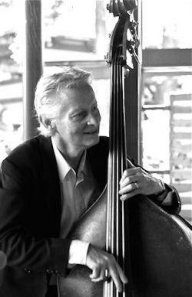
Speaking of lightness of touch, Michael Moore comes to my mind.
He is a master, his choice of notes, knowledge of harmony, dexterity on the board, all amazing.
This is a screen shot of his hands.
What a player.
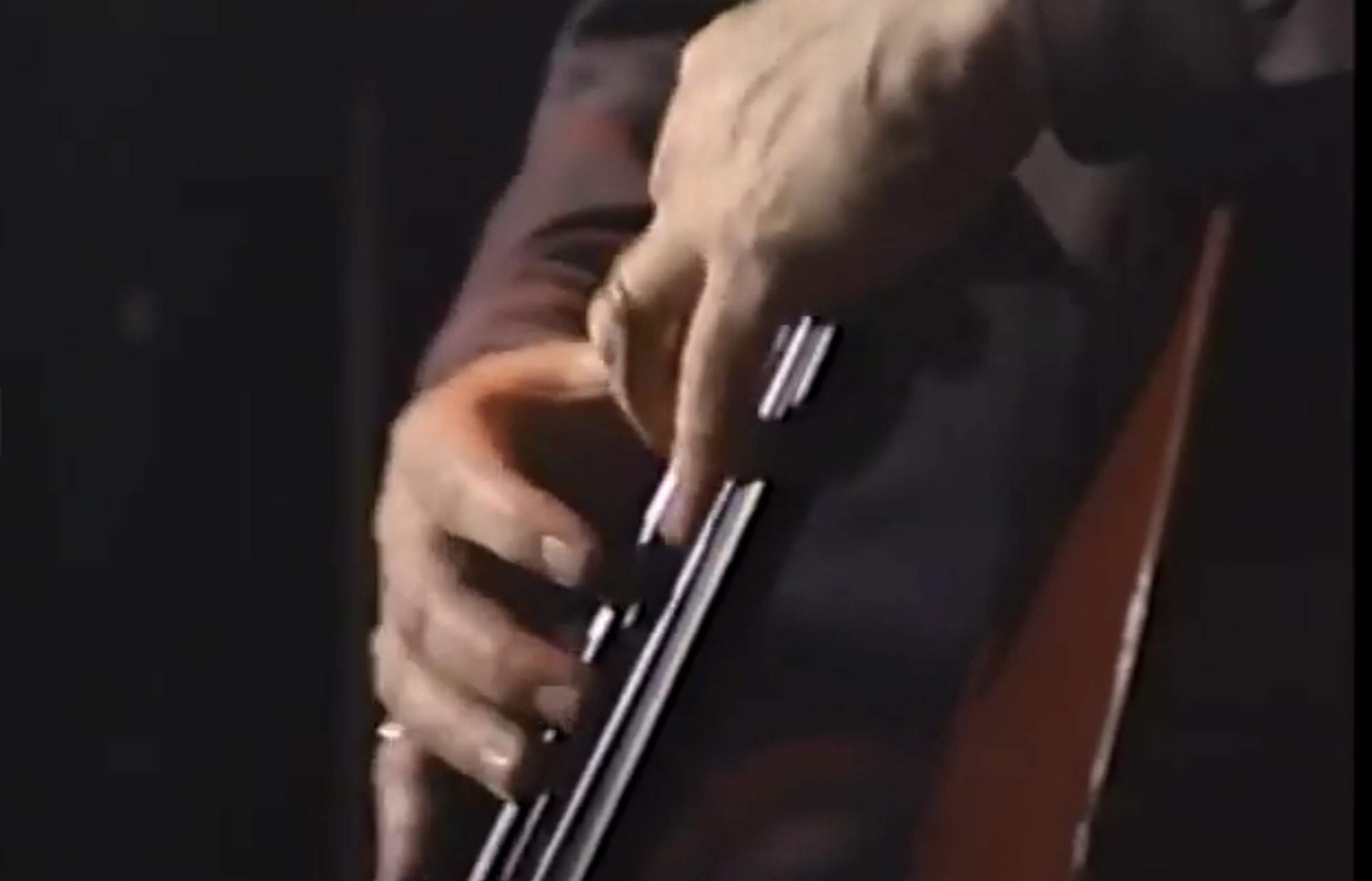
He is a master, his choice of notes, knowledge of harmony, dexterity on the board, all amazing.
This is a screen shot of his hands.
What a player.
Thanks!
Thankfully, no. We did train against multiple attackers in two of the three arts, but happily I have not been in any actual fights outside of what my teachers call "drunk uncle situations" since I started Aikido training in my mid 20's. And all three arts emphasize regularly that it's almost always better to avoid a fight than engage in one.
But all three have been enormously helpful in helping me grapple with other musicians in the medium of sound on the bandstand.
I'm all for peace and love.. but sometimes life arranges for you to just get cornered and there is no escape.
And then this could be another issue. Learning to play jazz is like learning a new language. But for most it will be a foreign language that will never truly sound like that of a native.
And even after seemingly learning the rudiments of this language they actually have nothing of value to say. They have lived.. while at the same time completely dodging life. It's the language of those whose hearts have been broken a 100 times.
In other words a life completely insulated what what is discussed in the videos below. A life of never having had to face fear and death..
Part 1
Part 2
Last edited:
“ I have discovered that localized sound and projected sound (in front of the bass) are very different things. Hard attack seems louder to the ears of the player standing above the bass, but a softer more considered pizz sounds far richer and dynamic in front of the bass. “
This so spot on from Jason… Regarding Cole’s comments, maybe the sweet spot is a little more than “petting a cat”. The strike of the string at the angle you like at the time, getting thru it quickly with a relaxed arm and wrist, while maintaining control..
Reconciling hearing yourself from the player perspective vs. the ideal sound in your head, or as if you were the listener brings so many challenges. My sound recorded is always different than what I hear while playing in combo, or when I hear someone else playing my bass from 20’ away. At medium to higher volumes, or just when I’m tense, I sometimes wear a pair of Bose earbuds that reduce enough external noise to give me that tactile low end connection and ease that allows me to find the right touch again. Kind of like sticking your finger in your ear to hear your singing better… May look odd, but who cares if I’m pulling a good sound! Musicians attenuating earplugs can help too, but the ones I’ve tried are too mid-focused.
Btw - Love the Bruce Lee and IP Man quotes.. Just went by Bruce’s final resting spot in Seattle the other day - a great teacher of mine said to “Be like water”.
This so spot on from Jason… Regarding Cole’s comments, maybe the sweet spot is a little more than “petting a cat”. The strike of the string at the angle you like at the time, getting thru it quickly with a relaxed arm and wrist, while maintaining control..
Reconciling hearing yourself from the player perspective vs. the ideal sound in your head, or as if you were the listener brings so many challenges. My sound recorded is always different than what I hear while playing in combo, or when I hear someone else playing my bass from 20’ away. At medium to higher volumes, or just when I’m tense, I sometimes wear a pair of Bose earbuds that reduce enough external noise to give me that tactile low end connection and ease that allows me to find the right touch again. Kind of like sticking your finger in your ear to hear your singing better… May look odd, but who cares if I’m pulling a good sound! Musicians attenuating earplugs can help too, but the ones I’ve tried are too mid-focused.
Btw - Love the Bruce Lee and IP Man quotes.. Just went by Bruce’s final resting spot in Seattle the other day - a great teacher of mine said to “Be like water”.
Last edited:
I've been digging through his work with Ruby Braff and it's just killer. Also, I think it is definitely peak leisure suit.Speaking of lightness of touch, Michael Moore comes to my mind.
He is a master, his choice of notes, knowledge of harmony, dexterity on the board, all amazing.
This is a screen shot of his hands.
What a player.
View attachment 4892296
Everyone is looking at the hands, the fingers, the wrist, the elbow.. the hips, the core.
But one is looking at the soul. Which is the real place the most powerful, profound and spiritually moving tone comes from.
It bugs me when people try to analyze jazz as an intellectual theorem. It’s not. It’s a feeling.’
- Bill Evans.
‘Forgive me if I don’t have the words. Maybe I can sing it and you’ll understand.’
- Ella Fitzgerald.
Just because I’m playing jazz I don’t forget about me. I play or write me the way I feel through Jazz, or whatever. Music is, or was, a language of the emotions.’
- Charles Mingus.
‘By and large, jazz has always been like the kind of a man you wouldn't want your daughter to associate with.’
- Duke Ellington.
‘I’ll play it first and tell you what it is later.’
- Miles Davis.
‘If you have to ask what jazz is, you'll never know.’
- Louis Armstrong.
‘Anyone can learn what Louis Armstrong knows about music in a few weeks. Nobody could learn to play like him in a thousand years.’
- Benny Green.
‘Music is your own experience, your thoughts, your wisdom. If you don't live it, it won't come out of your horn.’
- Charlie Parker.
‘You should never be comfortable (safe), man. Being comfortable fouled up a lot of musicians.’
- Miles Davis.
But one is looking at the soul. Which is the real place the most powerful, profound and spiritually moving tone comes from.
It bugs me when people try to analyze jazz as an intellectual theorem. It’s not. It’s a feeling.’
- Bill Evans.
‘Forgive me if I don’t have the words. Maybe I can sing it and you’ll understand.’
- Ella Fitzgerald.
Just because I’m playing jazz I don’t forget about me. I play or write me the way I feel through Jazz, or whatever. Music is, or was, a language of the emotions.’
- Charles Mingus.
‘By and large, jazz has always been like the kind of a man you wouldn't want your daughter to associate with.’
- Duke Ellington.
‘I’ll play it first and tell you what it is later.’
- Miles Davis.
‘If you have to ask what jazz is, you'll never know.’
- Louis Armstrong.
‘Anyone can learn what Louis Armstrong knows about music in a few weeks. Nobody could learn to play like him in a thousand years.’
- Benny Green.
‘Music is your own experience, your thoughts, your wisdom. If you don't live it, it won't come out of your horn.’
- Charlie Parker.
‘You should never be comfortable (safe), man. Being comfortable fouled up a lot of musicians.’
- Miles Davis.
Last edited:
Yeah, soul is covered in another thread…You posted in “Lightness of Touch”. Best to give the hands, wrists, elbows, back, fingers and feet some attention too for this instrument .
Yeah, soul is covered in another thread…You posted in “Lightness of Touch”. Best to give the hands, wrists, elbows, back, fingers and feet some attention too for this instrument .
I second this. I had a far less equanimous reply I was writing but I like yours better.


