I've mentioned in other posts about bass players I heard in the pre amp days who got a huge sound that carried very well and was very clear - frequently on plywood instruments,mostly with gut strings. They had a way of producing tone that I'm afraid was more or less lost when amps became more usable. I'm sure it involved relaxation and maximum vibration of the entire instrument. You could tell from watching them that they weren't overplaying. Is it a lost art? I don't know, but I wish I was able to do it better. I also wonder if the perception of volume and low frequency power have changed what listeners expect. I expect so.

Enjoy the benefits of a premium membership!
Upgrade Account
-
TalkBass has been independent since 1998. Add your voice.
Create a free account to reply to discussions, view embedded media, and browse with fewer display ads.
Join free Log in
Want zero display ads or expanded classifieds tools? Compare plans.
You are using an out of date browser. It may not display this or other websites correctly.
You should upgrade or use an alternative browser.
You should upgrade or use an alternative browser.
Double Bass Lightness of touch (DB forum thread)
- Thread starter Chris Fitzgerald
- Start date
More options
Who Replied?

I also wonder if the perception of volume and low frequency power have changed what listeners expect. I expect so.
I wasn't around in the pre amp days, but I have no doubt that this is true. I remember reading in Pops Foster's autobiography where he talked about his bands playing so quietly at dance halls that you could hear the the shuffling feet of the dancers overtop go the band's volume.
Yes. All of this. A teacher explained to me that your sound comes from you feet, all the way through your body, your arms, hands through the bass and out into space. She was relating this to arco but same principles apply. If your sound encounters a point of tension it will be blocked and muted. Within the bass there is a column of air/sound (the bass top and back creating a bellow) and when all the parts of the bass are allowed to function properly in relation to each other this column of air/sound creates a circular pattern. This is your complete sound. This charges a room. When I was learning to bow I could recognize it as almost a subwoofer suddenly kicking in. Then I would lose it only to try to get it going again. The trick was to keep it going, keep the column of air throughout your playing. Even during quiet parts, even during silences. She would demonstrate to me how even when she stopped you could hear the sound continuing to dissipate as the column slowed. I used the image of an upside down bicycle with the wheels up in the air free to rotate. As kids we would get the wheels rotating with our hands and then occasionally lightly graze the moving wheel to keep it turning. The initial spin took the most effort but once it was spinning it took almost nothing to keep it going. I think of sound production like that. For me personally the challenge is to be able to keep the bass vibrating while playing a lot of short fast notes with the bow. In order to practice this I start a legato phrase, getting the column moving freely and then once it’s moving see if I can switch to shorter notes without losing that full sound.Some time ago I have been to a matinee with Schubert Lieder; piano & tenor. The singer was not loud, but his voice was everywhere in the room, so much that I saw the dustball in the corner moving.
Good singers (actors/speakers) and wind players know well how to use resonances (the bodies and the rooms) for projection of the sound making vibrations that move those molecules in the air. I guess the trick is to get everything to build loops where all the involved elements are enforcing each other. I believe something similar is valid for string instruments too. For a big sound (and to mean more than just “loud”) you have to get to most (and nice) vibrations possible on your instrument and synchronize with the rooms resonance. Some even do believe that your own body (relaxation = open to flow with) plays a major role in that process.
And yes, you can also choke the vibrations hitting too hard, using too much force in the wrong places (moments of sound production). It’s all about finding ways to trigger the “right” vibrations, those that build up on themselves and grow and grow from the instrument into the room and back again.

I've mentioned in other posts about bass players I heard in the pre amp days who got a huge sound that carried very well and was very clear - frequently on plywood instruments,mostly with gut strings. They had a way of producing tone that I'm afraid was more or less lost when amps became more usable. I'm sure it involved relaxation and maximum vibration of the entire instrument. You could tell from watching them that they weren't overplaying. Is it a lost art? I don't know, but I wish I was able to do it better. I also wonder if the perception of volume and low frequency power have changed what listeners expect. I expect so.
I suspect that your last sentence, regarding listener expectations, is truer than your suggestion that relaxed but full-sounding playing may be a "lost art."
I risk heresy here, but for the most part, orchestras could get along without us, especially when the tympani, trombones, and cellos are grunting away. Many of the most effective passages (to me) are soft, with just a touch of bass, and I often think that composers give us many more notes than are useful. In my little orchestra, I find myself consciously playing more softly in soft passages, and with slower and longer bow strokes, than my section mates.
In jazz and/or big band music, I think that changed listener's tastes have definitely "demanded" more bass. Sometimes I'll watch a modern movie with "period" big band music where the bass is quite uncharacteristically hyped from what it would have sounded like in the day, and it bugs me.
My favorite live recording of a western-swing band I was in in the 1970s is quite shy of bass sound... I know it's there, but it's almost like only a "suggestion," to be interpolated somehow from the whole sound. I suspect that in the big-band era, that's what it was like in ballrooms with a floor full of dancers.
Last edited:
This is a really interesting subject and something I used to think about a lot. Like many of us I was/am a huge Jimmy Blanton fan. For my first decade of playing bass I mainly focused on how to get that sound on the bass. At some point I realized that the recording process greatly alters the way a bass sounds as opposed to real life. The mid-forward almost reversed scooped sound of Blanton must have had something to do with the mic, placement, mixing and eq. The Ellington big band recordings and the duets were recorded in a way to get the bass to punch out of the mix. When I heard the live Fargo recordings I could slightly better hear into the room and get a better sense of what Blanton, and that band, sounded like live.I suspect that your last sentence, regarding listener expectations, is truer than your suggestion that relaxed but full-sounding playing may be a "lost art."
I risk heresy here, but for the most part, orchestras could get along without us, especially when the tympani, trombones, and cellos are grunting away. Many of the most effective passages (to me) are soft, with just a touch of bass, and I often think that composers give us many more notes than are useful. In my little orchestra, I find myself consciously playing more softly in soft passages, and with slower and longer bow strokes, than my section mates.
In jazz and/or big band music, I think that changed listener's tastes have definitely "demanded" more bass. Sometimes I'll watch a modern movie with "period" big band music where the bass is quite uncharacteristically hyped from what it would have sounded like in the day, and it bugs me.
My favorite live recording of a western-swing band I was in in the 1970s is quite shy of bass sound... I know it's there, but it's almost like only a "suggestion," to be interpolated somehow from the whole sound. I suspect that in the big-band era, that's what it was like in ballrooms with a floor full of dancers.
I remember the first time I saw Charlie Haden in a small club and I could barely hear him. This wasn’t the same guy from The Shape of Jazz to Come, the Closeness Duets! I thought.
And most recently playing with the Charlotte Symphony and being positioned right in front of the conductor and really getting to hear his mix. Most of the busier bass section parts sounded rather smeared. The real contributions were long sustained notes played with dynamics.
I may not have been clear in my post. My point is that amplification and recording have changed how players and listeners perceive the live sound of the bass. Years ago there was only one way to produce sound from the instrument, so good players developed techniques to get the most out of it, and these didn't seem to involve overplaying or pulling excessively hard. They had to play in a relaxed and efficient way or they wouldn't have made it through the gig. Whether these techniques are in wide use anymore is why I wondered if they are part of a lost art. We don't have to play this way now because we have choices and expectations are different. I remember vividly hearing the bass played acoustically in many different circumstances from trio to big band where the bass was perfectly audible but not with the same sort of sound or volume that we expect out of an amplified instrument. I played in and heard bands in ballrooms in the old days where an unamplified bass sounded great. A lot was due to the room and certainly the overall volume of the band, which was also mostly unmiked, but the sound was clear and audible. Some of these old places would still be my "bass friendly" favorites to play in. To contemporary audiences this would simply not be adequate. Times change.I suspect that your last sentence, regarding listener expectations, is truer than your suggestion that relaxed but full-sounding playing may be a "lost art."
I risk heresy here, but for the most part, orchestras could get along without us, especially when the tympani, trombones, and cellos are grunting away. Many of the most effective passages (to me) are soft, with just a touch of bass, and I often think that composers give us many more notes than are useful. In my little orchestra, I find myself consciously playing more softly in soft passages, and with slower and longer bow strokes, than my section mate
In jazz and/or big band music, I think that changed listener's tastes have definitely "demanded" more bass. Sometimes I'll watch a modern movie with "period" big band music where the bass is quite uncharacteristically hyped from what it would have sounded like in the day, and it bugs me.
My favorite live recording of a western-swing band I was in in the 1970s is quite shy of bass sound... I know it's there, but it's almost like only a "suggestion," to be interpolated somehow from the whole sound. I suspect that in the big-band era, that's what it was like in ballrooms with a floor full of dancers.
Last edited:
I started playing in a weekly gypsy jazz jam early this year. The guy who runs it is a professional swing dance instructor, so often we play in his small, home dance studio. It's maybe the size of very large bedroom with mostly hard surfaces. My bass booms in there with little effort. With the bow, I have to use the lightest of touch. It feels like I could over power the whole group except for the sax players who sometimes come. So I can imagine how acoustic bassists might have sounded and played in (albeit larger) dance rooms so long ago. I do find myself using a pretty light touch in this setting, but it's just so totally different than, for example, playing dance tunes with a 20 piece big band, which is also something I've done a lot of.
I've also played well over a hundred outdoor gigs and dozens of outdoor jam sessions since the pandemic started almost three years ago. The aforementioned gypsy jam session is outdoors (and totally acoustic) whenever the weather is nice; my bass can still hold its own just fine, but I probably do play significantly harder when it's outside. I think that's okay. (I hope it's better than okay.)
I've also played well over a hundred outdoor gigs and dozens of outdoor jam sessions since the pandemic started almost three years ago. The aforementioned gypsy jam session is outdoors (and totally acoustic) whenever the weather is nice; my bass can still hold its own just fine, but I probably do play significantly harder when it's outside. I think that's okay. (I hope it's better than okay.)
Jazzdogg
Less barking, more wagging!
I may not have been clear in my post. My point is that amplification and recording have changed how players and listeners perceive the live sound of the bass. Years ago there was only one way to produce sound from the instrument, so good players developed techniques to get the most out of it, and these didn't seem to involve overplaying or pulling excessively hard. They had to play in a relaxed and efficient way or they wouldn't have made it through the gig. Whether these techniques are in wide use anymore is why I wondered if they are part of a lost art. We don't have to play this way now because we have choices and expectations are different. I remember vividly hearing the bass played acoustically in many different circumstances from trio to big band where the bass was perfectly audible but not with the same sort of sound or volume that we expect out of an amplified instrument. I played in and heard bands in ballrooms in the old days where an unamplified bass sounded great. A lot was due to the room and certainly the overall volume of the band, which was also mostly unmiked, but the sound was clear and audible. Some of these old places would still be my "bass friendly" favorites to play in. To contemporary audiences this would simply not be adequate. Times change.
Your post reminds me of how few modern singers use the bel Canto technique exemplified by Tony Bennett; many seem incapable of singing without a microphone.
As to singers, I constantly find myself yelling at the radio:Your post reminds me of how few modern singers use the bel Canto technique exemplified by Tony Bennett; many seem incapable of singing without a microphone.
"Breathe, damn it!"
"E-NUN-ciate, damn it!"
"Can't someone give that girl a cup of hot strong black coffee and wake her the hell up?"
As to bass playing, I suspect it's a bad idea for double bassists to start out playing with an amp from the beginning. Just like it's a bad idea to start out singing into a mike from the beginning.

Your post reminds me of how few modern singers use the bel Canto technique exemplified by Tony Bennett; many seem incapable of singing without a microphone.
He did a great demo of singing unmic'd right at the sweet spot of the stage at the Fox Theatre in Atlanta. Can't remember the year but it was perfect.
John Goldsby
Supporting Member
- Mar 4, 2003
- 1,172
- 2,160
- Disclosures
- Bassist @ WDR Big Band Cologne, Discover Double Bass, Conservatorium Maastricht, NL
Here's a project we did recently with the WDR Big Band, playing the music of Neal Hefti. Since a lot of his music was recorded originally with no bass amp, I decided to play this concert with no amp ... just the bass with Gerold Genssler strings (silk-core, gut-like strings). We had James Chirillo as guest on rhythm guitar, so that added to the traditional 4/4 sound of the rhythm section.
Disclaimer: The bass was close-mic'd with a baffle in front. All of the instruments are close-mic'd. I'm using in-ears, so everything sounds wonderful and crystal clear.
You can see my right hand playing quarter-notes at about 0:22, again at 2:02, and then a little solo line at 2:30.
While this is not a 100% replication of the playing techniques of the pre-amp era, it's a modern recreation of some of that music.
"The Good Earth" - Neal Hefti
Disclaimer: The bass was close-mic'd with a baffle in front. All of the instruments are close-mic'd. I'm using in-ears, so everything sounds wonderful and crystal clear.
You can see my right hand playing quarter-notes at about 0:22, again at 2:02, and then a little solo line at 2:30.
While this is not a 100% replication of the playing techniques of the pre-amp era, it's a modern recreation of some of that music.
"The Good Earth" - Neal Hefti
John Goldsby
Supporting Member
- Mar 4, 2003
- 1,172
- 2,160
- Disclosures
- Bassist @ WDR Big Band Cologne, Discover Double Bass, Conservatorium Maastricht, NL
I may not have been clear in my post. My point is that amplification and recording have changed how players and listeners perceive the live sound of the bass. Years ago there was only one way to produce sound from the instrument, so good players developed techniques to get the most out of it, and these didn't seem to involve overplaying or pulling excessively hard. They had to play in a relaxed and efficient way or they wouldn't have made it through the gig. Whether these techniques are in wide use anymore is why I wondered if they are part of a lost art. We don't have to play this way now because we have choices and expectations are different.
I agree with your statement, @Bruce Calin ! When I started playing double bass, it was the '70s era of Barcus Berry, D'Armond, and other contact piezo pickups. Then when I got an Underwood, I couldn't believe how big the sound was through a Walter Woods or Polytone amp. When I moved to NYC in 1980, I had the feeling that the bass had taken over the sound of small (and large) jazz groups. I think audiences, musicians, and sound people were used to now hearing closed-mic'd or pickup sounds on records. In the clubs in NYC at the time, the bass was always cranked, almost to the point of drowning out the drums ... the time was coming from the bass.
Later on in my NYC tenure, I started working with big bands and small groups which welcomed the unamplified double bass sound—and that's when I really got into early Ellington, Basie, Lunceford, John Kirby, etc ... and the acoustic sound of jazz.
Then came the Wynton Marsalis revolution, and a lot of bass players were trying to go back to playing acoustically. Nowadays, some of us like to do whatever the music calls for ... I love the amp and pickup, but I *really* love the acoustic sound of the bass! Whatever the music needs.
John,You can see my right hand playing quarter-notes
Would you characterize your quarter-note "touch" (whether amped or not) as "LIGHT"?
Does your "touch" convey and correlate with your time/pulse/feel? (whether amped or not.)
Just curious...
(Also - I think this Thread should have been named "Looseness and Touch". IMFO, of course.)
Thanks.
This thread reminds me of an episode that occurred several years ago involving two excellent players playing the same bass(unamped) at different times for the same occasion. One was younger and had begun playing in the amp era. The other was older and had come up through the only acoustic days. Without commenting on the style of playing, although that may have had something to do with it, the difference in sound was obvious. To this day I can't explain how, but the older guy got that full, present old school sound that the younger guy didn't. He didn't pull harder or do anything obvious but it was there. Did it have to do with how he perceived the sound of the bass while playing because of early experience or something else? I wouldn't want to go back to playing that way all the time, but there is a certain attractiveness and simplicity about it. I guess I'm just old.
John Goldsby
Supporting Member
- Mar 4, 2003
- 1,172
- 2,160
- Disclosures
- Bassist @ WDR Big Band Cologne, Discover Double Bass, Conservatorium Maastricht, NL
John,
Would you characterize your quarter-note "touch" (whether amped or not) as "LIGHT"?
Does your "touch" convey and correlate with your time/pulse/feel? (whether amped or not.)
Just curious...
(Also - I think this Thread should have been named "Looseness and Touch". IMFO, of course.)
Thanks.
Hey, @Don Kasper! I would say I played with a "relaxed" touch, but not light (exceptions to come). I subscribe to my theory that the "big sound" comes from the coordination of right- and left-hand, and a quick stroke "through" the string. That's more of the Dave Holland method (I took lessons with Dave). There are a lot of other ways to play right-hand pizz, and this is one of the ways that I most often use.
For an example of an alternate way of attacking the string, we can watch Ray Brown "pulling" the string and letting it snap ... also great, and he's one of the masters without a doubt. (I sometimes use the "pulling" technique with the r.h., but my default is the loose r.h. wrist, and the fast snap through the string).
I have to read a lot of music in my day-to-day work, and arrangers will write dynamics that they expect to hear. The difference between pp, p, mp, mf, f, ff is the amount of flesh of the right-hand finger that is going through the string. The volume is determined by the amount of finger-flesh that I'm using.
The speed of the stroke through the string (r.h.) and the coordination with the left hand also makes the "big sound," (medium & uptempo) or the "warm tone" (ballad playing). For me, I usually strike through the string fast whether I'm playing a ballad or an up-tempo walking line. For a ballad, I might play "lighter" with the r.h. to achieve a quieter dynamic, but the tone, pitch, and time would still be precise because I'm coordinating the right- and left-hand. For a medium tempo, I will use more r.h. finger, but still strike through the string fast, coordinated with the left hand. For an up tempo, I might use a bouncy right-hand wrist, and the l.h. and r.h. are very coordinated (hopefully like you see in the video). I might switch to two finger with the r.h. if it's very fast.
Last edited:
It sounds like you're explaining the techniques that I'm trying to describe. Thank you, John.Hey, @Don Kasper! I would say I played with a "relaxed" touch, but not light (exceptions to come). I subscribe to my theory that the "big sound" comes from the coordination of right- and left-hand, and a quick stroke "through" the string. That's more of the Dave Holland method (I took lessons with Dave). There are a lot of other ways to play right-hand pizz, and this is one of the ways that I most often use.
For an example of an alternate way of attacking the string, we can watch Ray Brown "pulling" the string and letting it snap ... also great, and he's one of the masters without a doubt. (I sometimes use the "pulling" technique with the r.h., but my default is the loose r.h. wrist, and the fast snap through the string).
I have to read a lot of music in my day-to-day work, and arrangers will write dynamics that they expect to hear. The difference between pp, p, mp, mf, f, ff is the amount of flesh of the right-hand finger that is going through the string. The volume is determined by the amount of finger-flesh that I'm using.
The speed of the stroke through the string (r.h.) and the coordination with the left hand also makes for the "big sound," (medium & uptempo) or for the "warm tone" (ballad playing). For me, I usually strike through the string fast whether I'm playing a ballad or an up-tempo walking line. For a ballad, I might play "lighter" with the r.h. to achieve a quieter dynamic, but the tone, pitch, and time would still be precise because I'm coordinating the right- and left-hand. For a medium tempo, I will use more r.h. finger, but still strike through the string fast, coordinated with the left hand. For an up tempo, I might use a bouncy right-hand wrist, and the l.h. and r.h. are very coordinated (hopefully like you see in the video). I might switch to two finger with the r.h. if it's very fast.
Thank You, John!
Yes - RELAXED is a great term to describe it, as opposed to "light".
Yes - RELAXED is a great term to describe it, as opposed to "light".
Last edited:
Whoomp...There it is!loose r.h. wrist,
100%.
Last edited:
This thread reminds me of an episode that occurred several years ago involving two excellent players playing the same bass(unamped) at different times for the same occasion. One was younger and had begun playing in the amp era. The other was older and had come up through the only acoustic days. Without commenting on the style of playing, although that may have had something to do with it, the difference in sound was obvious. To this day I can't explain how, but the older guy got that full, present old school sound that the younger guy didn't. He didn't pull harder or do anything obvious but it was there. Did it have to do with how he perceived the sound of the bass while playing because of early experience or something else? I wouldn't want to go back to playing that way all the time, but there is a certain attractiveness and simplicity about it. I guess I'm just old.
I bet it was a firm left hand. A solid left hand often lets you start the string easier with the right I find. When the notes are fingered cleanly the string vibrates easier. Really projecting pizz bass takes a different sort of left hand touch than you get from playing arco even.
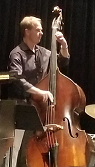
Thank God (or whoever or whatever you pray to) for John Goldsby..
Thread should be called: Petting the Dog with a loose right hand wrist
Thread should be called: Petting the Dog with a loose right hand wrist


