With the Apocalypse in mind, better start learning to build Acoustic Basses…unless you learn how to build a mini hydro-powered generator and just live in a van down by the river….or build a pedal-powered generator and find yourself a "gimp" to Tour-de-France while you play…This is exactly why I decided to learn how to make my own basses.
I believe it's an essential skill that everyone should learn, along with how to fish, snare, build a shelter and start a fire.
What happens when the apocalypse hits and we're all scattered around in small camps or solo? What happens when you can't order from SW or GC?
Y'all need to learn to be self sufficient and survive. Start building your own.

Enjoy the benefits of a premium membership!
Upgrade Account
-
TalkBass has been independent since 1998. Add your voice.
Create a free account to reply to discussions, view embedded media, and browse with fewer display ads.
Join free Log in
Want zero display ads or expanded classifieds tools? Compare plans.
You are using an out of date browser. It may not display this or other websites correctly.
You should upgrade or use an alternative browser.
You should upgrade or use an alternative browser.
Looking at used basses is just so depressing lately...
- Thread starter FishDub
- Start date
More options
Who Replied?

This is an excellent option. And I already have a van.learn how to build a mini hydro-powered generator and just live in a van down by the river
Luckily I have an auxiliary battery bank that is charged from the engine and an inverter that will easily handle a small amp. The rub is I would need to find fuel to run the van. Or, just build a small windmill to charge the batteries.
Don't forget, there should be plenty of batteries and solar panels to scavenge after half The population kill each other off over the remaining toilet paper and P basses.

If that's the situation, I'll be more worried about things other than electric basses. Like if I'll be hung for hunting deer on the Laird's land.
More likely that you'd be sent to Australia.

I wish I had this problem! Trying to sell a vintage bass locally at the moment, but the rate at which people are leaving HK for good at the moment means that secondhand values of just about everything have plummeted, you can barely give stuff away. Vintage music gear is generally not that popular here to begin with (eg most of the higher profile pros here seem to gravitate to new boutique rather than vintage), so there's been a bunch of similar-aged guitars and basses on FB marketplace just sitting there at good prices but not going anywhere. Given the price of int'l shipping at the moment, I'm resigned to not being able to sell the bass until I can never find myself in a country where demand is stronger.

The buying and selling party is over. The good news is that its like beano for gas.
I was looking for a turbo tuner recently and found one on CL. But wait, $150? Went to their website and see they sell for $140 new.
I sort of blame reverb here. Usually when Im looking for something used I check sold listings and see a trend that most listings for that item are higher than any have sold for. Sellers are using the data to push prices up. But buyers can use it to say no thanks.
One thing the verb does that's misleading is those diamond ratings where it will say "below average price for this item in this condition". That's below average for current asking prices, not below average for what that item has recently sold for.
Gotta just walk away!
I was looking for a turbo tuner recently and found one on CL. But wait, $150? Went to their website and see they sell for $140 new.
I sort of blame reverb here. Usually when Im looking for something used I check sold listings and see a trend that most listings for that item are higher than any have sold for. Sellers are using the data to push prices up. But buyers can use it to say no thanks.
One thing the verb does that's misleading is those diamond ratings where it will say "below average price for this item in this condition". That's below average for current asking prices, not below average for what that item has recently sold for.
Gotta just walk away!

By and large that's a big step up from Baltimore. Unless they sent you to Melbourne which would fall under cruel and unusual punishment.More likely that you'd be sent to Australia.

My daughter surprised me by saying that the reason she has almost no money at the end of the month is partly because she is buying company stock max they would allow and maximum contribution to her IRA . She is 24 and just graduated last year.
So not all young ones are irresponsible. She drives a 16 year old car she got from us with 325 K miles. She would like a newer car but she also knows that when her car is out, we have a car for her at home she can borrow. She has not lived with us since she was 18
Back to used prices - on the ABQ and Santa Fe CL...
People are still selling basses for reasonable asking prices. Here are Fender basses (
Geedy Lee and Vintera (less than a year old- minty). - 900
American Jazz special - 950 with case
Active Jazz MIM - 750. with case
Squires -- 375 or lower
MIJ Power Jazz (PJ) Special - 900 -- this is probably the only one that is slightly overpriced. and a Pbass Special MIJ for 850
There was a US 1975 P-bass for 500 but just sold
So not all young ones are irresponsible. She drives a 16 year old car she got from us with 325 K miles. She would like a newer car but she also knows that when her car is out, we have a car for her at home she can borrow. She has not lived with us since she was 18
Back to used prices - on the ABQ and Santa Fe CL...
People are still selling basses for reasonable asking prices. Here are Fender basses (
Geedy Lee and Vintera (less than a year old- minty). - 900
American Jazz special - 950 with case
Active Jazz MIM - 750. with case
Squires -- 375 or lower
MIJ Power Jazz (PJ) Special - 900 -- this is probably the only one that is slightly overpriced. and a Pbass Special MIJ for 850
There was a US 1975 P-bass for 500 but just sold

With the Apocalypse in mind, better start learning to build... a mini hydro-powered generator and just live in a van down by the river….or build a pedal-powered generator and find yourself a "gimp" to Tour-de-France while you play…
Once on Maui on the east end past Hana, we stopped at a juice stand and the proprietors were having the tourists ride an exercise bike with a genny hooked up to it to run the blender.
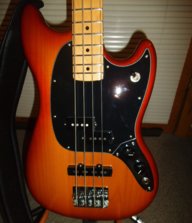


The buying and selling party is over. The good news is that its like beano for gas.
This is pretty much how I feel. With taxes being charged on used gear, being turned in for tax from selling gear at the usual places, the cost of shipping, there is nothing fun or cheap about it anymore. Dealing local can be okay for the very-very few times someone local is actually looking or selling exactly what you want.
I'm glad I have way more than I'll ever 'need' and got it before all the bs happened, and there's nothing I can't live without.
Last edited:
At the risk of getting too political for this board... Almost everything you wrote is incorrect.But there are real problems with the CPI and its accuracy.
• The US is not Argentina or Zimbabwe. No one is manipulating the data. The BLS is totally transparent about its adjustments -- and that's not what you do if you're trying to hide inflation. If the numbers weren't reliable, someone else would produce alternative measures, because getting the right numbers is too important to too many major corporations.
• CPI does, in fact, include costs such as housing, medical costs (including insurance), child care, and so on. It's all documented.
• "Hyperinflation" is when costs rise by 50% per month. That's impossible to hide.
• Standard CPI does not include substitutions based on rising prices. Substitutions are used in something called Chained CPI, or "CPI-U." By the way, CPI-U is consistently around 0.25% lower on average than traditional CPI.
• Hedonic adjustments are based on the quality of products, not consumer enjoyment. Per the BLS, it "refers to a method of adjusting prices whenever the characteristics of the products included in the CPI change due to innovation or the introduction of completely new products." Oh, and if a 40" 4k HDTV cost you $1400 last year, and costs you $1200 this year, and now includes Netflix without needing to hook up a $100 device? Then yeah, that means the price dropped.
The rest of your claims are awash in negative bias (look it up) and money illusion (look it up).
This can be easily illustrated with gas prices. Everyone freaks out when gas rises by a few cents per gallon. But I'm reasonably sure that you don't remember how many times the price of gas fell over the past 5 or 10 years. You probably don't remember when gas prices most recently dropped, or by how much.
Anyway. The price of new and used instruments is rising because demand is increasing, at a time when manufacturers can't increase supply. It really isn't that difficult.

Since inflation is rising on a global level could you school us on how that works as well?
Many of the same dynamics at play with rising costs of living, especially in first world countries.
Add to that shortages and the fact that increased demand for shipping has really impacted landing costs. For example used shipping containers traded for $3K pre pandemic. Last I checked people were bidding them north of $12K. Multiply that by all the containers on a ship. Then consider fuel costs, etc.
I am a co-owner in an import company so shipping is a huge expense on our P and L and it has more than doubled since the pandemic. That's just shipping.
Sigh...

Forget gear pricing woes. Its really time to get a genny, bunch of dry beans and MREs, and hunker down.
Nah maybe not that bad. But yeah used gear prices are stupid.
Nah maybe not that bad. But yeah used gear prices are stupid.


From my side of the pond it's not only the used price that have increased but the USD currency that appreciated by closed to 15% in a couple of month. That and the increase in shipping fees have cool down potential GAS of buying from USA, now I'm so happy that i purchased 2 super cool bass in February, of which one became my #1 workhorse (my Gould GGi5). Now I appreciate and will focus on playing the small collection I have
At the risk of getting too political for this board... Almost everything you wrote is incorrect.
• The US is not Argentina or Zimbabwe. No one is manipulating the data. The BLS is totally transparent about its adjustments -- and that's not what you do if you're trying to hide inflation. If the numbers weren't reliable, someone else would produce alternative measures, because getting the right numbers is too important to too many major corporations.
• CPI does, in fact, include costs such as housing, medical costs (including insurance), child care, and so on. It's all documented.
• "Hyperinflation" is when costs rise by 50% per month. That's impossible to hide.
• Standard CPI does not include substitutions based on rising prices. Substitutions are used in something called Chained CPI, or "CPI-U." By the way, CPI-U is consistently around 0.25% lower on average than traditional CPI.
• Hedonic adjustments are based on the quality of products, not consumer enjoyment. Per the BLS, it "refers to a method of adjusting prices whenever the characteristics of the products included in the CPI change due to innovation or the introduction of completely new products." Oh, and if a 40" 4k HDTV cost you $1400 last year, and costs you $1200 this year, and now includes Netflix without needing to hook up a $100 device? Then yeah, that means the price dropped.
The rest of your claims are awash in negative bias (look it up) and money illusion (look it up).
This can be easily illustrated with gas prices. Everyone freaks out when gas rises by a few cents per gallon. But I'm reasonably sure that you don't remember how many times the price of gas fell over the past 5 or 10 years. You probably don't remember when gas prices most recently dropped, or by how much.
Anyway. The price of new and used instruments is rising because demand is increasing, at a time when manufacturers can't increase supply. It really isn't that difficult.
I am not an econmist (and you might be so I will be careful here!) but I am a professional investor and analyst. I am not mostly incorrect but I will accept that your analysis and interpertation of some things differ from mine, that I made a couple of errors in fact, and I was vague about a couple of points you latched on to.
Before I get into that though, I want to address a couple of points you made, namely that I know which country in which we live and more importantly I never said anyone manipulates the data. I said the index is constructed by human beings (at the BLS). Furthermore, I know they are transparent as I linked to their site in my OP and am reading it now. With that in mind let me clarify a couple of things and reply to others.
-CPI has rent for housing costs and owner equivalent rent. Rent increases are often controlled for periods of time either contractuallly or in the case of certian muicipalities, by regulation depending on the pricing of the unit, the income level of the lessee, the district in which the unit is located, its usage, etc. Not all but some. Personally speaking, I gave up on leaving NYC and moving to the burbs in CT because homes to purchase literally rose 40-60% where I was looking. Owner equivalent rent is not the same thing as the cost of purchasing a home though it does track housing values (more on that later).
-CPI has medical services, not health insurance per se. My wife and I had to change plans because last year our broker informed us that our former plan went from about $32K per year premium to $80K. I have lots of friends with similar tales of woe. And before that outrageous hike, our heath insurance costs went up double digits every year.
-Again, education and childcare are omitted from the CPI.
-I stand corrected on energy.
-Hyperinflation is a rapid rate of inflation. If there is a 50% montly threshold that needs to be met to have license to use the term I was not ware. I am certainly not at John Williams' level of skepticism!
-On hedonics, if you read what I wrote I conclude my paragrah using TVs as an example by saying that the logic is that the new more expensive proucts are so much better. I will edit.
-Substituion is substitution
-This is a national index ergo my point about owner equivalent rent. This will vary greatly region by region which is particularly important given weightings for shelter, medical services, etc..
The most importnat point I made though was this: I think about how much of my spendable income goes to the omitted items I listed above and how much they increased every year and the CPI number is utterly meaningless. And my situation cannot be all that different than others'. You can call that money bias; I call it dry analysis that demonstrates the disconnect between the stated CPI and actual cost of living for many people which was the overarching point I was making.
And yes, gas rises and falls. Personally it doesn't bother me that it does but it does effect other costs. Remember back to 2008 when gas did the same thing and all the shipping carriers hiked their rates. When it fell back to where it was they didn't decrease their rates. Rinse repeat.
Lastly, let's also remember the OP's is talking about what is happening now. And what is happening now is a perfect storm of shortages, supply and demand (for instruemnts) and all of these rising cost inputs whether or not in the CPI.
Last edited:

You didn't mention in your OP where you're looking - Reverb or GC aren't going to offer any deals on used basses - have you been checking out your local pawn shops? Sometimes you can find an incredible steal when they don't know what they've got and misprice it accordingly.Before I speak, no offense to my TB people. Its just so sad whats happening with USED pricing nowadays. ...
I don't understand these words.things other than electric basses
What language is this?

Since we're talking inflation and all, if that's the 1979 show, then $5 then is ~$21(USD) now.
Which is still pretty not bad for a show. Nice.
Course these days for anything beyond local shows that I've looked for you can't just buy from the venue, you have to find some sort of reseller which is when it gets pricey. Ticket price, tax, fees, more fees, surcharges that somehow aren't already in the fees, etc.


