About 25 years ago, a piano tech at the store where I was guitar and bass repairing- showed me something I've never forgotten. It rings (see what I did here) true with every set of strings I install on my own, and client's basses.
He showed me the gauges of the lower strings on different length pianos. The really short harp- grand pianos, like the ones you'll see in the corner of some people's homes, have very thick bass strings. They produce the same notes as longer pianos, and you can hear how 'tubby' and they sound, with fast decay and weird overtones- in comparison, say, to a Steinway concert grand piano which uses much thinner, longer strings to reach the lower pitches. It is known, that longer, thinner strings with the added length to hold a low pitch, and that has room to vibrate, will sound more pure than one that is shorter and thicker. I was not surprised at his demonstration, but it was enlightening.
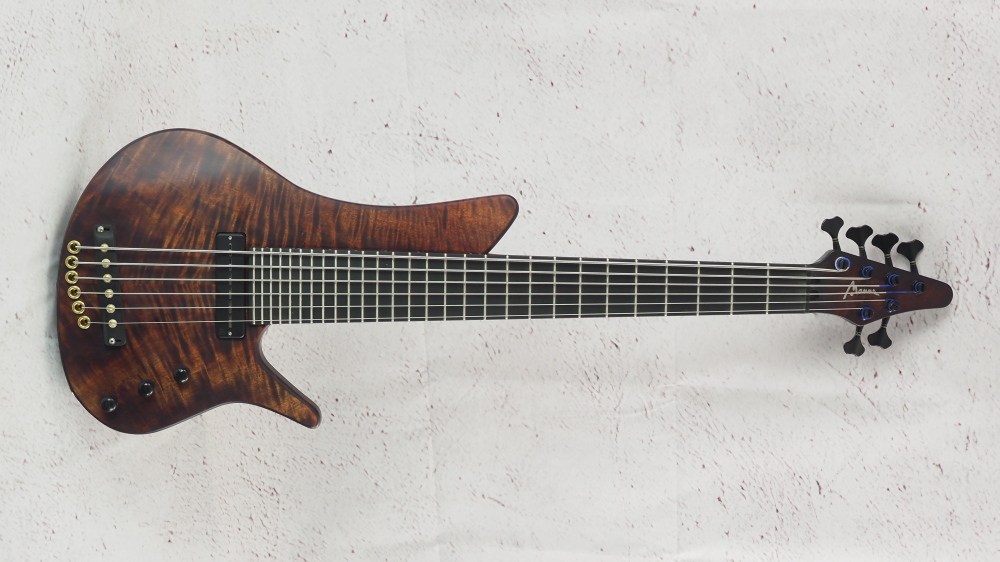
As all of that pertains to basses, with a fixed scale length- I find, on my own 34" scale five strings, that a .125, is ideal in my standard .45,65,85,105, sets.
I'd imagine a .120 with a little higher action, would sound maybe a little better. The D'Addarios I buy sometimes, have a .130- as do most regular gauge five string sets. I always find that it doesn't really sound all that good. Especially as the strings reach the end of their life span. I've played some longer scale- 35" mainly- and I cannot say that it makes much of a difference. Lighter bass strings, more pure harmonics.. but on a shorter scale, it's not feasible. I've strung some of the lower tuning players instruments with Kalium strings as large as a .160, if I remember correctly. I can't relate, as I've not played a gig in those tunings- but they seemed to dig it.
We all like what we do, these are just my experiences.