The B string on my Lakland 55-60CS is ridiculously good. If you're not looking to go fanned fret, Lakland is a good option.

TalkBass has been independent since 1998. Add your voice.
Create a free account to reply to discussions, view embedded media, and browse with fewer display ads.
Join free Log in
Want zero display ads or expanded classifieds tools? Compare plans.

Dingwall?Currently I have 2 "vintage" Fender American J fives. 10 and 20 years old. Both have weak and floppy B string tone. Although the newer one is better. Both strung with .130 rounds. A new project is demanding more than occasional B string work so I'm seeking something with better definition and sustain. 35" scale? Fatter B string? Different designs?

love my Sandberg basses with DR Pure Blues 120-40
just a better string IMO!
34" scale too but great B string sound
and I used 130 and 135 for YEARS
but no more!



The accumulation of organic material (skin, oils, dirt) along the spaces on string windings has a surprisingly noticeable effect on the tone of roundwound strings.
B strings are susceptible in particular because the windings are larger than any of the other strings, creating more and easier places for skin gak to hide. For this reason a lot of players notice all their other strings sound fine but their B string sounds different, "dead," or "floppy".
Good news and bad news.
The bad news is that all roundwound B strings behave like this more or less. There's no brand of string that's immune; you could swap strings and initially be thrilled with the outcome, but soon after you play that bass a while the new B string will start to sound like your current one, more or less.
More bad news. If you're the kind of player who likes the sound of dead roundwounds, there's no getting away from this phenomenon. The dead rounds thing is sort of incompatible with 5 string basses if you are sensitive to this issue.
The good news. You can soak the strings (or just the B, I suppose) in denatured alcohol for a day or two, put them back on the bass, and they will have picked up most of the vibrational harmonic activity they lost when all the grease from your chicken tenders got on them. And you can do that as often as you want. I have ten year old roundwound sets I've been rotating onto basses the whole time.
BTW, the construction of flatwound strings sort of minimizes this effect, and the deal with "coated" strings is that they also prevent accumulation of dirt and gak along the windings to some extent. Those, however, do not respond well to solvents.
Good luck out there.

Yeah, I think the coating itself deadens the vibrations a bit, with the objective that its presence keeps it from getting too much worse.there's not a whole lot you can do about it other than to go to coated strings which are usually not as bright as their regular counterparts to begin with.

Plus, I feel there is a trade-off on 35"s in that what you gain in B-string clarity, you also make the G-string sound thin and tinny.


I should probably be able to give you a better answer, but all I can say is..... I use Dunlop Super Bright Nickel wounds with a tapered B. The Nickel tapered B seems to be much more articulate than the regular B on my Fender. I don't need the tapered B on my other 5 string basses. The Dunlop Nickels actually work very well on most of my basses. Even my acoustic bass. I put my well used strings on that bass. It amplifies and records very well.By "exposed core" do you mean "taper wound"? My B and E are currently taper wound on both basses.

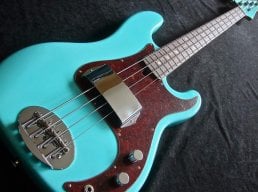
Happy to report that additional string trees and a .130 DDT string from DR made a noticeable difference on my 2001 American Deluxe V. Looking forward to a live rehearsal listen tomorrow....View attachment 5092730