Following up on drurb's story with one of my own:
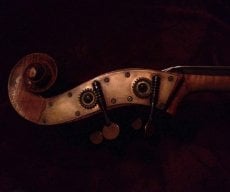
I had played electric bass for 20 years when I finally followed through on a threat I had been making for decades to pick up the DB. Thanks to a lucky strike on craigslist, I got a screaming deal on a beautiful old Hofner ply. Actually, what was left of a formerly beautiful Hofner may be a more accurate description. Apart from looking like it had done hard time in a chicken coop, its' major problem was that it had been set up left-handed for the previous owner. I happen to be the only right-handed member of a family of southpaws, so I wasn't going to get far playing it backwards.
Following recommendations made in this forum, I brought the bass to Bill Merchant. He restrung it, recut the bridge, trimmed and reset the soundpost, and apologized because he had no clamps to lend me to fix the open seams. He did, however, give me a baggie of glue granules, explained how to prepare hide glue and how to properly clamp a seam shut.
In so doing, he changed the course of my life. The above cost me $100, plus tax. I now consider him to be a mentor and a personal friend. I don't visit him often, because he propelled me toward self-sufficiency at his own expense, but when I do, I leave buzzing with ideas.
The denouement to that story is pretty neat, and illustrates the fact that the player-luthier relationship is not necessarily a one-way street, so I'll tell that part too.
In my working life, my responsibilities include oversight of government grants for nonprofit social service agencies. Bill, as those who know him are aware, is an ardent conservationist who is passionate about preserving local history.
During a typically freewheeling conversation that took place while I was visiting him in the shop a few years ago, he told me that his historical society had hit a wall financially in their efforts to preserve a local building that many years ago was significant to New York State's canal system.
I explained the grant process to him, told him who to contact and what to do, and if he had a problem, to call me. There was no quid pro quo asked or expected; rather, I was freely sharing information about my field of "expertise" as he had done with his own to get me started.
He emailed me a few months ago to let me know that they had been awarded their grant and would be able to preserve this noteworthy building, and graciously thanked me for getting him started down that path. I'm very proud of that.



 No, if Ron Carter or some highly regarded symphony showed up at my home, then I would not drop a friend. That's sure not how I operate. Now, with regard to a business, there's no excuse to shortchange one customer because another shows up. That doesn't mean all customers are or should be treated alike. Integrity dictates that every customer receive a proper level of service. Rushing a job so that you can get to your "whale" customer is inappropriate and insulting. Just because it happens and is often not surprising doesn't make it right.