No argument here. My questions were purely rhetorical, and your answer is just as good as anyone elses.
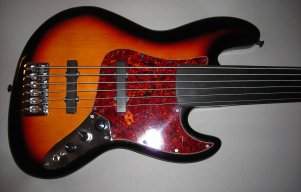
But, for the sake of discussion, can you objectively prove that your American-made Fender neck with carbon graphite support rods is better than my 2010 Mexican made Fender neck with no rods, or that it makes your bass play or sound better than my MIM? I don't mean subjectively, as in "better for you," that goes without saying. I mean objectively.
This question fails blind listening tests time after time here on TB. And as I own both USA- and foreign-made Fenders, I can tell you I get a certain sense of security from the rods in my USA Fender necks, but my contemporary MIM necks (from about 2009 on) feel and play just as good, and feel just as stable, to me.
Is a carbon fiber reenforced neck better than a wood one? As always one has to define what you mean by "better". Does is sound better? Could you tell it in a classic double blind listening test? Of course not. But could a PLAYER tell the difference living with the basses for a while? Well you BET he can. I happen to own a MIM wood neck. It's a WONDERFUL neck. Prefect setup, stable, fast, perfect smooth feel, perfect balance, etc. Can I tell the difference with my Modulus full graphite neck? Hell yes. The graphite is so stable it doesn't even lose tune. The setup is perfect and Stays that way forever. Does the full graphite sound better? Some say graphite sounds different but I really doubt it. It does feel different though with a kind of smooth cold feel (which I happen to like). Clearly carbon reenforcment bars are just a lesser version of this that doesn't give you the cold carbon feel.
So what is the bottom line of this ramble? My MIM neck sound wise is every bit as good as the reenforced MIA neck. But while my neck is stable, it's never going to be as stable as the MIA one. You can't say otherwise.
But that is just the science. What about the "art"? Well some players find a changing wood neck an irritation. And others just LOVE a wood neck instablilities and all. They say it's those imperfections that make the instrument great. So in these cases one can figure that if the player is pleased he plays better and only in THAT sense, does neck construction change your sound.
And the major other MIM differnece is that the MIM body is made of a bunch of sticks glued together while the MIA is a nice selected piece of tonewood. We all know tonewood doesn't matter. Or probably at least to the point where it can be picked out of a double blind tone test. But again it matters to me. My G&L L2500 MIA basses have wood to die for. Most MIA G&Ls are like that. The tribute not so much. I doubt you could hear the difference when I play them, but I can feel the difference even if you can't hear it. Am I delusional? Maybe.
And in ANY case these manufacturing differences are FAR overshadowed by bass to bass individual differences. I've played some REALLY lousy MIA Fenders and my MIM is a VERY exceptional example of a good one.
Point is you guys are all trying hard to find an easy way out of actually judging basses. You want basses to be like Nazi Germany where you can tell what kind of people are what by the symbols they are required to wear on their arms! Sorry, country of origin is NOT such a label. Good luthiers, just like great bass players can be born anywhere!
You have to judge each bass AS ITSELF. There are no quick shortcuts using brands or countries. Yes, it's more work and you actually have to think and know what your are doing. Sorry about that. And as always, tone is where you find it. Even PRICE is not always an indicator. Danelectro masonite basses are AMAZING instruments everyone loves.