
Enjoy the benefits of a premium membership!
Upgrade Account
-
TalkBass has been independent since 1998. Add your voice.
Create a free account to reply to discussions, view embedded media, and browse with fewer display ads.
Join free Log in
Want zero display ads or expanded classifieds tools? Compare plans.
You are using an out of date browser. It may not display this or other websites correctly.
You should upgrade or use an alternative browser.
You should upgrade or use an alternative browser.
"Major Scale Box" diagram
- Thread starter Horseflesh
- Start date
More options
Who Replied?
I am probably newer to bass than you are! That's a good question and I hope someone smarter than me can fact check my guess. The triad diagram is derived from the typical major scale sequence. Flattening a note in that sequence may just be easier to remember than other valid fingerings. (But why is that major scale pattern seemingly ubiquitous when you can play it other ways, that I don't know.)
My expectation is that you'd learn the other fingering you pointed out too, and pick whichever one was best based on the next thing you wanted to play.
My expectation is that you'd learn the other fingering you pointed out too, and pick whichever one was best based on the next thing you wanted to play.
Yup. There's basically three different fingerings you can use to play any triad or seventh chord. Off of the first, second, or fourth finger. You should work on all of them. The fact that you recognize this so early on, and was able to make your chord chart tells me that you really get the big picture.My expectation is that you'd learn the other fingering you pointed out too, and pick whichever one was best based on the next thing you wanted to play.
Simultaneously studying bass & guitar, and using a piano to further visualize intervals/chord voicings has made things click in a way that I thought would be impossible a few months ago. The big picture is coming into view and it is pretty cool. Now I just need years of memorization and manual dexterity skills to make it pay off, haha.

I am probably newer to bass than you are! That's a good question and I hope someone smarter than me can fact check my guess. The triad diagram is derived from the typical major scale sequence. Flattening a note in that sequence may just be easier to remember than other valid fingerings. (But why is that major scale pattern seemingly ubiquitous when you can play it other ways, that I don't know.)
My expectation is that you'd learn the other fingering you pointed out too, and pick whichever one was best based on the next thing you wanted to play.
Correct. We do learn all this in small leaps up to a new area, where we stay until a new leap takes us to another new area.
Trying to do it all at one time makes us give up and we quit.

Benjamin Earl
Commercial User
- Dec 31, 2008
- 281
- 469
- Disclosures
- Fretboard Visualization Author
I whipped up a few graphics to help with this subject.
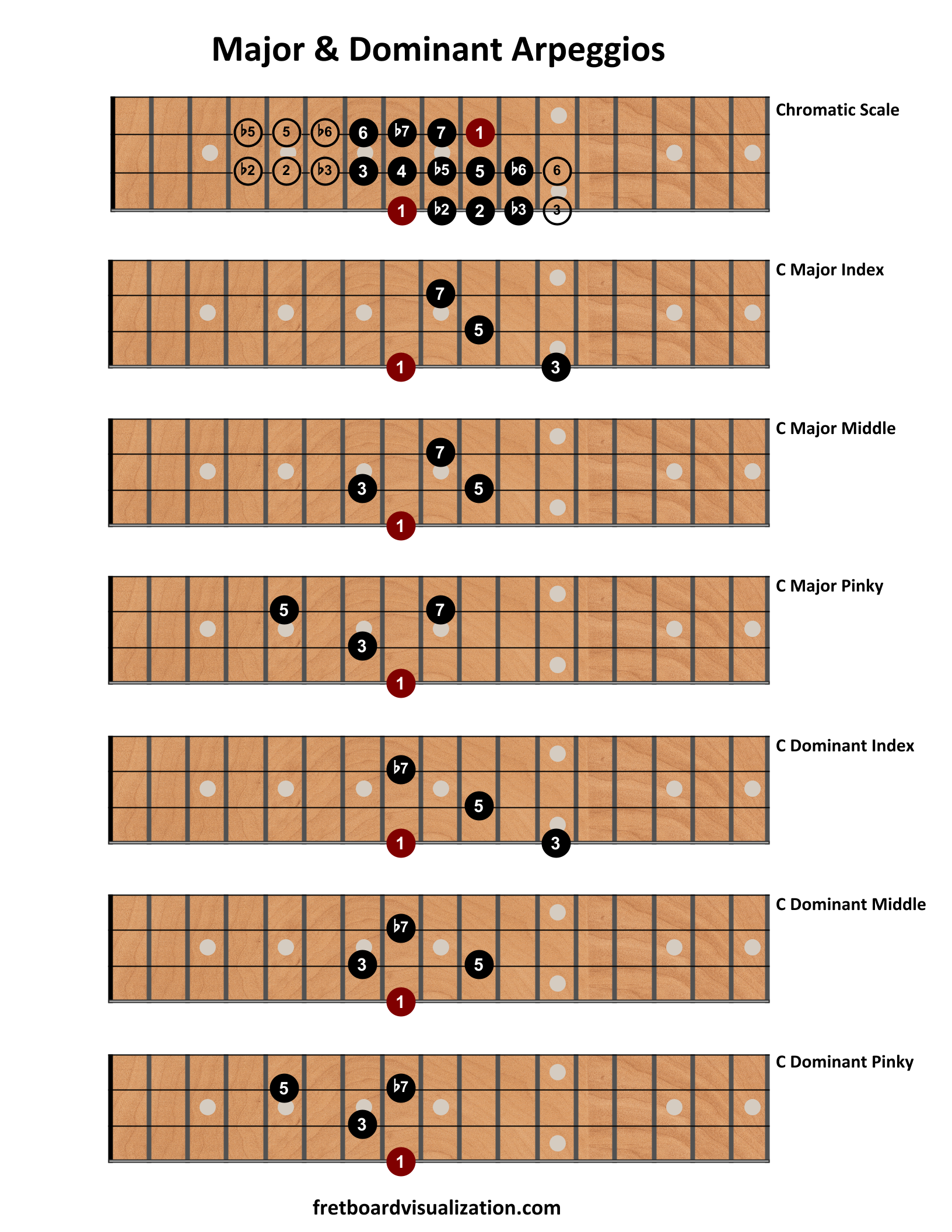
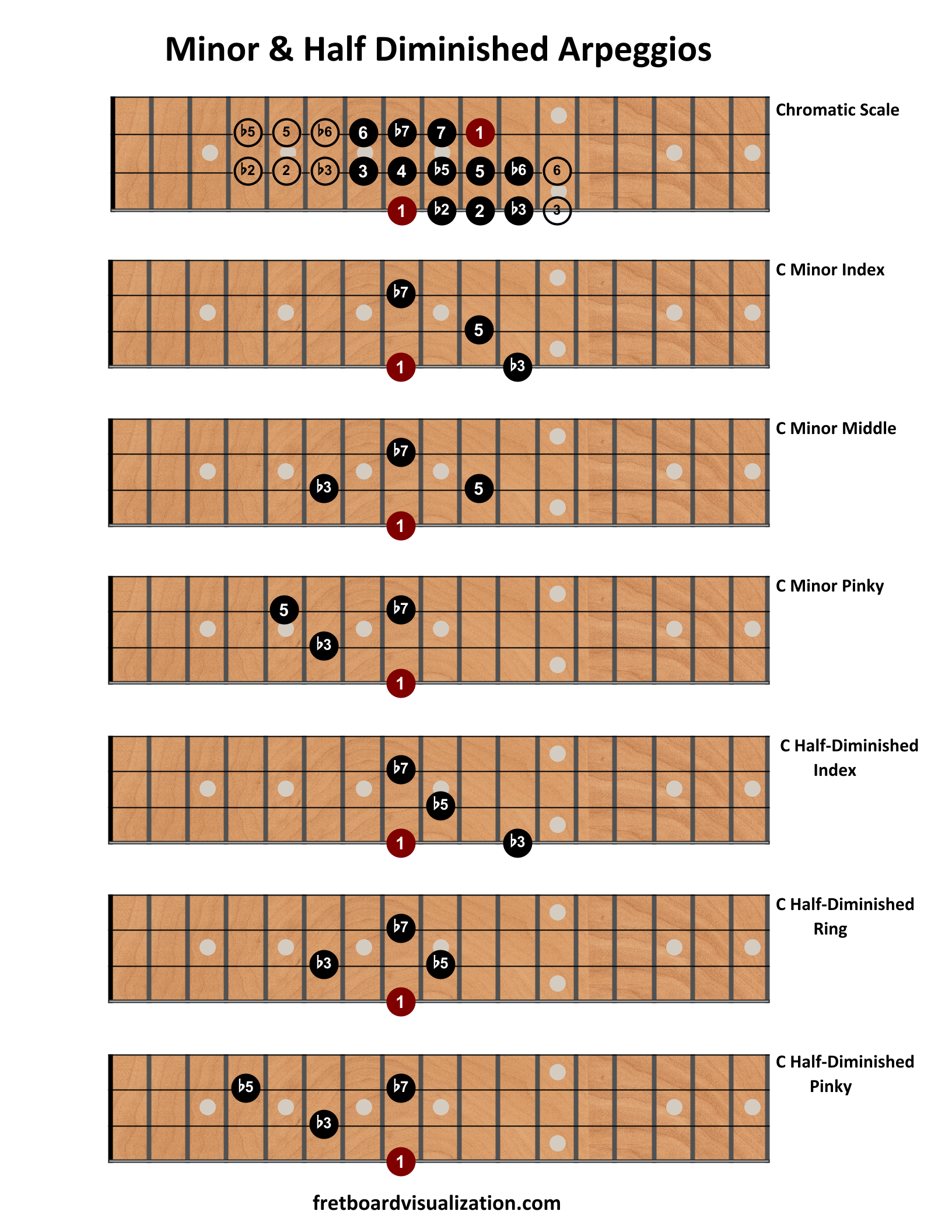

I think everybody should spend time making there own diagrams, using the underlying rules for interval construction. diagrams form scales, individual intervals, triads, 7 note arpeggios. anything that has a name. Multiple diagrams for the same patterns. extended diagrams across serval octaves. Diagrams of the entire scale across the entire neck.
Just don't fall into the trap of thinking that knowing the shape = knowing the scale (or chord or whatever)
I often say there are 4 components to master before one can "know" a musical concept:
Further, something s foundational as the major scale contains patterns within patterns and relationships within relationships that are pretty endless. I learned the box 3 1/2 decades ago, and went around thinking I "knew the major scale" for a hot minute. Now 30+ years later, I know there's still work I need to do.
Just don't fall into the trap of thinking that knowing the shape = knowing the scale (or chord or whatever)
I often say there are 4 components to master before one can "know" a musical concept:
- sound
- execution
- name
- notation
Further, something s foundational as the major scale contains patterns within patterns and relationships within relationships that are pretty endless. I learned the box 3 1/2 decades ago, and went around thinking I "knew the major scale" for a hot minute. Now 30+ years later, I know there's still work I need to do.
Those are great, @Benjamin Earl. OK with you if I add them to the TalkBass wiki? I'll be sure to link back to your site--and the pics would be on an editable page that you can update too.
Benjamin Earl
Commercial User
- Dec 31, 2008
- 281
- 469
- Disclosures
- Fretboard Visualization Author
Those are great, @Benjamin Earl. OK with you if I add them to the TalkBass wiki? I'll be sure to link back to your site--and the pics would be on an editable page that you can update too.
Sure, I don't mind. Thanks!
Done and please edit if there is anything you want to add!
Infographics - Arpeggio Fingerings 1 | TalkBass.com
Infographics - Arpeggio Fingerings 1 | TalkBass.com


