• TalkBass has been independent since 1998. Add your voice.
    Create a free account to reply to discussions, view embedded media, and browse with fewer display ads.
    Join freeLog in
    Want zero display ads or expanded classifieds tools? Compare plans.

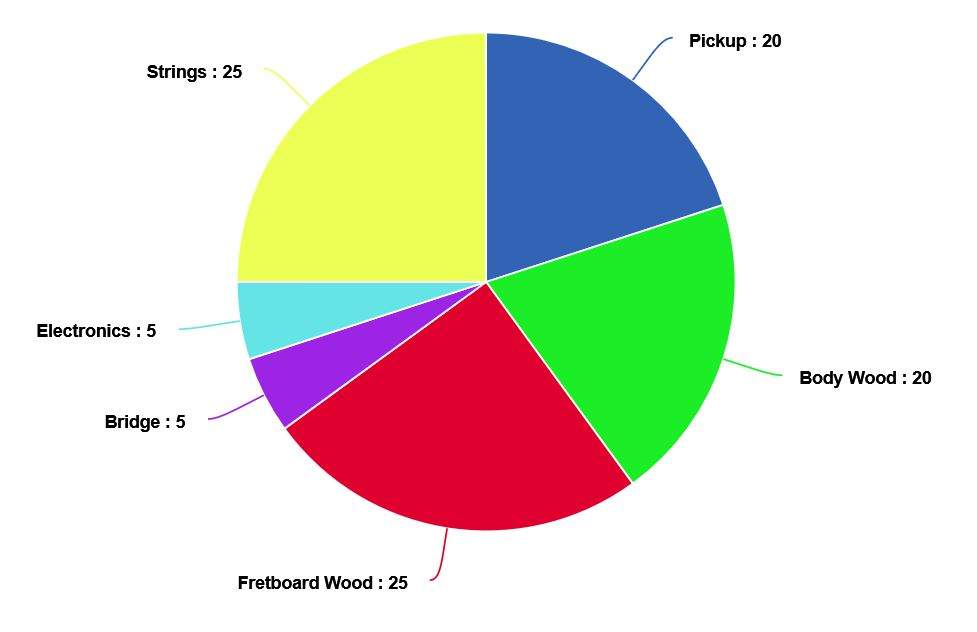
Make YOUR own "bass tone" pie chart!

My results are very biased. I only like rosewood fretboards and TI Flats on a Precision. I am probably fortunate there is no "dislike" button to push.:)
pie.JPG
 
I once did a comparison where a friend and I recorded about a dozen different basses (precisions, jazzes, ricks, a stingray, a 12 string and an EUB) going straight through a REDDI into the board. What we concluded was the following (sorry, no chart just percentages)
1. Technique - (fingers vs. pick vs. slap as well as where played (by the bridge or neck, etc.)) - this mattered a lot more than we thought it would. 25%
2. Pickups - interestingly more where they were they were located more so than what kind they were. Notable exceptions were the rick and the stingray as well as piezo pickups - in these cases, what the pickup was definitely mattered. Interestingly, we had a 57 precision reissue (split coil) and a 51 precision reissue (single coil), but the differences between them were pretty subtle in comparison to precision vs. rick. 25%
3. Active vs. passive - not sure if this was pick or preamp related, but again the stingray had a unique voice (active) as did the rick (passive). 25%
4. Strings - the 12 string was unmistakable as was the EUB. The difference between flats and rounds was also pretty obvious. 25%
5. All others - body wood, neck wood, fingerboard wood, bridge, etc. 0%

I know that #5 flies in the face of a lot of conventional wisdom, but there always seemed to be a factor in the first 4 groups that matter so much more than anything in #5.

That said, it should be noted that this was going straight into the board via a DI. If an amp/cab or preamp had been used, then that would have accounted for almost all of the tone. Just my experience, but usually the last piece of the signal chain exerts the most influence over tone. Put another way, all basses will sound pretty much the same when played through an amp/preamp/pedal that adds a lot of color to the sound.
 
You'll never get consensus is all I'm going to say. Well, but I'll post my favorite pie chart:

View attachment 781688

I love this! I have an English Mastiff who seems to just lick the water once and then proceed to just drool (I keep spelling the word d-r-o-o-l and it replaces my typing with an emoji!) into the bowl with an occasional lap here and there to give you the illusion that he is actually drinking.

Sorry for the hijack...

We now return to your normally scheduled thread.
 
Setting aside the effect of the amp and the player, I would rank them roughly in this order:

Pickups (kind and placement)
Strings
Neck construction
Electronics (unless you are specifically using a tone-enhancing preamp)
Body wood
Neck and fingerboard wood (unless fretless)

Edit: Am I missing something as to why so many folks keep telling the OP that there will never be a consensus or that there isn't only one chart that is right? The OP specifically asked everyone to make their own "personal chart" reflecting their own beliefs.
I edited the op because of those comments. Even though my original thread did ask them to include a personal aspect in their charts, I had to make sure it was really, REALLY clear so I edited it :P
 
Im not ignoring it at all. It makes a difference, especially in construction, but after playing hundred of basses I've found that, build quality being equal and good, that the fretboard wood is far less noticeable in its character to tone than strings and especially your choice of cabs.

I agree that the contribution of the fretboard is minor. My point was that the neck (not just the fretboard) is a big factor.
 
On a passive, bolt-on fretted bass (I've never own a neck-through or a set-neck):

19% - Pickup Location
17% - Strings
16% - Pickup Type: Single Coil, Humbuckers, etc.
13% - Electronics (Pots & Caps) Electrical Values: 500k pots, .047uf caps, etc
12% - Electronics (Pots & Caps) Quality: difference between quality components and very cheap components
11% - Pickup Model: Difference of swapping a single coil, for example, with another single coil in the same pickup location
5% - Bridge
4% - Fretboard Wood / Finish
3% - Body Wood / Finish

On a passive, bolt-on fretless bass:

18% - Pickup Location
17% - Strings
16% - Fretboard Wood / Finish
12% - Pickup Type: Single Coil, Humbuckers, etc.
11% - Electronics (Pots & Caps) Electrical Values: 500k pots, .047uf caps, etc
10% - Electronics (Pots & Caps) Quality: difference between quality components and very cheap components
9% - Pickup Model: Difference of swapping a single coil, for example, with another single coil in the same pickup location
4% - Bridge
3% - Body Wood / Finish

This is all based on my experience with the few mods I've done and basses I've owned. YMMV of course.

I didn't include technique, because I related this to the same person picking up a few basses in a store and using the same technique on all of them. We all, or should, all know the different tones we can get when we play this way, or that way.
 
Last edited:
WHERE DOES MY TONE COME FROM ....

pedal.jpg


1 - First I run into an equalizer

2 - Then I split the signal into 4 parallel signals with a rolls mixer.

3 - I run one of the parallel lines into the Line6 bass pod where I model an acoustic 360 with a rat or big muff distortion pedal. I use this to get a retro growlly distorted sound. Or I also model an Ampeg fliptop with the Rat Distortion pedal. And I also Model an old Marshall amp. With the bass pod I can get a wide range of clean or dirty sounds and various effects and model different amps and speaker cabinets.

4 - The second parallel signal goes into a MXR bass di+. I use this pedal to get a clean modern sound. It also has a distortion button that can give a moderate to extreme amount of modern distortion.

5 - The third parallel signal goes into a Marshall Guv'nor. This gives me an old 60s marshall stack sound. This can go from a small amount of distortion to an over the top marshall sound. This effect can give you a the classic Jack Bruce Cream tone.

6 - The fourth parallel signal goes into a Tech21 VT Bass pedal. With this effect I get a slightly dirty Ampeg SVT bass amp sound with a tube like growl.

7 - Then I remix the 4 signals back together and run it into a bass amp, or pa, or studio mixer. Because the signals are parallel I can mix clean and overdriven sounds together and still get effect and a sound that punches through the mix.

effects-sch.jpg